Tropical North Queensland
Great Barrier Reef
How UK travellers actually reach the Great Barrier Reef: Cairns vs Port Douglas vs the Whitsundays, why the small outer-reef boats beat the big pontoons, and the dry-season window that decides your trip.
In short
Great Barrier Reef at a glance
The Great Barrier Reef isn't one place you go to — it's a 2,300km marine park you reach from a coastal base, and which base you pick decides the whole trip. The two southern hubs, Cairns and Port Douglas, sit an hour apart and run the outer-reef snorkel and dive boats; the Whitsundays, 600km further south by air, are about white-sand island beaches and Whitehaven rather than coral. Fly into Cairns (~3 hours from Sydney), give the reef a full day on a small outer-reef boat rather than the cheapest big pontoon, and pair it with a Daintree rainforest day. The single decision that makes or breaks a trip is timing it for the May-to-October dry season, when the water is clear and the stinger risk is lowest.
People talk about “going to the Great Barrier Reef” as though it were a single resort with a front gate. It isn’t — it’s a marine park the length of the UK, and you only ever see a sliver of it, from whichever coastal base you happened to fly into. That base is the real decision. Cairns and Port Douglas, an hour apart in the tropical north, are where the outer-reef snorkel and dive boats leave from; the Whitsundays, a separate flight 600km to the south, are about powder-white island beaches and Whitehaven, not coral. Most first-timers don’t realise these are different trips until they’ve already booked the wrong airport.
The other mistake is going cheap on the one day that matters and pricey on the rest. The big pontoon trips are the loudest-advertised and the most crowded; pay the extra for a smaller boat to an outer-reef site and you swim over living coral with a handful of people instead of a hundred. And get the timing right before anything else — the May-to-October dry season means clearer water, calmer seas and being clear of the summer stinger season, when you’ll be snorkelling inside a full-length suit whether you like it or not.
The route
A reef-focused leg you can slot into a wider Australia trip, built around one really good day on the outer reef rather than several rushed ones. Distances are real: Cairns and Port Douglas are about an hour apart by road, while the Whitsundays are a separate flight 600km to the south, so you choose one reef region per trip rather than touring the lot.
-
Days 1-2
Cairns — land and acclimatise
Fly into Cairns (~3 hours from Sydney, ~3h15 from Melbourne); the airport is ~10 minutes and around A$25-30 by taxi from the centre. Don't dive straight onto a boat jet-lagged — swim the free Esplanade Lagoon, book your reef and rainforest days, and let your body catch up to the 9-11-hour time jump.
-
Day 3
The outer reef
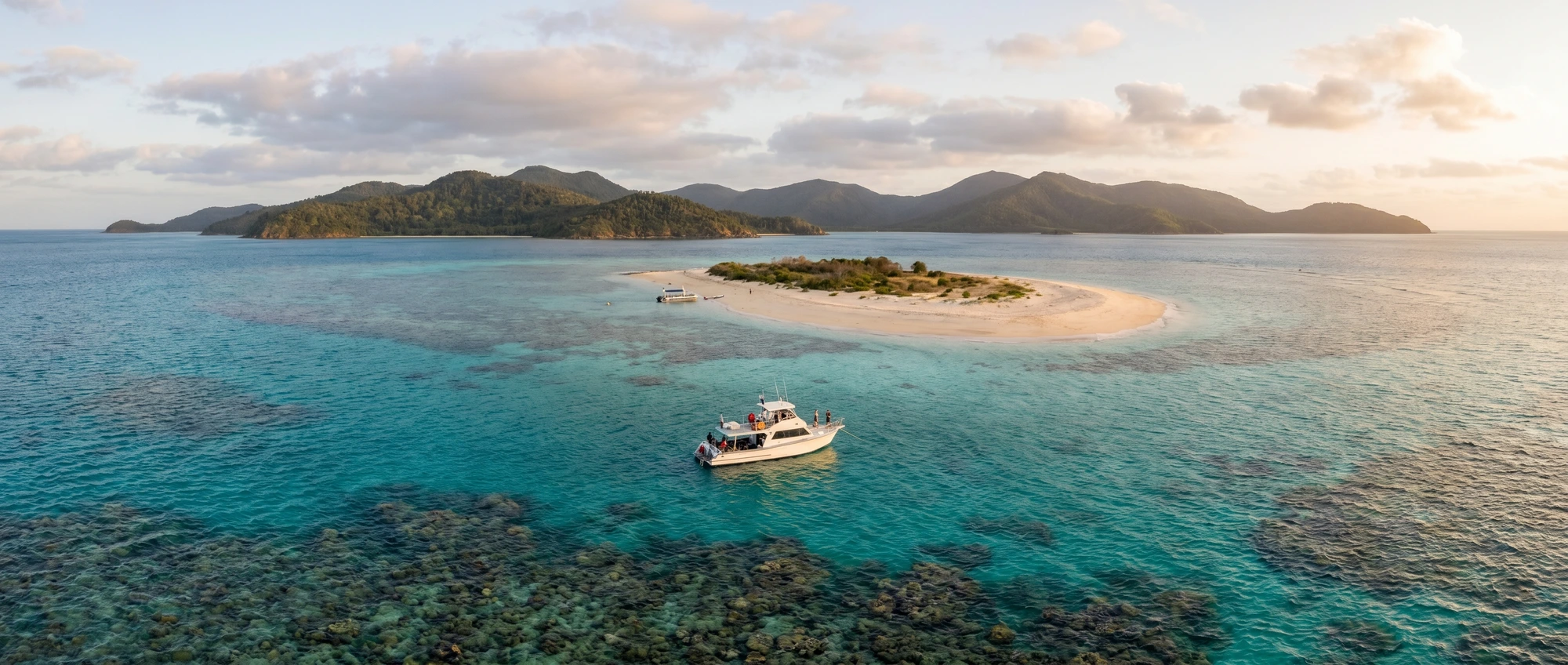
The main event: a full-day trip to an outer-reef site like Hastings, Norman or Flynn Reef. Choose a smaller boat (around A$250-300 including gear and lunch) over the cheapest big-pontoon day — the snorkelling and visibility are far better with fewer people in the water. Certified divers can add two guided dives for roughly A$130-180 extra.
-
Day 4
The Daintree & Cape Tribulation
Trade the water for the world's oldest tropical rainforest. Drive or take a tour ~2h15 north of Cairns (past Port Douglas) to the Daintree, cross on the cable ferry, and walk the boardwalks to where the rainforest meets the reef at Cape Tribulation. Watch for estuarine crocodiles — never swim in the rivers or estuaries here.
-
Days 5-6
Base up in Port Douglas (optional)
Shift an hour north to Port Douglas for a calmer, lower-key finish: Four Mile Beach, the Sunday market, and shorter boat runs out to the Low Isles or the Agincourt ribbon reefs. It's the move if you'd rather pay a little more for quieter surrounds than busy Cairns.
Where to base yourself
Pick one or two bases rather than moving every night.
Cairns
££ mid-rangeThe cheapest and best-connected reef base: the domestic airport, the widest choice of outer-reef boats, the free Esplanade Lagoon and the most budget beds. It's a functional tropical town rather than a beach resort — there's no swimmable city beach, so you're here for the boats, not the sand.
Best for: First-timers, divers, value and the widest tour choice
Port Douglas
£££ premiumAn hour north of Cairns and a notch more upmarket: Four Mile Beach on the doorstep, closer access to both the Agincourt outer reef and the Daintree, and a quieter, resort feel. You pay more than Cairns for the calmer surrounds and the beach.
Best for: Couples and families wanting a beach and quiet over price
Airlie Beach & the Whitsundays
£££ premiumA separate reef region 600km south, reached via its own airports (Proserpine/Whitsunday Coast or Hamilton Island). This is the base for Whitehaven Beach, island resorts and sailing trips rather than the Cairns-style coral-snorkel day. Treat it as an either/or with the north, not a same-trip add-on.
Best for: White-sand island beaches, sailing and resort stays
Getting around Great Barrier Reef
You don't get around the reef itself — you pick a coastal base and take day boats out to it. From the UK you connect once to the east coast and then fly domestically: Sydney to Cairns is ~3 hours (book Jetstar, Virgin or Qantas 4-8 weeks ahead for the cheaper fares), and the Whitsundays are a separate flight into Proserpine or Hamilton Island, not a drive from Cairns. On the ground, Cairns and Port Douglas are about an hour apart on the Captain Cook Highway and most reef and rainforest operators run a hotel pick-up, so you rarely need a hire car for a reef-only leg; rent one mainly for a self-drive Daintree day. Australia drives on the left like the UK and your UK photocard licence is valid as a visitor. Reef boats leave early, so being based near the marina in Cairns or in central Port Douglas saves a groggy pre-dawn transfer.
Book the essentials
Where to stay
Tours & tickets
Airport transfers
Car hire
Stay connected
Trains & rail passes
Great Barrier Reef FAQs
Where should I base myself for the Great Barrier Reef?
When is the best time to visit the Great Barrier Reef?
Is it safe to swim and snorkel on the Great Barrier Reef?
Ready to book?
Compare car hire