


In short
Is Hungary a good holiday for UK travellers?
Yes, if you treat it as a Budapest city break: flights are ~2h15 from several UK airports, there's no visa for a holiday, a mid-range long weekend costs around £350–£450 per person, and the capital packs thermal baths, ruin bars, café houses and grand riverside architecture into a cheap, walkable centre.
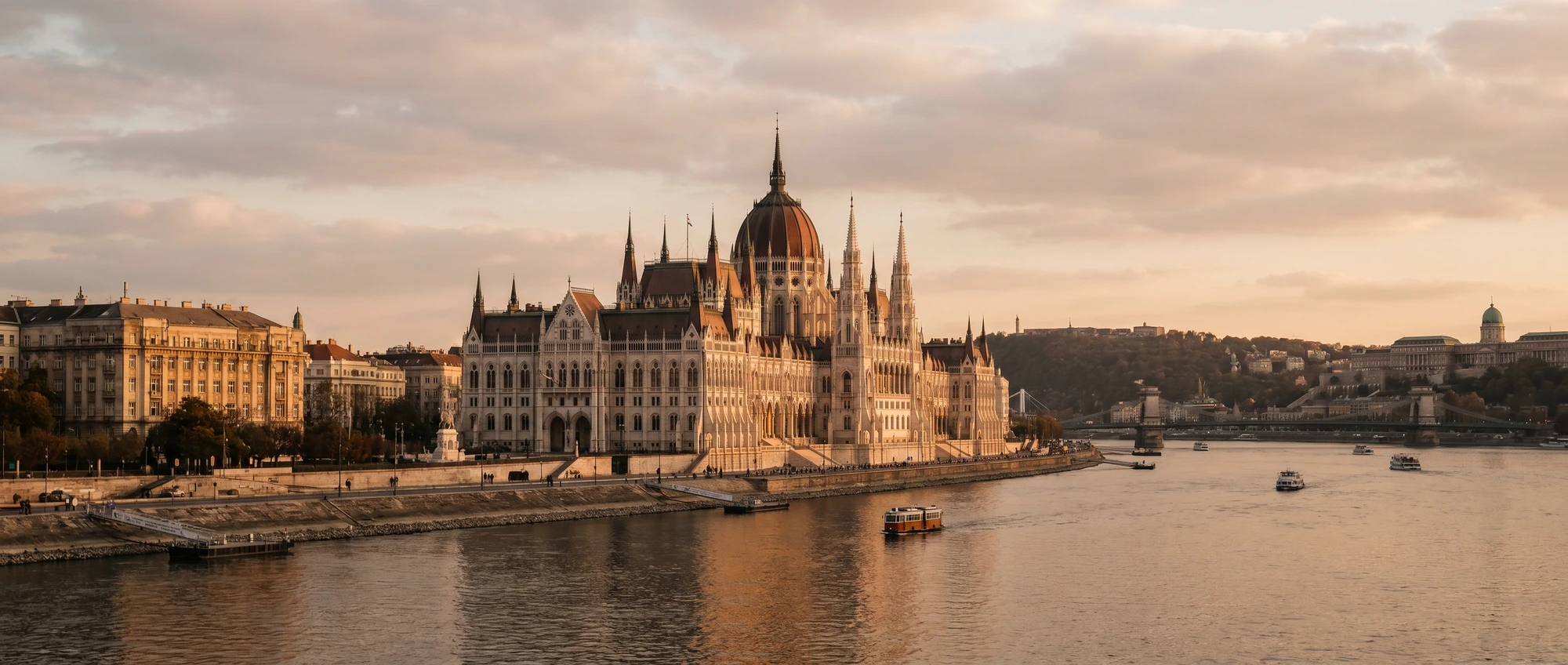
For UK travellers, Hungary means Budapest. The capital does the work of a whole country: a grand Habsburg-era city split across the Danube, with the world’s biggest collection of thermal baths, the ruin-bar nightlife of the old Jewish Quarter, and one of the cheapest price tags of any major European capital. The rest of Hungary — the wine towns, Lake Balaton, the Danube Bend — is worth knowing about, but most first trips are a long weekend or short break in Budapest, and that’s the trip this guide is built around. Below we set out, for a UK traveller spending their own money in 2026, what it costs in pounds, how to get around, and the entry rules straight from GOV.UK.
The short version
- Treat Hungary as a Budapest trip: a long weekend covers the headline sights, and the centre is walkable.
- Spend forints, not euros — Hungary is in the EU but outside the eurozone, and paying in euros gives you a poor rate.
- Pack swimwear: the thermal baths (Széchenyi, Gellért) are the city's signature experience, not an afterthought.
- Check the bill before you tip — many restaurants add a 10–15% service charge (szervizdíj) automatically.
- Always pay in forints, never pounds, at card machines and ATMs to dodge the ~5% DCC markup.
Entry requirements for UK travellers
In short
Do UK citizens need a visa for Hungary?
No. British citizens can visit Hungary visa-free for up to 90 days in any 180-day period for tourism, family visits or business (GOV.UK). Your passport must be issued less than 10 years before you arrive and valid for at least 3 months after you leave the Schengen area. Rules can change — confirm on GOV.UK before you travel.
There’s very little paperwork for a Hungarian holiday: no visa, and a passport that clears two Schengen checks. The one that catches UK travellers out is the issue date — your passport has to have been issued less than 10 years before you arrive, which an older “10-year-plus” passport can fail even when its expiry date still looks fine. Hungarian border officers can also ask to see proof of onward travel, travel insurance, enough money for your stay, and where you’re staying, so keep a booking confirmation handy. You must declare cash of €10,000 or more, and you can’t bring meat, milk or dairy in from outside the EU (GOV.UK).
Key points before you book
- No visa for stays up to 90 days in any 180-day period (GOV.UK).
- Passport: issued under 10 years before arrival and valid 3+ months after you leave Schengen (GOV.UK).
- Carry a free UK GHIC for state healthcare plus travel insurance — the GHIC won't repatriate you (GOV.UK).
- Border officers can ask for proof of onward travel, insurance, funds and accommodation (GOV.UK).
- Declare cash of €10,000 or more; meat, milk and dairy can't be brought in from outside the EU (GOV.UK).
- Carry your passport (not a copy); drink-drive limit is zero and drug penalties are severe (GOV.UK).
- Emergency number across Hungary is 112 (GOV.UK).
Passport validity
Your passport must have been issued less than 10 years before the day you arrive, and be valid for at least 3 months after the day you plan to leave the Schengen area. Check the issue date, not just the expiry — an old passport with more than 10 years between the two dates can fail even if it still looks 'in date' (GOV.UK).
Visas
No visa for a holiday. You can travel visa-free to the Schengen area, including Hungary, for up to 90 days in any 180-day period for tourism, visiting family, business meetings or short courses. Working or staying longer than 90/180 needs separate permission via the Hungarian Embassy in the UK (GOV.UK).
Health
A free UK GHIC (or valid EHIC) covers state-provided healthcare in Hungary on the same basis as a local, but GOV.UK is explicit it is not a substitute for travel insurance: it won't cover medical repatriation to the UK, treatment in a private clinic, non-urgent care, or changes to your travel and accommodation. Carry both. No vaccinations are required; check TravelHealthPro at least 8 weeks before you travel for recommendations.
Safety & security
Hungary is generally safe and violent crime is rare. GOV.UK says terrorist attacks in Hungary cannot be ruled out, but the main day-to-day risk in Budapest is street crime — bag-snatching and pickpocketing in crowded tourist spots and on public transport. GOV.UK also flags bar and restaurant scams (inflated bills, then pressure to withdraw cash at an ATM with a 'security guard') and drink-spiking in some Budapest bars. Rules can change — confirm on GOV.UK before you travel.
Local laws & customs
You must carry your actual passport — a photocopy is not accepted as ID if police stop you. Hungary has a zero-tolerance drink-drive limit: any alcohol at all before driving is illegal. Drug penalties (including for cannabis) are severe and can mean long jail sentences. Dipped headlights are compulsory outside built-up areas, day and night. Validate your public-transport ticket the moment you board or inspectors will fine you. Note too that under a 2025 law the authorities banned events seen to 'promote' LGBT+ identity to minors, which led to Budapest Pride 2025 being declared illegal (GOV.UK).
GOV.UK is the official source for Hungary entry rules — always check it before you book.
Read GOV.UK adviceGOV.UK updated 1 Jun 2026 · Departly checked 9 Jun 2026
EU entry rules for Hungary
Checked 6 Jun 2026The EU's biometric Entry/Exit System (EES) began a progressive rollout on 12 October 2025 and became fully operational on 10 April 2026: on your first trip since then you give fingerprints and a facial scan at the border (a one-off, valid 3 years), and the 90-days-in-180 limit is now counted automatically. Some countries may still ease or pause checks at busy crossings during the rollout-flexibility window, so queues vary. ETIAS — a separate €20 travel authorisation (free for under-18s and over-70s, valid 3 years) — is expected in late 2026 and is not required yet. Always confirm on GOV.UK before you book.
- 90/180 rule
- Visa-free stays of up to 90 days in any 180-day period across the Schengen area. Days spent in other Schengen countries count towards the total.
- Passport
- Issued less than 10 years before the day you arrive, and valid for at least 3 months after you plan to leave the Schengen area. Check the issue date, not just the expiry.
- GHIC
- Carry a free UK GHIC for state healthcare on the same basis as a local — but it is not a substitute for travel insurance, which you still need.
- Roaming
- Post-Brexit, EU roaming is no longer guaranteed free; many UK networks charge around £2.25/day. Check your tariff or use a travel eSIM.
On health, carry a free UK GHIC (or valid EHIC): it gets you state healthcare in Hungary on the same terms as a local. But GOV.UK is blunt that it is not a substitute for travel insurance — it won’t fly you home, won’t cover a private clinic, and won’t pay for cancellation or lost bags. Carry both, and never pay a third-party website for a GHIC; it’s free from the NHS. One local rule worth flagging now: carry your actual passport, not a photocopy, because Hungarian police don’t accept copies as ID. Rules can change — confirm on GOV.UK before you travel.
Flights from the UK
In short
How long is the flight to Budapest from the UK?
About 2h15–2h30 from London and ~2h45 from Bristol or Birmingham. Direct flights run from at least eight UK airports, mostly on Wizz Air and Ryanair, with British Airways and easyJet from London Gatwick. Hungary is effectively a one-airport country for UK travellers — almost everyone flies into Budapest (BUD).
Hungary is, for practical purposes, a single-gateway country: nearly everyone flies into Budapest’s Ferenc Liszt airport (BUD). The good news is the route is short, frequent and cheap — Wizz Air, whose home base this is, and Ryanair carry most of it, with British Airways and easyJet adding London Gatwick options. And it doesn’t all leave from London: Manchester, Bristol, Edinburgh and Birmingham run direct services that are often as cheap as the capital. Off-peak returns dip under £40 booked ahead; the December Christmas-market weeks and peak summer carry the biggest premium.
Flights from the UK
Short-haul, single gatewayHungary is effectively a one-airport country for UK travellers — almost everyone flies into Budapest (BUD). Wizz Air (Budapest's home airline) and Ryanair carry the bulk of the route, with British Airways and easyJet from London Gatwick. Direct flights run from at least eight UK airports, and regional departures like Manchester, Bristol and Edinburgh are often as cheap as London.
Fly from
Main arrival airports
- BUD Budapest (Ferenc Liszt International)
When to go
In short
When is the best time to visit Budapest?
May–June and September–October: 15–25°C, open café terraces and bath gardens, manageable crowds and prices below the summer peak. July and August are hot and humid; winter is cold but brings the Christmas markets and atmospheric steaming outdoor baths. Spring and autumn are the sweet spot for a city break.
When to go
Sweet spot: Late April to June and September to October. You get 15–25°C, the café terraces and bath gardens are open, crowds are manageable and prices sit below the summer peak. May and September are the sweet spot — warm enough for the outdoor pools at Széchenyi but without July's heat and humidity.
High summer (July–August) is hot, humid and busiest, though the outdoor thermal pools and Sziget Festival are summer-only draws. Winter is cold — often below freezing — but it's the season of the Christmas markets around Vörösmarty Square and the Basilica, and the steaming outdoor baths are at their most atmospheric in the snow. Spring and autumn balance decent weather, open terraces and lower prices.
The shoulder seasons suit a Budapest trip best: warm enough to use the outdoor pools at Széchenyi and sit out on a café terrace, but without July’s heat and humidity or the price peak. Each season has its own pull, though. High summer adds the outdoor thermal pools at full tilt and the Sziget Festival. Winter drops below freezing but turns on the Christmas markets around Vörösmarty Square and the Basilica — and the steaming outdoor baths are at their most atmospheric in the cold. Pick the season for the experience you actually want, not just the temperature.
What it costs
In short
How much does a trip to Budapest cost from the UK?
Budapest is one of Europe's best-value city breaks. A mid-range long weekend runs roughly £350–£450 per person all-in (flights, a central 3-star hotel, restaurants, the baths and a couple of sights); a budget version lands nearer £250–£350. UK return flights run ~£29–£60 off-peak. On the ground, budget on £35–£50 a day, mid-range £70–£110.
What it costs
UK return flights to Budapest run from about £29–£60 off-peak on Wizz Air or Ryanair booked ahead, £90–£180 in the school holidays or at short notice, and £250–£400 on BA at busy times. January and early summer are among the cheapest months; the Christmas-market weeks of December and peak summer carry the biggest premium.
Daily budget per person
| Pint of local beer (Dreher) in a ruin bar | 1,200–1,600 Ft / £3–£4 |
|---|---|
| Bowl of goulash or a Hungarian main | 2,500–4,500 Ft / £6–£11 |
| Coffee in a café | 900–1,400 Ft / £2.20–£3.40 |
| Széchenyi Baths — basic weekday locker ticket (cashier) | 13,200 Ft / ~£32 |
| 100E airport bus to Deák Ferenc tér (single) | 2,500 Ft / ~£6 |
| BKK single transport ticket in the city | 450 Ft / ~£1.10 |
| Hostel dorm bed per night | 5,000–9,000 Ft / £12–£22 |
Budapest is one of the cheapest capitals in the EU, but the gap to Western Europe has narrowed — it is no longer a 'pints for a pound' city, and the famous thermal baths have caught up to Western prices. The big-ticket extras are the baths (a basic weekday locker ticket at Széchenyi is now about 13,200 Ft / £32 at the cashier, more for a fast-track online ticket) and dinner with drinks, while a ruin-bar beer and a bowl of goulash stay genuinely cheap.
The numbers above are honest mid-2026 figures converted at £1 ≈ 412 Ft, so a ruin-bar pint really is about £3–£4 and a bowl of goulash £6–£11. Budapest remains one of the cheapest capitals in the EU, but be honest about the trend: the gap to Western Europe has narrowed, and it’s no longer a “pints for a pound” city. The biggest surprise for returning visitors is the baths — a basic weekday locker ticket at Széchenyi is now about 13,200 Ft (£32) at the cashier, and more for a fast-track online ticket, so the spa day is a Western-priced treat, not a bargain. Dinner with drinks is the other big-ticket item; the cheap end — café coffee, street food, public transport — stays genuinely cheap.
A realistic first itinerary
Hungary is, for almost every UK visitor, a Budapest trip — and Budapest splits neatly into two halves either side of the Danube: hilly, historic Buda and flat, buzzing Pest. The classic first-trip mistake is treating it like a sprawling country to tour; in practice you can walk most of the centre, and a long weekend covers the headline sights comfortably. Use any extra days for a thermal-bath morning, a Danube-bend day trip, or to pair it with Vienna (~2h40 by train) rather than chasing distant Hungarian towns.- 1Day 1
Pest highlights
Start on the Pest side: the Parliament (pre-book the interior tour), St Stephen's Basilica, the Great Synagogue in the old Jewish Quarter, and the Central Market Hall. End with a ruin bar in District VII.
- 2Day 2
Buda & the river
Cross to Buda for the Castle District, Fisherman's Bastion and Matthias Church, with the best views back over the river. Walk the Chain Bridge and time the evening to see Parliament lit up from the water.
- 3Day 3
Baths & City Park
Spend the morning soaking at the Széchenyi thermal baths in City Park, then Heroes' Square and a slower afternoon of cafés and Andrássy Avenue. A relaxed last day rather than a sightseeing sprint.
- 4Day 4 (optional)
A day trip
Add the Danube Bend — Szentendre's artists' town (~40 min by HÉV suburban train) or Visegrád's castle and Esztergom's basilica by boat or bus — or take the fast train to Vienna for the day (~2h40).
The honest cut for a three-night trip is the first three days above: Pest’s monuments, Buda’s castle and views, and a half-day at the baths. Resist the urge to bolt on far-flung Hungarian towns — they’re a long way for a short trip. If you have a spare day, a Danube Bend day trip or a fast train to Vienna (~2h40) adds far more than racing across the country.
Where to base yourself
In short
Where should I stay in Budapest for a first trip?
District V (Belváros) is the central, walkable first-trip base — Parliament, the Basilica and the river on foot. District VII (the Jewish Quarter) is the ruin-bar and nightlife heart, District VI around Andrássy Avenue is central but calmer, the Castle District (Buda) is scenic and quiet, and District XIII is better value with a local feel.
District V (Belváros / Lipótváros)
The central, walkable core on the Pest side: Parliament, the Basilica, the Danube promenade and the smartest hotels. The easiest first-trip base — you can walk to almost everything — though it's the priciest district and quietest at night.
Good for: First-timers who want everything on foot
District VII (Erzsébetváros / Jewish Quarter)
The ruin-bar heartland and the liveliest nightlife, plus the Great Synagogue and excellent street food. Brilliant if you're here to go out; pick a street away from the loudest bars if you want to sleep. Strong value on mid-range hotels and apartments.
Good for: Nightlife, food and a younger crowd
District VI (Terézváros)
Around Andrássy Avenue and the Opera House — handsome, central and a little calmer than District VII, with good metro links up to Heroes' Square and the baths. A sensible middle ground for couples.
Good for: Couples wanting central but quieter
District I (the Castle District, Buda)
Up on the Buda hill among the cobbles, Fisherman's Bastion and the postcard views. Atmospheric and quiet, but you'll walk up steep hills or take the funicular, and you're a bridge away from Pest's restaurants and nightlife.
Good for: A quiet, scenic base over a lively one
District XIII (Újlipótváros)
Just north of the centre, residential and leafy along the river with good tram links — better value than the tourist core and a more local feel, while still a short tram ride to Parliament. A smart pick for a longer stay or a quieter trip.
Good for: Better value and a local feel
These are district-level bases for Budapest, where almost every Hungarian trip is spent — the street-by-street detail belongs on a dedicated Budapest city guide. The pattern to follow: District V if you want everything on foot and don’t mind paying for it; District VII if you’re here for the food and nightlife; the Buda Castle District if you’d trade buzz for cobbled, quiet views. Wherever you land, the centre is small enough that you’re rarely more than a short tram ride from the rest.
Getting around
In short
What's the best way to get around Budapest?
On foot for most of it — the centre is one of Europe's most walkable. When you need transport, BKK's metro, tram and bus network is cheap (a single is 450 Ft, ~£1.10) and a 24/72-hour travelcard is better value. From the airport, the 100E Airport Express bus reaches the centre in ~40 minutes for 2,500 Ft. You don't need a hire car. Drive on the right.
Getting around Hungary
Budapest is one of Europe's most walkable capitals — the headline sights cluster either side of the Danube and you'll cover most of them on foot. When you do need transport, BKK runs a cheap, integrated metro, tram and bus network: a single ticket is 450 Ft (about £1.10) and a 24- or 72-hour travelcard is far better value if you're moving around. Buy and validate tickets in the BudapestGO app or validate paper tickets the instant you board, because inspectors fine un-validated travel. The one thing to know is the airport: the 100E Airport Express bus runs to Deák Ferenc tér in the centre in about 40 minutes for a special 2,500 Ft fare (regular BKK tickets aren't valid on it). You don't need a hire car for a Budapest trip — it's a liability in the centre. Rent one only if you're touring wine country or Lake Balaton.
- The centre is genuinely walkable — most first-trip sights are within a 30-minute walk either side of the Danube.
- BKK single ticket is 450 Ft (~£1.10); a 24/72-hour travelcard pays off fast once you ride more than a few times.
- Airport: the 100E Airport Express bus reaches Deák Ferenc tér in ~40 min for 2,500 Ft — regular tickets don't work on it.
- Always validate your ticket the moment you board, in the app or at the machine — inspectors do fine tourists.
- Use official Főtaxi or a ride-hailing app (Bolt) rather than hailing a random cab to avoid overcharging.
The one airport detail to get right: the 100E Airport Express runs to Deák Ferenc tér in the centre in about 40 minutes for a special 2,500 Ft (~£6) single — but regular BKK metro and tram tickets are not valid on it, so buy the 100E ticket by card on board. In the city, validate every ticket the instant you board (inspectors do fine tourists), and use official Főtaxi or the Bolt app rather than hailing a random cab.
Staying connected & covered
Most UK networks now bill around £2.25 a day to use your data in Hungary — roughly £15–£16 for a week — because post-Brexit EU roaming is no longer guaranteed free. Check your tariff first, and if the daily charge adds up, buy a Hungary or Europe eSIM that switches on the moment you land. The other thing to sort is cover: your GHIC and travel insurance do different jobs, and you need both.
Stay connected in Hungary
Post-Brexit, free EU roaming is no longer guaranteed — most UK networks now charge around £2.25/day to use your allowance in Hungary (about £15–16 for a week). A travel eSIM is usually cheaper and gives you data the moment you land.
- Check your UK tariff first — some Three, iD and Smarty plans still include EU roaming free.
- A typical 5–10GB Hungary or Europe eSIM costs about £6–£12, beating a week of daily roaming charges.
- eSIMs install before you fly via a QR code on any eSIM-capable phone.
Travel insurance for Hungary
A free UK GHIC gets you state healthcare in Hungary, but it won't fly you home, won't cover a private clinic, and won't pay for cancellation or lost baggage. GOV.UK and the NHS both say to carry travel insurance on top.
- Single-trip European cover starts at roughly £3–£10 for a healthy younger traveller on a short trip.
- Annual multi-trip cover pays off if you travel abroad twice or more a year.
- Pair it with your GHIC — they cover different things, and you need both.
Money
Hungary is in the EU but not the eurozone, so you spend forints (Ft), not euros — and paying in euros where it's offered nearly always gives you a poor rate, so pay in forints. Budapest in 2026 is heavily contactless: cards, Apple Pay and Google Pay work almost everywhere, including on the 100E bus and in most bars, so you barely need cash beyond a few thousand forints for markets and tips. Withdraw from bank-branded ATMs (OTP, K&H, Erste) and avoid the standalone Euronet machines that cluster around tourist spots, which push high fees and bad rates. The rule that saves UK travellers real money: when an ATM or card machine asks whether to charge in pounds or forints, always choose forints — choosing pounds triggers Dynamic Currency Conversion, a hidden markup of up to ~5%. On tipping, check the bill first: many restaurants add a 10–15% szervizdíj (service charge) automatically, in which case there's no need to tip again; where there's no service charge, round up or leave about 10%.Fee-free travel money
Skip the airport exchange desk — a fee-free travel card gives you the real exchange rate abroad.
Before you fly
The Hungary-specific moves that save real money are paying in forints rather than euros (and never in pounds at a card machine) and ordering a free GHIC before you go. Pre-book UK airport parking too — it’s almost always cheaper booked ahead than on the day — and sort a Hungary eSIM so your data works the moment you land.
Airport parking & lounges
Pre-book your UK airport parking or a lounge — it's almost always cheaper booked ahead than on the day.
How we know this
How we know this
- GOV.UK foreign travel advice — Hungary — entry, passport, visa, health, safety and local laws (print page)
- NHS — Global Health Insurance Card (GHIC) — the GHIC is free and is not a substitute for insurance
- BKK — Budapest public transport & 100E Airport Express — official airport-bus fare and journey time
- Széchenyi Thermal Baths — official thermal-bath ticket prices
GOV.UK last updated 1 Jun 2026.