




In short
Is Italy a good holiday for UK travellers?
Yes — flights are short (~2h25 to Milan, ~2h40 to Rome from a dozen-plus UK airports), there's no visa for a holiday, a mid-range week costs about £700–£800 per person, and the Frecciarossa rail spine links Rome, Florence, Venice and Milan centre to centre so you never need a hire car.
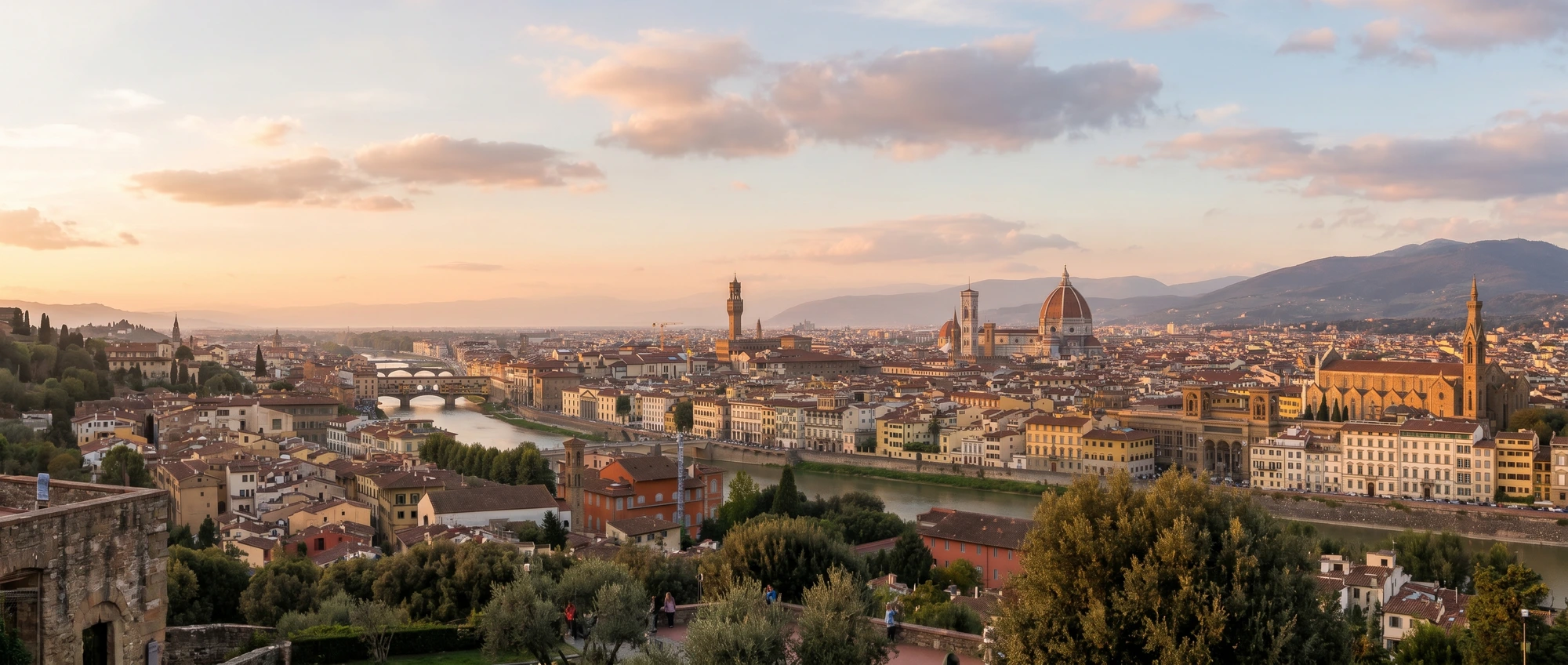
Italy is really several holidays wearing one flag, and the first-trip trap is trying to do them all in a week. Rome is the ancient-world set-piece; Florence is Renaissance art at walking pace; Venice is a one-off you do once; Milan is design, fashion and aperitivo; and Naples is the best pizza in the country with Pompeii and the Amalfi Coast on its doorstep. The country is also longer than people expect — Milan to Sicily is roughly London to Marrakesh — so the trick is to pick one or two cities, link them by train, and go deep. Below we set out, for a UK traveller spending their own money in 2026, exactly what each part suits, what it costs in pounds, and the entry rules straight from GOV.UK.
The short version
- Pick one or two cities, not the whole country: Rome–Florence–Venice is a full week on its own.
- Take the Frecciarossa, not a hire car: historic centres are ringed by camera-enforced ZTL zones that fine foreign cars.
- Book an open-jaw flight for a multi-city trip: in to Venice, home from Rome, no backtracking.
- Eat like an Italian — bar-standing coffee and pizza al taglio by day, one proper trattoria dinner — and watch out for the coperto cover charge.
- Always pay in euros, never pounds, at card machines and ATMs to dodge the ~5% DCC markup.
Entry requirements for UK travellers
In short
Do UK citizens need a visa for Italy?
No. British citizens can visit Italy visa-free for up to 90 days in any 180-day period for tourism, family visits or business (GOV.UK). Your passport must be issued less than 10 years before you arrive and valid for at least 3 months after you leave the Schengen area. Rules can change — confirm on GOV.UK before you travel.
The good news for an Italian holiday is that there’s very little paperwork: no visa, and a passport that clears two Schengen checks. The one that catches UK travellers out is the issue date — your passport has to have been issued less than 10 years before you arrive, which an older “10-year-plus” passport can fail even when its expiry date still looks fine. Italian border officers can also ask to see proof of onward travel, travel insurance, enough money for your stay, and where you’re staying, so keep a booking confirmation handy. You must declare cash of €10,000 or more (GOV.UK).
Key points before you book
- No visa for stays up to 90 days in any 180-day period (GOV.UK).
- Passport: issued under 10 years before arrival and valid 3+ months after you leave Schengen (GOV.UK).
- Carry a free UK GHIC for state healthcare plus travel insurance — the GHIC won't repatriate you (GOV.UK).
- Border officers can ask for proof of onward travel, insurance, funds and accommodation (GOV.UK).
- Declare cash of €10,000 or more (GOV.UK).
- Carry photo ID; drug laws are strict and some cities fine you for sitting on monument or church steps (GOV.UK).
- Emergency number across Italy is 112 (GOV.UK).
Passport validity
Your passport must have been issued less than 10 years before the day you arrive, and be valid for at least 3 months after the day you plan to leave the Schengen area. Check the issue date, not just the expiry — an old passport with more than 10 years between the two dates can fail even if it still looks 'in date' (GOV.UK).
Visas
No visa for a holiday. You can travel visa-free to the Schengen area, including Italy, for up to 90 days in any 180-day period for tourism, visiting family, business meetings, cultural or sports events or short-term study. Working or staying longer than 90/180 needs separate permission (GOV.UK).
Health
A free UK GHIC (or valid EHIC) covers medically necessary state healthcare in Italy on the same basis as a local, but GOV.UK is explicit it is not a substitute for travel insurance: it won't cover medical repatriation to the UK, treatment in a private clinic, non-urgent care, or changes to your travel and accommodation. Carry both. No vaccinations are required; check TravelHealthPro for recommendations.
Safety & security
Italy is generally safe and violent crime is rare. GOV.UK flags a high threat of terrorist attack globally and says attacks in Italy cannot be ruled out; the main day-to-day risk is street crime — pickpocketing and bag-snatching, concentrated around big-city stations, on crowded buses and metros (Rome's 64 bus to the Vatican is notorious), and in tourist crush-points. Be alert to ATM and ticket-machine scams, and to seasonal risks from earthquakes and, near Naples, volcanic activity. Rules can change — confirm on GOV.UK before you travel.
Local laws & customs
Carry photo ID at all times. Drug penalties are severe, including for cannabis. Some Italian cities fine you for sitting on monument steps or eating and drinking on church steps and historic fountains, and there can be a fine of up to €10,000 for urinating in a public place. Drink-driving limits are strict, and many historic centres are ZTL limited-traffic zones where driving without a permit triggers a camera fine that reaches your UK hire-car company months later (GOV.UK).
GOV.UK is the official source for Italy entry rules — always check it before you book.
Read GOV.UK adviceGOV.UK updated 10 Apr 2026 · Departly checked 7 Jun 2026
EU entry rules for Italy
Checked 6 Jun 2026The EU's biometric Entry/Exit System (EES) began a progressive rollout on 12 October 2025 and became fully operational on 10 April 2026: on your first trip since then you give fingerprints and a facial scan at the border (a one-off, valid 3 years), and the 90-days-in-180 limit is now counted automatically. Some countries may still ease or pause checks at busy crossings during the rollout-flexibility window, so queues vary. ETIAS — a separate €20 travel authorisation (free for under-18s and over-70s, valid 3 years) — is expected in late 2026 and is not required yet. Always confirm on GOV.UK before you book.
- 90/180 rule
- Visa-free stays of up to 90 days in any 180-day period across the Schengen area. Days spent in other Schengen countries count towards the total.
- Passport
- Issued less than 10 years before the day you arrive, and valid for at least 3 months after you plan to leave the Schengen area. Check the issue date, not just the expiry.
- GHIC
- Carry a free UK GHIC for state healthcare on the same basis as a local — but it is not a substitute for travel insurance, which you still need.
- Roaming
- Post-Brexit, EU roaming is no longer guaranteed free; many UK networks charge around £2.25/day. Check your tariff or use a travel eSIM.
On health, carry a free UK GHIC (or valid EHIC): it gets you medically necessary state healthcare in Italy on the same terms as a local. But GOV.UK is blunt that it is not a substitute for travel insurance — it won’t fly you home, won’t cover a private clinic, and won’t pay for cancellation or lost bags. Carry both, and never pay a third-party website for a GHIC; it’s free from the NHS. Rules can change — confirm on GOV.UK before you travel.
Flights from the UK
In short
How long is the flight to Italy from the UK?
About 2h25 to Milan and ~2h35 to Venice from London, ~2h40 to Rome, ~3h to Naples and ~3h15 to Pisa for Florence. Sicily (Catania) is around 3h20. Direct flights run from well over a dozen UK airports on Ryanair, easyJet, Jet2, BA, Wizz Air and ITA Airways — and Milan Malpensa is usually the cheapest entry point.
Because Italy is one of the UK’s busiest leisure markets, flights are short, frequent and competitive — and they don’t all leave from London. Manchester, Birmingham, Edinburgh, Bristol and Belfast all run direct routes that are often as cheap as the capital. March, April and November are the cheapest months, while July, August and the Christmas fortnight carry the biggest premium, so the booking lever that matters most is when you go. The other quiet saving: Milan Malpensa and the southern airports (Naples, Bari, Catania) routinely show the lowest UK return fares, so it can pay to fly into one and take the train onward.
Flights from the UK
Short-haul (north); medium-haul to the deep south and SicilyItaly is one of the UK's busiest leisure markets, so direct routes run from well over a dozen UK airports on Ryanair, easyJet, Jet2, BA, Wizz Air and ITA Airways. Regional departures like Manchester, Birmingham, Edinburgh and Bristol are often as cheap as London — and Milan Malpensa frequently shows the lowest UK return fares of any Italian airport.
Fly from
Main arrival airports
- FCO Rome (Fiumicino)
- CIA Rome (Ciampino, low-cost)
- MXP Milan (Malpensa)
- BGY Milan (Bergamo, low-cost)
- VCE Venice (Marco Polo)
- NAP Naples (Capodichino)
- PSA Pisa (for Florence & Tuscany)
- BLQ Bologna
- CTA Catania (Sicily)
When to go
In short
When is the best time to visit Italy?
Late April–June and September to mid-October. You get roughly 18–27°C across most of the country, manageable crowds and prices below the July–August peak. Avoid Rome and Florence in high summer, when both hit 35°C+ and mid-August's Ferragosto shuts many shops. Winter is cheapest for flights and quietly great for the art cities.
When to go
Sweet spot: Late April to June and September to mid-October. You get roughly 18–27°C across most of the country, manageable crowds, and prices below the July–August peak. May and late September are the sweet spot — warm enough for long days outdoors but short of the punishing summer heat, with shorter queues at the Colosseum, Vatican and Uffizi.
Avoid Rome and Florence in July and August: both routinely hit 35°C+, the big sights grow multi-hour queues, and mid-August (Ferragosto, around the 15th) sees many shops and family-run restaurants shut while Italians take their own holidays. If you must travel then, build the day around early starts and late dinners, or head to the lakes or coast for the breeze. Winter is cheapest for flights and quietly excellent for the art cities — Florence's Uffizi even drops to a low-season ticket price — though Venice can flood (acqua alta) and the north turns cold and foggy.
The shoulder seasons are the sweet spot for almost every kind of Italy trip. The one season to be deliberate about is high summer: July and August in Rome and Florence are genuinely punishing — both routinely top 35°C, the Colosseum and Uffizi grow multi-hour queues, and mid-August’s Ferragosto (around the 15th) sees many shops and family-run restaurants shut while Italians take their own holidays. If you can only travel then, build the day around early starts and 9pm dinners, or head to the lakes and coast for the breeze. Winter flips the logic: it’s the cheapest time to fly and a fine time for the art cities — Florence’s Uffizi even drops to a low-season ticket price — though Venice can flood (acqua alta) and the north turns cold and foggy.
What it costs
In short
How much does a week in Italy cost from the UK?
Roughly £900–£1,000 per person on a budget and around £1,500–£1,800 mid-range for a week. UK return flights run ~£30–£150 off-peak. On the ground, budget on £50–£70 a day, mid-range £100–£155 — and Venice runs 20–40% dearer than the rest of the country.
What it costs
UK return flights to northern Italy run from about £30–£80 off-peak on a budget carrier booked ahead (Milan Malpensa is usually the cheapest entry point), £120–£250 in the school holidays or at short notice, and £300–£600 on BA or ITA Airways at busy times. March, April and November are the cheapest months; July, August and the Christmas fortnight carry the biggest premium. Southern airports — Naples, Bari, Catania — often show the lowest off-peak fares of all.
Daily budget per person
| Cappuccino + cornetto, standing at the bar | €2.20–€3 / £1.90–£2.60 |
|---|---|
| Espresso at the bar | €1–€1.30 / £0.85–£1.10 |
| Pizza al taglio (slice) for lunch | €4–€6 / £3.40–£5.20 |
| Margherita in a trattoria | €8–€12 / £7–£10 |
| Two-scoop gelato cone | €2.50–€3.50 / £2.15–£3 |
| Rome–Florence Frecciarossa/Italo (booked ~3 months ahead) | from €15–€20 / £13–£17 |
| Rome Fiumicino → Termini, Leonardo Express | €14 / £12 |
| Colosseum standard entry (timed slot) | €18 / £15 |
| Hostel dorm bed per night | €25–€45 / £21–£39 |
The single biggest day-to-day saver is eating like an Italian: a cappuccino and cornetto standing at the bar is ~€2.50, pizza al taglio (pizza by the slice, sold by weight) makes a €4–€6 lunch, and you save the sit-down trattoria for one proper dinner. Two rules that quietly cost UK tourists: a coperto (cover charge) of €1.50–€3 a head is normal and legal, and a cappuccino ordered after about 11am — or worse, sitting at an outdoor table — costs several times the standing-at-the-bar price.
The numbers above are honest mid-2026 figures converted at €1 = £0.86, so a bar-standing cappuccino and cornetto really is about £1.90–£2.60 and a trattoria margherita about £7–£10. The single biggest saving is eating like an Italian: coffee standing at the bar, pizza al taglio (sold by weight) for lunch, and one proper sit-down dinner. Two things quietly cost UK tourists — a coperto (cover charge) of €1.50–€3 a head is normal and legal, and the same cappuccino costs several times more sitting at an outdoor table than standing at the bar.
A realistic first itinerary
Italy is longer than UK travellers expect — Milan to Sicily is roughly London to Marrakesh — and the classic first-trip mistake is trying to bolt the Amalfi Coast or Sicily onto a Rome–Florence–Venice week. The trio alone is a full week, and you'll see it best as a rail trip, not a road trip: the Frecciarossa links all three centre to centre, while a hire car is dead weight you'd only pay to park and then fine through the historic-centre ZTL cameras. The money-saving move is an open-jaw flight — in to Venice, home from Rome — so you never double back.- 1Days 1–2
Venice
Do it first and do it once: St Mark's Basilica (pre-book), the Doge's Palace, get lost off the Rialto in Cannaregio and Dorsoduro, and ride the number 1 vaporetto down the Grand Canal at dusk instead of an overpriced gondola. Skip the restaurants right on St Mark's Square.
- 2Day 3
Frecciarossa to Florence (~2h05)
Swap the lagoon for the Renaissance by high-speed train — city centre to city centre, no airport faff and no car to garage.
- 3Days 3–4
Florence
Pre-book a timed Uffizi slot and the Accademia for the David, climb the Duomo's dome or Giotto's campanile, and cross the Arno into the Oltrarno for dinner away from the crowds. Florence is walkable end to end — you won't need a single bus.
- 4Day 5
Frecciarossa to Rome (~1h32)
Drop south to the capital, again by train rather than a hire car you don't need and couldn't park.
- 5Days 5–7
Rome
Pre-book the Colosseum and Forum on one combined timed ticket and the Vatican Museums early to beat the queue, then do the Pantheon, Trevi and Piazza Navona on foot. Base yourself in Monti or near the Pantheon, eat in Trastevere or Testaccio, and add a half-day to Pompeii or Ostia if you have it.
The honest cut for a shorter trip is to drop one corner of the triangle — Rome plus Florence (with the Uffizi pre-booked), or Venice plus Florence — rather than racing all three. The thing to resist is the “three cities in five days” sprint; on this geography, even with fast trains, that’s a transit blur, not a holiday. And whatever you do, leave Sicily and the Amalfi Coast for a separate trip — they’re a long way south of the art-city triangle.
Where to base yourself
In short
Where should I stay in Italy for a first trip?
Rome for the headline ancient history, Florence for Renaissance art and a Tuscan add-on, Venice for a one-off city break done properly, Milan for design and the lakes, and Naples for pizza, Pompeii and the Amalfi Coast. Match the base to the trip you actually want, and link two of them by train rather than trying to see everything.
Rome
The ancient-world set-piece and the obvious first-trip base — Colosseum, Forum, Vatican, Pantheon and Trevi in one walkable centre. Stay in Monti (next to the Colosseum, full of bars and trattorias) or near the Pantheon, and eat in Trastevere or Testaccio rather than the tourist traps around the big sights. Skip a hotel right on Termini station — it's convenient but charmless and pickpocket-heavy.
Good for: First-timers who want the headline history
Florence & Tuscany
Renaissance art at walking pace, and the obvious base for Tuscany. The whole historic centre is compact enough to cross on foot, so anywhere between Santa Maria Novella station and Santa Croce works; the Oltrarno across the river is quieter and more local for dinner. Pre-book the Uffizi and Accademia or you'll lose hours to queues. A brilliant base for day-trips to Siena, Pisa and the hill towns.
Good for: Art lovers and a Tuscan add-on
Venice
A one-off you do once — there is nowhere else like it. Stay actually on the islands (Cannaregio and Dorsoduro are quieter and better value than San Marco), not on the mainland at Mestre, so you get Venice at dawn and after the day-trippers leave. The honest catch: it's Italy's most expensive city for beds and food, and St Mark's is a crush by mid-morning, so go early and eat away from the square.
Good for: A once-in-a-lifetime city break done properly
Milan
Italy's design, fashion and aperitivo capital, and the cheapest city to fly into from the UK. The Duomo, The Last Supper (book weeks ahead), the Brera district and Navigli canals for evening drinks. It's more business-city than postcard Italy, so it suits a long weekend or a first stop before the lakes (Como is an hour by train) rather than a week on its own.
Good for: Design, shopping and the lakes
Naples & the south
The best pizza in Italy, a thrilling chaotic city, and Pompeii, Herculaneum, Vesuvius and the Amalfi Coast all within reach. It's grittier and more intense than the north — keep your wits and valuables close — but it's also cheaper and far less polished-for-tourists. Use it as a base for the Bay of Naples and as the springboard to Capri and the Amalfi Coast.
Good for: Pizza, Pompeii and the Amalfi Coast
These are country-level bases — the neighbourhood-by-neighbourhood detail (which street in Monti, which sestiere in Venice) belongs on the individual city guides. The pattern to follow: stay in the real historic centre and walk, rather than basing yourself out at a cheaper mainland station like Venice’s Mestre and commuting in. You get the city at dawn and after the day-trippers leave, which is when these places are at their best.
Getting around
In short
What's the best way to get around Italy?
Between cities, the Frecciarossa and Italo high-speed trains: Rome–Florence is about 1h30 and Florence–Venice about 2h05, city centre to city centre, with advance fares from €15–€20. Within cities, cheap metros and buses (~€1.50 a ride), and Florence and Venice are walked. Rent a car only for Tuscany, Puglia or the lakes — never the cities, where ZTL camera zones fine foreign hire cars. Drive on the right.
Getting around Italy
Between cities, Italy has one of Europe's best high-speed rail networks, and open competition between state-owned Trenitalia (Frecciarossa) and private Italo has driven fares down and quality up. Rome–Florence is about 1h30, Florence–Venice about 2h05 and Rome–Milan about 3h, all city centre to city centre with no check-in. Fares behave like budget airlines: cheapest released ~90–120 days out (Rome–Florence from €15–€20), far dearer at the station, so book ahead on Trenitalia, Italo or Trainline. Inside cities, metros and buses are cheap (~€1.50–€2 a ride), and Florence and Venice are walked rather than ridden. Rent a car only for Tuscany, Puglia or the lakes — never for the cities, where camera-enforced ZTL zones fine foreign hire cars and parking is a nightmare.
- Rome–Florence by Frecciarossa or Italo is ~1h30, centre to centre — far faster than flying once you count airports.
- Book trains ~3 months ahead: Rome–Florence from €15–€20 (£13–£17), versus €70–€80 walking up on the day.
- Rome Fiumicino: the Leonardo Express is €14 to Termini in 32 minutes, every 15 minutes.
- Milan Malpensa: the Malpensa Express is €15 to Milano Centrale in ~58 minutes (47 to Cadorna).
- Venice Marco Polo: the Alilaguna water bus is ~€18 to St Mark's; or the cheap ATVO bus to Piazzale Roma, then the vaporetto.
- Don't drive into historic centres — ZTL camera zones fine foreign hire cars, with the bill reaching you months later.
Trains & rail passes
Book intercity trains and work out whether a rail pass actually pays off for your route before you go.
Staying connected & covered
Most UK networks now bill around £2.25 a day to use your data in Italy — roughly £15–£16 for a week, £32 for a fortnight — because post-Brexit EU roaming is no longer guaranteed free. Check your tariff first, and if the daily charge adds up, buy an Italy eSIM that switches on the moment you land. The other thing to sort is cover: your GHIC and travel insurance do different jobs, and you need both.
Stay connected in Italy
Post-Brexit, free EU roaming is no longer guaranteed — most UK networks now charge around £2.25/day to use your allowance in Italy (about £15–16 for a week, £32 for a fortnight). A travel eSIM is usually cheaper and gives you data the moment you land.
- Check your UK tariff first — some Three, iD and Smarty plans still include EU roaming free.
- A typical 5–10GB Italy eSIM costs about £8–£12, beating a week of daily roaming charges.
- eSIMs install before you fly via a QR code on any eSIM-capable phone.
Travel insurance for Italy
A free UK GHIC gets you state healthcare in Italy, but it won't fly you home, won't cover a private clinic, and won't pay for cancellation or lost baggage. GOV.UK and the NHS both say to carry travel insurance on top.
- Single-trip European cover starts at roughly £3–£10 for a healthy younger traveller on a short trip.
- Annual multi-trip cover pays off if you travel abroad twice or more a year.
- Pair it with your GHIC — they cover different things, and you need both.
Money
Italy in 2026 is far more contactless than it once was — cards, Apple Pay and Google Pay work in city restaurants, shops and on transit — but a stubborn cash culture persists in small trattorias, bars, markets, taxis and at the coperto-charging end of the south, so carry €40–60 in small notes and coins. Withdraw from bank-branded ATMs (a Bancomat) and avoid standalone Euronet machines, which push high fees. The one rule that saves UK travellers real money: when an ATM or card machine asks whether to charge in pounds or euros, always choose euros. Choosing pounds triggers Dynamic Currency Conversion — a hidden markup of up to ~5% — and your own UK card or a fee-free travel card always beats it. Tipping is modest and not expected: the coperto already covers the table, so just round up or leave a euro or two for good service.Fee-free travel money
Skip the airport exchange desk — a fee-free travel card gives you the real exchange rate abroad.
Before you fly
The two Italy-specific moves that save real money are booking Frecciarossa or Italo trains ~3 months ahead (advance fares from €15–€20, versus €70–€80 at the station) and ordering a free GHIC before you go. Pre-book UK airport parking too — it’s almost always cheaper booked ahead than on the day — and sort an Italy eSIM before you fly so you land connected.
Airport parking & lounges
Pre-book your UK airport parking or a lounge — it's almost always cheaper booked ahead than on the day.
How we know this
How we know this
- GOV.UK foreign travel advice — Italy — entry, passport, visa, health, safety and local laws (print page)
- NHS — Global Health Insurance Card (GHIC) — the GHIC is free and is not a substitute for insurance
- Trenitalia, Italo & Seat61 — Frecciarossa and Italo high-speed fares, routes and journey times
- Leonardo Express, Malpensa Express & Alilaguna — official airport-transfer costs and times
GOV.UK last updated 10 Apr 2026.