


In short
Is Croatia a good holiday for UK travellers?
Yes — short ~2h30 flights, no visa for a holiday, and a single coastline that gives you a walled city (Dubrovnik), a lively Roman hub (Split), dozens of swimmable islands and a real capital (Zagreb). It's no longer the bargain it was before the 2023 euro switch, but a mid-range week still runs around £700–£800 per person.
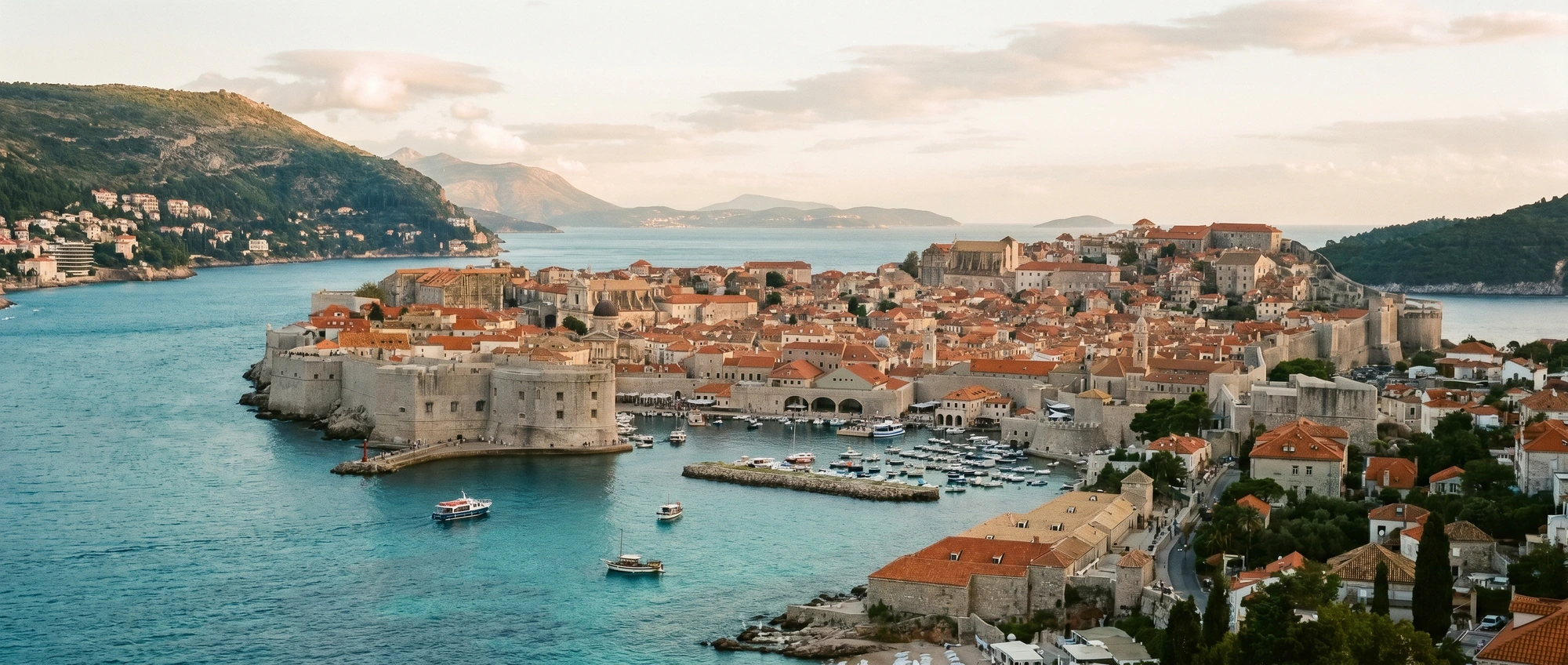
Croatia is essentially one long, island-fringed coastline with a couple of cities attached, and the smartest thing you can do on a first trip is pick your stretch of it rather than try to drive the whole 500 kilometres in a week. Dubrovnik is the walled-city showpiece — and the most expensive, most cruise-crowded base. Split is the bigger, livelier, better-value Dalmatian hub and the natural launchpad for the islands. Istria up north is the quiet, Italianate, food-led corner, and Zagreb is a proper European capital most beach-goers skip entirely. Below we set out, for a UK traveller spending their own money in 2026, what each part suits, what it costs in euros, and the entry rules straight from GOV.UK.
The short version
- Pick one stretch of coast and add islands — don't try to drive Pula to Dubrovnik in a week.
- Base in Split for the best value and the most island ferries; treat Dubrovnik as a short, scenic finale.
- It's a ferry trip, not a road trip: Jadrolinija and Krilo catamarans are the real coastal network.
- Croatia uses the euro now (since 2023) — ignore any guide still quoting prices in kuna.
- Always pay in euros, never pounds, at card machines and ATMs to dodge the ~5% DCC markup.
Entry requirements for UK travellers
In short
Do UK citizens need a visa for Croatia?
No. British citizens can visit Croatia visa-free for up to 90 days in any 180-day period for tourism, family visits or business (GOV.UK). Croatia is in the Schengen area, so the same 90/180 rule applies as for the rest of it. Your passport must be issued less than 10 years before you arrive and valid for at least 3 months after you leave Schengen. Rules can change — confirm on GOV.UK before you travel.
There’s very little paperwork for a Croatian holiday: no visa, and a passport that clears two Schengen checks. The one that catches UK travellers out is the issue date — your passport has to have been issued less than 10 years before you arrive, which an older “10-year-plus” passport can fail even when its expiry date still looks fine. Croatian border officers can also ask to see proof of accommodation, a return or onward ticket, travel insurance and enough money for your stay, so keep a booking confirmation handy. You must declare cash or travellers cheques of €10,000 or more (GOV.UK).
Key points before you book
- No visa for stays up to 90 days in any 180-day period (GOV.UK).
- Passport: issued under 10 years before arrival and valid 3+ months after you leave Schengen (GOV.UK).
- Carry a free UK GHIC for state healthcare plus travel insurance — there's always a charge, up to €530, and the GHIC won't repatriate you (GOV.UK).
- Border officers can ask for proof of accommodation, onward travel, insurance and funds (GOV.UK).
- Declare cash or travellers cheques of €10,000 or more (GOV.UK).
- Carry photo ID; fines apply for public drinking, going shirtless in town and climbing monuments (GOV.UK).
- Emergency number across Croatia is 112 (GOV.UK).
Passport validity
Your passport must have been issued less than 10 years before the day you arrive, and be valid for at least 3 months after the day you plan to leave the Schengen area. Check the issue date, not just the expiry — an old passport with more than 10 years between the two dates can fail even if it still looks 'in date' (GOV.UK).
Visas
No visa for a holiday. You can travel visa-free to the Schengen area, including Croatia, for up to 90 days in any 180-day period for tourism, visiting family, business meetings or short courses. Working or staying longer than 90/180 needs separate permission (GOV.UK).
Health
A free UK GHIC (or valid EHIC) covers state-provided healthcare in Croatia on the same basis as a local, but GOV.UK is explicit that there is always a charge for treatment, which can be up to €530, and the card is not a substitute for travel insurance: it won't cover medical repatriation to the UK, treatment in a private clinic, non-urgent care, or changes to your travel and accommodation. Carry both. No vaccinations are required; check TravelHealthPro for recommendations.
Safety & security
Croatia is one of Europe's safer holiday countries: GOV.UK notes crime levels are low and violent crime is rare. There is a high threat of terrorist attack globally and GOV.UK warns that attacks cannot be ruled out, but Croatia has no recent history of them. The everyday risks are mundane — petty theft in the most crowded tourist spots, jellyfish and sharp rocks underfoot if you swim without water shoes, and reckless behaviour around water and boats. Forest fires can break out along the coast in a hot, dry summer. Rules can change — confirm on GOV.UK before you travel.
Local laws & customs
You must carry your passport or ID at all times. Cannabis possession is decriminalised but still draws heavy fines. There are on-the-spot fines for drinking alcohol in public, walking around shirtless in town, sleeping rough and climbing on monuments — Dubrovnik and Split enforce these in the old towns. The drink-drive limit is 0.05% (and zero for drivers under 24), and there is zero tolerance for drunk boating (GOV.UK).
GOV.UK is the official source for Croatia entry rules — always check it before you book.
Read GOV.UK adviceGOV.UK updated 20 May 2026 · Departly checked 8 Jun 2026
EU entry rules for Croatia
Checked 6 Jun 2026The EU's biometric Entry/Exit System (EES) began a progressive rollout on 12 October 2025 and became fully operational on 10 April 2026: on your first trip since then you give fingerprints and a facial scan at the border (a one-off, valid 3 years), and the 90-days-in-180 limit is now counted automatically. Some countries may still ease or pause checks at busy crossings during the rollout-flexibility window, so queues vary. ETIAS — a separate €20 travel authorisation (free for under-18s and over-70s, valid 3 years) — is expected in late 2026 and is not required yet. Always confirm on GOV.UK before you book.
- 90/180 rule
- Visa-free stays of up to 90 days in any 180-day period across the Schengen area. Days spent in other Schengen countries count towards the total.
- Passport
- Issued less than 10 years before the day you arrive, and valid for at least 3 months after you plan to leave the Schengen area. Check the issue date, not just the expiry.
- GHIC
- Carry a free UK GHIC for state healthcare on the same basis as a local — but it is not a substitute for travel insurance, which you still need.
- Roaming
- Post-Brexit, EU roaming is no longer guaranteed free; many UK networks charge around £2.25/day. Check your tariff or use a travel eSIM.
On health, carry a free UK GHIC (or valid EHIC): it gets you state healthcare in Croatia on the same terms as a local. But GOV.UK is blunt on two points — there is always a charge for treatment, which can be up to €530, and the card is not a substitute for travel insurance. It won’t fly you home, won’t cover a private clinic, and won’t pay for cancellation or lost bags. Carry both, and never pay a third-party website for a GHIC; it’s free from the NHS. Rules can change — confirm on GOV.UK before you travel.
Flights from the UK
In short
How long is the flight to Croatia from the UK?
About 2h30 from London to Dubrovnik, Split or Zagreb, and broadly 2h15–2h45 from most UK airports. The catch is seasonality: the coastal airports have lots of direct summer flights that thin out or go via a connection in winter, while Zagreb keeps year-round direct service. BA, easyJet, Ryanair, Jet2 and Croatia Airlines all fly the route.
The thing to understand about Croatia flights is how seasonal they are. Between May and September the coastal airports — Dubrovnik, Split, Pula and Zadar — bristle with direct routes from across the UK, and Jet2 added new ones for 2026 including Glasgow–Dubrovnik and East Midlands–Split. Come winter, many of those vanish or turn into a one-stop slog via a European hub, while Zagreb keeps its year-round direct service. So the booking lever that matters most is timing: a cheap, direct summer fare to the coast can become an expensive, awkward connection if you try the same trip in November.
Flights from the UK
Short-haulCroatia is a heavily seasonal route: the coastal airports (Dubrovnik, Split, Pula, Zadar) bristle with direct flights from across the UK between May and September, then thin right out in winter, when many run only via a connection. Zagreb keeps year-round direct service. British Airways, easyJet, Ryanair, Jet2 and Croatia Airlines all fly it, and Jet2 added new 2026 routes including Glasgow–Dubrovnik and East Midlands–Split.
Fly from
Main arrival airports
- DBV Dubrovnik
- SPU Split (Dalmatia)
- ZAG Zagreb (capital)
- PUY Pula (Istria)
- ZAD Zadar (north Dalmatia)
When to go
In short
When is the best time to visit Croatia?
Late May–June and September–early October: 22–28°C, a sea warm enough to swim in, and fewer crowds than the July–August peak. September is the sweet spot, with the Adriatic at its warmest after summer. Avoid Dubrovnik's old town at midday in high summer, and treat winter on the coast as a Zagreb city break rather than a beach trip.
When to go
Sweet spot: Late May to June and September to early October. You get 22–28°C, a sea that's warm enough to swim in (the Adriatic holds its heat into October), manageable crowds, and prices below the July–August peak. September is the connoisseur's month — the sea is at its warmest after a summer of sun, but the cruise-and-charter crush has eased.
Avoid Dubrovnik in the high-summer middle of the day, when cruise-ship crowds and 33°C+ heat turn the walls into a slow shuffle; walk them at opening or near closing instead. July and August are peak everything — hottest, busiest, dearest, and ferries to popular islands sell out. Winter on the coast is quiet and many island restaurants and some flights shut down entirely, so off-season trips are really city breaks to Zagreb rather than beach holidays.
Croatia’s shoulder seasons are unusually generous because the Adriatic holds its heat: September is arguably the best month of all, with the sea at its warmest after a long summer but the cruise-and-charter crush easing off. The season to be deliberate about is high summer. July and August are the hottest, busiest and dearest weeks, ferries to popular islands sell out, and Dubrovnik’s walls become a slow midday shuffle when the cruise ships are in — walk them at opening or near closing instead. Winter flips the logic entirely: the coast goes quiet, many island restaurants and some flights shut down, and a trip then is really a city break to Zagreb.
What it costs
In short
How much does a week in Croatia cost from the UK?
Roughly £850–£950 per person on a budget and around £1,500 mid-range for a week. Croatia is no longer the bargain it was before the 2023 euro switch — coastal prices have risen 20–50% in places and Dubrovnik charges Western-European money. UK return flights run ~£40–£150 off-peak. On the ground, budget £50–£70 a day, mid-range £95–£140.
What it costs
UK return flights to the Croatian coast run from about £40–£90 off-peak on a budget carrier booked well ahead, £150–£300 in July and August or at short notice, and more on Croatia Airlines or BA at busy times. The seasonality is sharper than for Spain: a direct summer fare to Dubrovnik can become an expensive one-stop slog in November. Zagreb is the cheapest year-round bet for a city break.
Daily budget per person
| Konoba main course (grilled fish, peka, pasta) | €10–€20 / £9–£17 |
|---|---|
| Coffee in a café | €1.50–€2.50 / £1.30–£2.15 |
| Local draught beer (0.5l) | €2.50–€4 / £2.15–£3.45 |
| Tourist tax (per adult, per night) | ~€1 / £0.86 |
| Dubrovnik airport shuttle bus, one way | €10 / £8.60 |
| Split–Dubrovnik catamaran (seasonal, from) | €25 / £21.50 |
| Dubrovnik city walls ticket (adult) | €35 / £30 |
Croatia is no longer the bargain it was before the euro: prices have climbed 20–50% in places since the 2023 switch, and Dubrovnik's old town in particular charges Western-European money. The single biggest day-to-day saver is eating in a konoba (a family tavern), often a street or two back from the harbour, where a grilled-fish or peka lunch costs a fraction of a seafront restaurant with a view.
The honest headline is that Croatia has got noticeably dearer. Prices have climbed 20–50% in places since the euro replaced the kuna in 2023, and Dubrovnik’s old town in particular now charges full Western-European money for a harbourside meal and a view. The single biggest day-to-day saving is to eat in a konoba — a family tavern, usually a street or two back from the harbour — where a grilled-fish or peka lunch costs a fraction of the seafront equivalent. The figures above are mid-2026, converted at €1 = £0.86.
A realistic first itinerary
Croatia's coast looks compact on a map and isn't: Pula in the north and Dubrovnik in the south are about 500km apart by winding coastal road, so the classic first-trip mistake is trying to drive the lot in a week. The honest move is to pick one stretch and add islands. The best-value plan for a first trip is to base in Split, day-trip or overnight to a couple of islands by catamaran, and bolt Dubrovnik on either as a finale or a separate trip — and book an open-jaw flight (into Split, home from Dubrovnik) so you never backtrack. This is a ferry trip, not a road trip.- 1Days 1–3
Split
Wander the lived-in Roman core of Diocletian's Palace, climb the bell tower, swim at Bačvice, and use Split as your ferry hub. Stay just outside the palace walls — inside is atmospheric but noisy until 3am.
- 2Day 4
Catamaran to Hvar or Brač
A fast catamaran reaches the nearer islands in under an hour. Hvar town for the buzz, or quieter Brač (Bol's Zlatni Rat beach) if you want sand-spit-and-pine over a party.
- 3Days 4–6
Island time
Overnight on the island rather than day-tripping: the last afternoon catamaran takes the crowds with it and you get the harbour back. Hire a small boat or kayak for a morning.
- 4Day 7
Catamaran or bus to Dubrovnik
Move south to the walled city — by sea in summer, or by bus across the Pelješac Bridge, which now keeps you on Croatian soil the whole way.
- 5Days 7–10
Dubrovnik
Walk the city walls early (before the cruise crowds and the heat), ride the cable car up Srđ for the view, and escape to Lokrum island or Cavtat for an afternoon away from the crush.
The honest cut for a shorter trip is to drop one end: base in Split, take in a couple of islands, and either add Dubrovnik as a two-night finale or save it for a separate visit. The thing to resist is the “whole coast in a week” drive — on this geography, that’s hours behind the wheel, not a holiday. Let the ferries do the moving.
Where to base yourself
In short
Where should I stay in Croatia for a first trip?
Split for the best all-round base — a real city, the cheapest island ferries, and good food a street back from the harbour. Add Dubrovnik for a short scenic finale, the Dalmatian islands (Hvar, Brač, Vis) for beach and boat days, Istria for a food-led trip, and Zagreb for a winter city break. Match the base to the season and the holiday you actually want.
Split & central Dalmatia
The best all-round base: a real working city with a Roman palace at its heart, the cheapest and most frequent island ferries, and good food a street back from the harbour. Stay just outside the palace walls rather than inside them — the interior is magical but you'll hear every late-night reveller. Day-trips to Trogir, Krka waterfalls and a dozen islands.
Good for: First-timers who want city, beaches and island-hopping in one base
Dubrovnik
The walled-city showpiece — and the priciest, most crowded corner of Croatia, especially when cruise ships are in. Walk the walls at opening or near closing, not midday, and sleep up in the Ploče or Lapad areas rather than paying old-town prices for a room you can barely fit a suitcase into. Worth a couple of nights, not a whole week.
Good for: A short, scenic finale to a coastal trip
Hvar, Brač & the Dalmatian islands
The reason most people come: turquoise water, pine-backed coves and harbour towns. Hvar town is the glossy, lively one; Brač, Vis and Korčula are progressively quieter and more local. Overnight rather than day-trip — the islands empty out beautifully once the last catamaran has gone.
Good for: Beach and boat days, and slowing right down
Istria (Rovinj, Pula, Poreč)
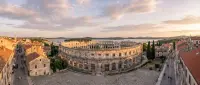
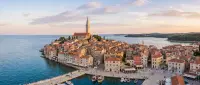
The Italianate north — truffles, olive oil, Roman ruins (Pula's amphitheatre) and pretty Venetian harbours, a short hop from Venice and Trieste. The sea is cooler and the beaches rockier than Dalmatia, but the food and the lower crowds win a lot of repeat visitors. Drive or bus rather than rely on ferries here.
Good for: Food-led trips and travellers who've already done the Dalmatian classics
Zagreb
A proper Central-European capital most beach trips skip entirely — café culture, Austro-Hungarian streets, good museums and far cheaper than the coast. It keeps year-round direct flights from the UK, so it's the natural choice for a winter city break or a stop on the way inland to the Plitvice Lakes.
Good for: City breaks, winter trips and Plitvice Lakes
These are country-level bases — the street-by-street detail (which side of Diocletian’s Palace, which Dubrovnik suburb) belongs on the individual city guides. The pattern to follow: in Split, sleep just outside the palace walls rather than inside the all-night noise; in Dubrovnik, sleep up the hill in Ploče or Lapad and walk down rather than paying old-town prices; and on the islands, overnight rather than day-trip, because the last afternoon catamaran takes the crowds with it.
Getting around
In short
What's the best way to get around Croatia?
Ferries and buses, not trains — the railways barely serve the Dalmatian coast and there's no useful train between Split and Dubrovnik. Jadrolinija and Krilo catamarans link the cities to the islands; buses (Arriva, FlixBus) are cheap and frequent, and since the Pelješac Bridge opened they no longer cross into Bosnia on the way to Dubrovnik. Hire a car only for Istria or the national parks. Drive on the right.
Getting around Croatia
Forget trains for the coast — Croatia's railways serve the inland cities reasonably but barely touch the Dalmatian coast, and there's no useful train between Split and Dubrovnik. The two things that actually move you are ferries and buses. Jadrolinija and Krilo run the ferry and catamaran network out of Split, Dubrovnik and Zadar to every inhabited island; the seasonal Split–Dubrovnik catamaran (roughly 4h30–6h, from about €25) is a scenic alternative to the bus. Buses are cheap, frequent and reliable between the cities — Arriva, FlixBus and Čazmatrans run the main routes — and crucially, since the Pelješac Bridge opened in 2022, buses to Dubrovnik no longer detour through Bosnia, so you no longer juggle three border checks on that leg. Hire a car only for Istria, the inland national parks (Plitvice, Krka) or a slow island road trip — not for the cities, where old-town driving and parking are a nightmare. Drive on the right.
- Ferries and catamarans (Jadrolinija, Krilo) are the real coastal network — book popular summer sailings ahead.
- Split–Dubrovnik by seasonal catamaran is ~4h30–6h from about €25; the bus is cheaper and runs year-round.
- Since the Pelješac Bridge opened, buses to Dubrovnik stay on Croatian soil — no more Bosnia border stops.
- Dubrovnik airport shuttle to the old town is €10 one way (€15 open return) and takes ~30–40 minutes.
- Zagreb airport shuttle to the centre is about €9 and takes ~35 minutes.
- Hire a car for Istria and the national parks; never for the walled cities.
One practical change worth knowing: the Pelješac Bridge, open since 2022, means buses to Dubrovnik now stay on Croatian soil the whole way. Before it, the coastal road dipped through a short strip of Bosnia at Neum, and once Croatia joined Schengen that would have meant three separate border checks on a single bus journey. The bridge removed all of that — a small thing that makes the Split–Dubrovnik bus a lot less of a faff than older guidebooks suggest.
Staying connected & covered
Most UK networks now bill around £2.25 a day to use your data in Croatia — roughly £15–£16 for a week, £32 for a fortnight — because post-Brexit EU roaming is no longer guaranteed free. Check your tariff first, and if the daily charge adds up, buy a Croatia eSIM that switches on the moment you land; it’s genuinely useful when you’re trying to check a ferry timetable from a quiet island. The other thing to sort is cover: your GHIC and travel insurance do different jobs, and you need both — especially if your trip involves boat trips, diving or sea kayaking.
Stay connected in Croatia
Post-Brexit, free EU roaming is no longer guaranteed — most UK networks now charge around £2.25/day to use your allowance in Croatia (about £15–16 for a week, £32 for a fortnight). A travel eSIM is usually cheaper and gives you data the moment you land, which matters when you're checking a ferry timetable from a quiet island.
- Check your UK tariff first — some Three, iD and Smarty plans still include EU roaming free.
- A typical 5–10GB Croatia eSIM costs about £6–£12, beating a week of daily roaming charges.
- Coverage on the Adriatic islands is good in towns and harbours but patchy in remote coves and on long sea crossings.
Travel insurance for Croatia
A free UK GHIC gets you state healthcare in Croatia, but GOV.UK warns there is always a charge for treatment — up to €530 — and the card won't fly you home, won't cover a private clinic, and won't pay for cancellation or lost baggage. GOV.UK and the NHS both say to carry travel insurance on top.
- Single-trip European cover starts at roughly £3–£10 for a healthy younger traveller on a short trip.
- If your trip involves boat trips, diving, sea kayaking or cliff-jumping, check those activities are covered.
- Pair it with your GHIC — they cover different things, and you need both.
Money
Croatia in 2026 runs on the euro and is heavily contactless — cards, Apple Pay and Google Pay work almost everywhere in cities and resorts — but a cash habit persists for island konobas, markets, small ferries and tips, so carry €30–50 in small notes and coins. Withdraw from bank-branded ATMs and avoid the standalone Euronet machines that cluster around tourist spots, which push high fees. The one rule that saves UK travellers real money: when an ATM or card machine asks whether to charge in pounds or euros, always choose euros. Choosing pounds triggers Dynamic Currency Conversion — a hidden markup of up to ~5% — and your own UK card or a fee-free travel card always beats it. Tipping is modest: round up at bars, leave around 10% in cash for good restaurant service.Fee-free travel money
Skip the airport exchange desk — a fee-free travel card gives you the real exchange rate abroad.
Before you fly
The Croatia-specific moves that save money and hassle are booking popular summer catamarans and coastal flights early (both sell out in peak weeks) and ordering a free GHIC before you go. Pre-book UK airport parking too — it’s almost always cheaper booked ahead than on the day — and sort a Croatia eSIM so your data is live the moment you land.
Airport parking & lounges
Pre-book your UK airport parking or a lounge — it's almost always cheaper booked ahead than on the day.
How we know this
How we know this
- GOV.UK foreign travel advice — Croatia — entry, passport, visa, health, safety and local laws (print page)
- NHS — Global Health Insurance Card (GHIC) — the GHIC is free and is not a substitute for insurance
- Jadrolinija & Krilo ferries — Adriatic ferry and catamaran routes, schedules and fares
- European Central Bank — Croatia adopts the euro — Croatia joined the euro on 1 January 2023
GOV.UK last updated 20 May 2026.