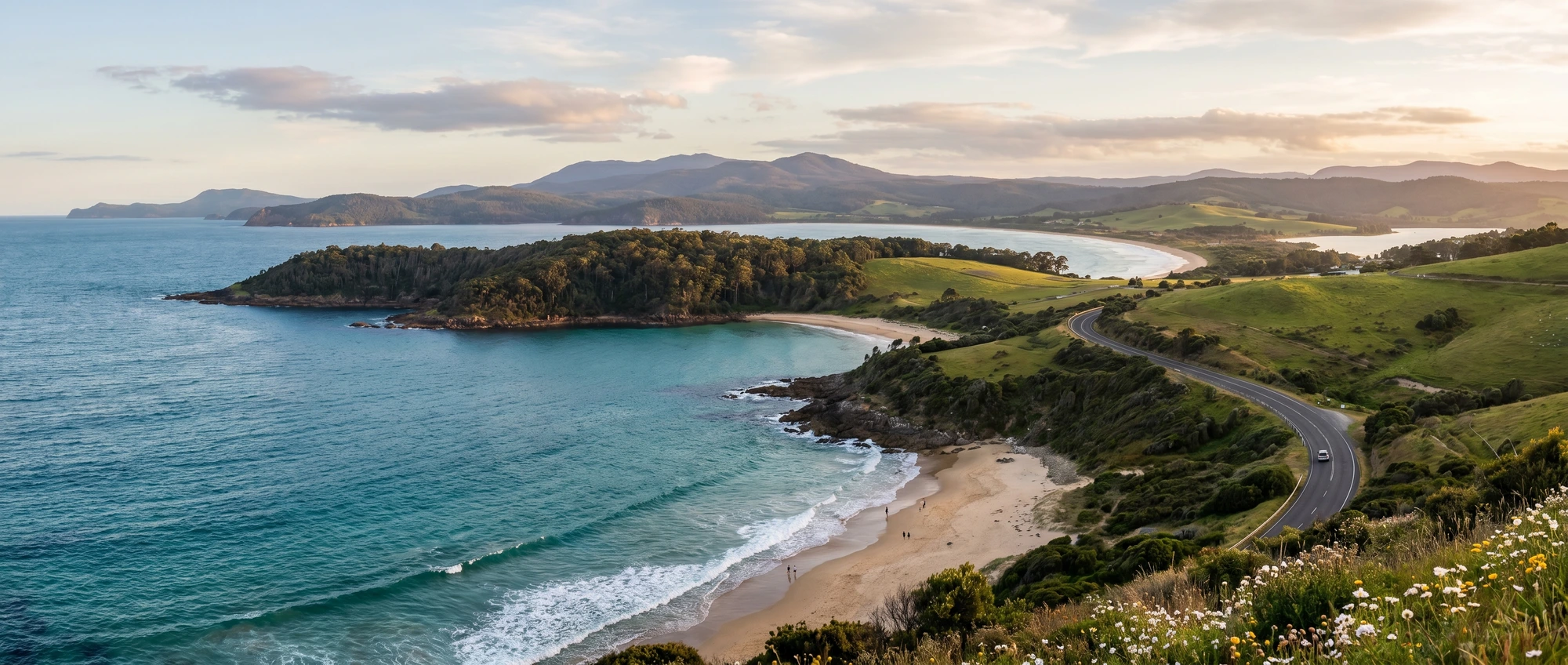
Australia (island state)
Tasmania
The Australia add-on Brits cut too short: how long Tasmania really needs, why you must hire a car, and the MONA-and-wilderness loop out of Hobart that fits a week.
In short
Tasmania at a glance
Tasmania is the Australia leg that rewards slowing down. It's an island the size of Ireland but with under 600,000 people, so the appeal is wilderness, food and MONA rather than big cities — and you reach almost none of it by public transport, so a hire car is effectively compulsory. The honest minimum is five days for a Hobart–Cradle Mountain–Freycinet loop; a week lets you breathe. Fly in (Hobart or Launceston are ~1h10 from Melbourne) unless you're bringing a campervan, in which case the Spirit of Tasmania ferry from Geelong is the move. Book the Cradle Mountain shuttle and any MONA or Port Arthur tickets ahead in summer, and pack for four seasons in a day — the weather here turns faster than anywhere else in Australia.
Most UK visitors meet Tasmania as a two-night afterthought tacked onto a Melbourne stop, and that’s the mistake. It’s an island the size of Ireland with the population of a mid-sized English town, and the draw is exactly what that implies — empty wilderness, serious food, and MONA, the underground art museum that single-handedly rebooted Hobart’s reputation. None of it rewards rushing, and almost none of it is reachable without a car, because Tasmania has no passenger trains and only the thinnest of intercity buses. The honest unit is days, not hours: five to loop the headline parks, seven to enjoy them.
The thing first-timers underestimate is the weather and the driving, in that order. Cradle Mountain can hand you sun, sleet and a whiteout inside an afternoon — alpine areas here get snow in any month — so the layers and waterproofs you’d skip in mainland summer are non-negotiable. And the roads are slow: sealed but narrow and winding, so Hobart to Cradle Mountain is four and a half hours for 350 kilometres, and wallabies and wombats make rural roads after dark a genuine hazard. Plan around those two facts and Tasmania becomes the most rewarding leg of an Australian trip rather than the one you wish you’d given longer.
The route
A relaxed five-to-seven-day loop from Hobart that pairs the city's food-and-MONA scene with the two headline wilderness areas — Cradle Mountain in the west and Freycinet on the east coast — without backtracking. Drive times are sealed-road estimates; Tasmania's roads are slow and winding, so add buffer rather than chasing the map distance.
-
Days 1–2
Hobart & MONA
Base in Hobart for the Saturday Salamanca Market, the waterfront and Mount Wellington (kunanyi) for the view over the Derwent. Take the dedicated MONA ferry up the river rather than driving — the museum is the cultural reason most people come, and it needs a half-day. Pick up the hire car as you leave.
-
Day 3
Port Arthur day or push west
Either day-trip the Port Arthur Historic Site (~1h30 each way on the Tasman Peninsula, a sobering UNESCO convict settlement that needs 3–4 hours) or start the loop early and drive to Cradle Mountain (~4h30 from Hobart). Don't try to do both in a day.
-
Days 4–5
Cradle Mountain
The flagship wilderness. Park at the visitor centre and take the compulsory shuttle bus into the park to Dove Lake — the 6km Dove Lake Circuit is the classic walk, the Overland Track its multi-day cousin. Two nights lets you wait out the weather, which changes by the hour up here.
-
Days 6–7
Freycinet & the east coast
Cross to the east coast (~4h drive) for Freycinet National Park: the Wineglass Bay lookout walk (~1h30 return, steep) and the Bay of Fires further north. Warmer, drier and gentler than the west — a soft landing before flying home from Hobart or Launceston.
Where to base yourself
Pick one or two bases rather than moving every night.
Hobart
££ mid-rangeThe obvious first and last base: the Salamanca and waterfront district puts you near the markets, restaurants and the MONA ferry pier. Battery Point's old cottages are characterful; the CBD is more functional but cheaper. Most loops start and end here.
Best for: MONA, food, markets, fly-in/fly-out
Cradle Mountain
£££ premiumLodges and cabins cluster just outside the park boundary near the visitor centre — there's no town, so book ahead and expect to pay a premium for the location. Staying inside the gate means you can hit the trails before the day shuttles fill.
Best for: Hiking, the Overland Track, alpine scenery
Coles Bay (Freycinet)
££ mid-rangeThe small settlement just outside Freycinet National Park, walking distance to the Wineglass Bay trailhead. Limited beds for the demand, so summer fills fast; quieter and warmer than the west coast.
Best for: Beaches, Wineglass Bay, the gentler east
Getting around Tasmania
You drive Tasmania — there's no rail network for passengers and intercity buses are sparse and slow, so a hire car (or campervan) is effectively essential to see anything beyond Hobart. Roads are sealed but narrow and winding, so journeys take longer than the distance suggests: Hobart to Cradle Mountain is around 4h30 for 350km, and Hobart to Launceston about 2h15 up the Midland Highway. Drive on the left as in the UK, and your UK photocard licence is valid as a visitor. The two things to respect are wildlife — wallabies, wombats and the occasional Tasmanian devil cross at dawn and dusk, so avoid driving after dark on rural roads — and fuel, which is pricier and stations are far apart on the west coast, so top up before long stretches. In Hobart itself, the MONA ferry is the one bit of transport you'll actually use, running up the Derwent from the waterfront to the museum.
Book the essentials
Where to stay
Tours & tickets
Airport transfers
Car hire
Stay connected
Tasmania FAQs
How many days do you need in Tasmania?
Do you need a car in Tasmania?
Is it better to fly to Tasmania or take the ferry?
Ready to book?
Compare car hire