Western Austria, Austrian Alps
Tyrol
Tyrol for UK travellers, decoded: a summer-hiking and winter-ski heartland around Innsbruck — St Anton, Mayrhofen, Sölden and the year-round Hintertux glacier — with real drive and train times, fares in pounds, and a clear verdict on the airport and whether you need a car.
In short
Tyrol at a glance
Tyrol is the mountain heart of western Austria, a long alpine corridor that follows the river Inn west from the Kitzbühel Alps to the Arlberg. Innsbruck sits at its centre — the one city in the Alps where a cable car climbs from the old town to a 2,256m ridge in twenty minutes — and the famous resorts fan out up the side valleys from there: St Anton on the Arlberg for serious skiers, Mayrhofen in the Zillertal, Sölden in the Ötztal, and the Hintertux glacier that holds snow and stays open every month of the year. This is the strongest two-season region in the country: a 7-night ski week from December to April, or summer hiking and via-ferrata from June to September. You can fly direct to Innsbruck (INN) for the ski charters or to Munich and take the train, and the ÖBB reaches the valley towns — but a hire car earns its keep once you want more than one resort.
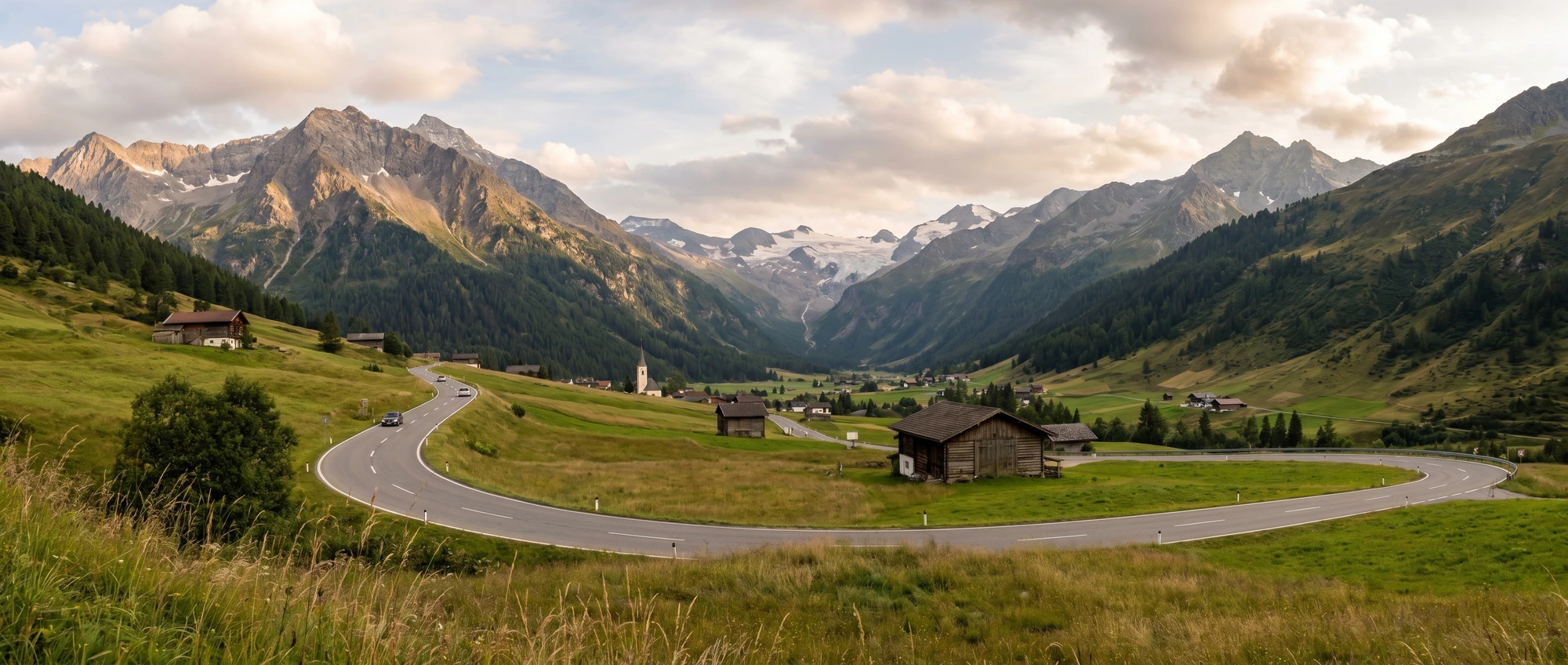
Tyrol is the bit of Austria that lives up to the brochure: a long alpine corridor that follows the river Inn west, with snow-snagged peaks crowding both sides and the resort names — St Anton, Mayrhofen, Sölden — stacked up the side valleys. What makes it unusual is Innsbruck. Most ski regions hide their mountains an hour from the nearest town; here a cable car climbs from the medieval old town to a 2,256m ridge in about twenty minutes, so you can stand under the Golden Roof at breakfast and look down on the rooftops from a clifftop trail by lunch. It is the strongest two-season region in the country — a serious ski week from December to April, or hiking, via-ferrata and glacier walks from June to September.
The choice that shapes the trip is the resort, not the town. St Anton on the Arlberg is for confident skiers and big après nights; Mayrhofen in the Zillertal is the all-rounder for mixed groups and families, with the Hintertux glacier 35 minutes up the road for snow in literally any month; Sölden in the Ötztal trades looks for altitude and snow-sure slopes. Base in Innsbruck if you want a city as well as the mountains and don’t mind a daily drive up a valley; base in the resort itself if you’ve come purely to ski. And on the car question — a single-resort week needs no car at all, since the ÖBB and the resort transfers do the work, but the moment you want to link two valleys or reach a high summer trailhead, hiring one at Innsbruck airport changes the trip.
The route
A relaxed week that uses Innsbruck as a base for the city-and-cable-car days, then heads up two contrasting valleys — the Zillertal and the Ötztal — without doubling back along the Inn. Drive times follow the A12 Inntal Autobahn and the valley roads, which are slower than the kilometres suggest. Much of this works by ÖBB train and post bus, but a hire car is what lets you reach the high trailheads and link more than one resort in a day.
-
Days 1–2
Innsbruck
Start in the compact old town under the Golden Roof, then ride the Nordkettenbahn — the funicular and two cable cars that climb from the city centre to the Hafelekar ridge at 2,256m in about 20 minutes (around €44 return) for the view straight down onto the rooftops. Add the Bergisel ski-jump tower and the Imperial Hofburg. Two nights is enough for the city before you head up a valley.
-
Day 3
Wattens and on to the Zillertal
Drive east and break the run at Wattens, 20 minutes from Innsbruck, for Swarovski Crystal Worlds — the region's headline paid attraction, around €23 a head — then carry on into the Zillertal to Mayrhofen, roughly an hour further. Settle in for two nights with the valley's gondolas and the Hintertux glacier road at the head of it.
-
Day 4
Mayrhofen and the Hintertux glacier
In winter, ski the Mayrhofen slopes or drive 35 minutes to the head of the valley for the Hintertux glacier, the only ground in Austria that skis 365 days a year. In summer, take the Ahornbahn or Penkenbahn gondola up for the high ridge trails, or walk in to the Schlegeis reservoir at the valley head — a deep turquoise dam at 1,800m.
-
Days 5–6
Sölden and the Ötztal
Cross back along the Inn and up the Ötztal to Sölden, about 2 hours from Mayrhofen, for the high, snow-sure slopes (the resort's Gaislachkogl gondola tops out near 3,058m, where the James Bond '007 Elements' cinematic installation sits). Out of ski season, the Ötztal is a hiking and rafting base, and the Timmelsjoch high alpine road over the Italian border (toll about €18 per car, open summer only) makes a spectacular day drive.
-
Day 7
Back to Innsbruck or on to St Anton
Loop back down the Ötztal and along the A12 to Innsbruck, about 1h15, for an evening flight — or, with more time and a snow trip in mind, carry on west to St Anton on the Arlberg, around 1h30 from Innsbruck, for the region's most serious skiing and liveliest après.
Where to base yourself
Pick one or two bases rather than moving every night.
Innsbruck
££ mid-rangeThe natural first base and the only real city in the Tyrol: a compact medieval old town under the Golden Roof, ringed by peaks, with the Nordkette cable car running straight from the centre to a 2,256m ridge. The airport is 15 minutes out, the ÖBB station puts the valley resorts within reach, and it has the region's best choice of restaurants and value rooms. The trade-off is that it sits between the ski and hiking seasons, so it can feel quiet in the shoulder months.
Best for: First-timers, a city-and-mountains base, easy logistics
St Anton am Arlberg
£££ premiumThe Tyrol's marquee ski resort and the access town for the vast Arlberg ski area shared with Lech and Zürs. Steep, snow-sure terrain and Austria's most famous après-ski, so it draws confident skiers and books out at New Year and February half-term. Pricey and ski-first — there is far less to do here in summer than in Innsbruck or the Zillertal — but unbeatable for a dedicated snow week. About 1h30 west of Innsbruck on the rail line and the A12.
Best for: Advanced skiers and a serious 7-night snow week
Mayrhofen (Zillertal)
££ mid-rangeThe all-rounder valley base: a lively year-round resort town at the head of the Zillertal with gondolas from the village, a wide spread of pistes for mixed-ability groups and families, and the Hintertux glacier 35 minutes up the road for snow in any month. Better value than St Anton and far more to do in summer, with the Penken and Ahorn gondolas opening straight onto the high trails. About an hour from Innsbruck by car or the Zillertalbahn.
Best for: Families, mixed-ability groups and two-season trips
Sölden (Ötztal)
££ mid-rangeA high, modern Ötztal resort built for snow-sure skiing, with two glacier ski areas and a gondola, the Gaislachkogl, that climbs near 3,058m. It is functional rather than pretty and best for skiers who want altitude and a lively bar scene; in summer it is a rafting, e-biking and high-hiking base with the Timmelsjoch alpine road on the doorstep. About 2 hours from Innsbruck up a single valley road, so a car helps most here.
Best for: Snow-sure skiing, altitude and summer adventure sports
Getting around Tyrol
Tyrol works as a two-mode region. The ÖBB rail spine runs west along the Inn valley linking Innsbruck with St Anton and the valley-mouth stations, and branch railways like the Zillertalbahn carry on up to Mayrhofen, so a car-free ski week in a single resort is entirely doable — many UK skiers take a resort transfer from Innsbruck or Munich and never drive. But a hire car earns its keep the moment you want to link more than one valley, reach a high summer trailhead, or drive the Timmelsjoch over the Italian border (a summer-only toll road, about €18 per car). Drive on the right, and note Austria's motorway vignette: the digital 10-day pass is about €12.40 and most hire cars from Innsbruck airport already include one, but check. The Innsbruck airport is 15 minutes from the old town by the F bus or a short taxi. As across Austria, validate every public-transport ticket before you ride or risk a €100–€500 on-the-spot fine.
Book the essentials
Where to stay
Tours & tickets
Airport transfers
Car hire
Stay connected
Tyrol FAQs
Which airport should I fly into for Tyrol?
Do you need a car in Tyrol?
When is the best time to visit Tyrol?
How much does a Tyrol ski week cost from the UK?
Ready to book?
Compare car hire