Upper Egypt
Abu Simbel
How to visit the Abu Simbel rock temples from Aswan: fly or take the desert road, what the ticket costs in pounds, the pre-dawn timing trap, and whether the four-hour drive is worth it.
Where
Aswan, Egypt
Opening hours
Daily, roughly 06:00 to 17:00, with last entry around 16:00 (shorter in Ramadan, opening nearer 07:00 with last entry around 15:00). The early opening exists for day-trippers from Aswan — confirm your date on egymonuments.com, because hours flex with the season.
Tickets
Around EGP 750 (about £12) for foreign adults, EGP 375 (about £6) for students with a valid card; under-6s free. Most major Egyptian sites are now card-only, so bring a contactless Visa or Mastercard rather than cash. Sun Festival days carry a surcharge and must be booked ahead.
Time needed
1.5–2 hours on site is plenty to see both temples properly. The real time cost is the journey: budget a full day from Aswan — 7–9 hours of driving plus stops, or a half-day if you fly.
In short
Visiting Abu Simbel
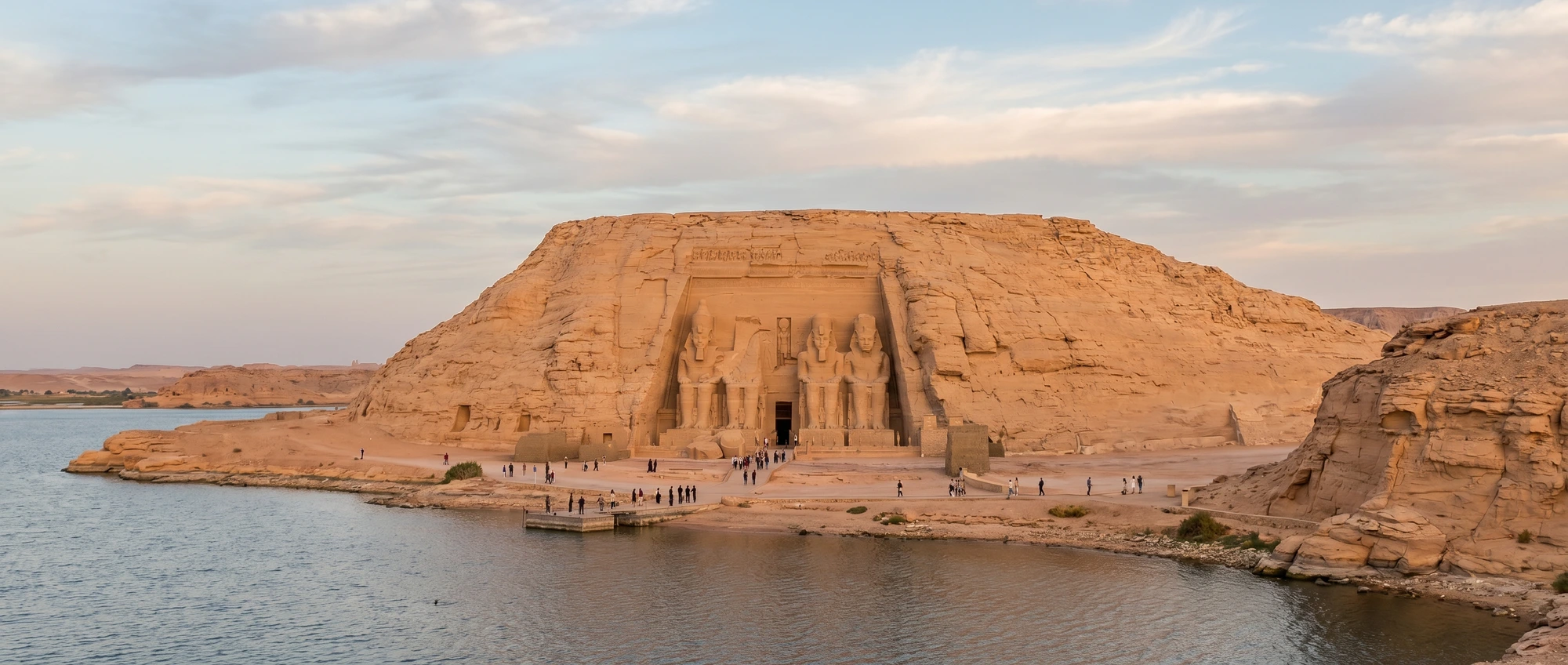
Abu Simbel is two relocated rock temples 280km south of Aswan, near the Sudan border — the colossal four-statue facade of Ramses II and the smaller temple to Nefertari. You reach it by a roughly 3.5–4 hour desert drive each way (most groups leave Aswan around 04:00) or a short EgyptAir hop that runs only on some days. Buy the entry separately from any tour transfer, expect to pay around EGP 750 (about £12) by card not cash, and budget 1.5–2 hours on site. The single thing to get right: go early to beat the heat and the tour-bus wave, and don't confuse the famous Sun Festival (22 February and 22 October) with a normal visit — those two mornings are spectacular but rammed.
Getting there is the whole decision
Abu Simbel isn’t a sight you stumble onto — it sits 280km south of Aswan, close to the Sudan border, so the planning question isn’t “which ticket” but “how do I get there”. Two answers work. The desert road is roughly 3.5–4 hours each way; most tours leave Aswan around 04:00 so you arrive for the early light and before the day heats up. The compulsory police convoy was scrapped years ago, but operators still cluster departures and you’ll roll through checkpoints, so a 4am minibus with a group is the normal way to do it. The alternative is the short EgyptAir flight (about 45 minutes), which only runs on certain days and costs far more — buy it if the pre-dawn start or eight hours of driving is a deal-breaker, and note the airline shuttles you between Abu Simbel airport and the temples.
Buy the entry ticket separately at the gate — around EGP 750 (about £12) for a foreign adult, roughly half that for students, under-6s free. A “tour” price usually covers your driver and not the temple, so don’t assume it’s included. Egypt has moved its major sites to card payment, so carry a contactless Visa or Mastercard rather than counting on cash at a remote gate.
Is the long day from Aswan worth it?
Go early. The gate opens around 06:00 precisely because day-trippers from Aswan need it to, and the difference between 7am and 11am is the difference between cool quiet and a sun-baked car park full of tour coaches. Allow 1.5–2 hours on site to see both temples without rushing: the Great Temple with its four 20-metre seated colossi of Ramses II, and the smaller Nefertari temple, one of very few in Egypt where the queen is carved the same height as the pharaoh.
One thing worth knowing: the whole complex was sawn into more than a thousand blocks and lifted 60-odd metres up the cliff in the 1960s to escape the rising Lake Nasser behind the Aswan High Dam — a UNESCO rescue that’s part of why it feels so improbably clean and complete. That same move nudged the Sun Festival a day later: it now falls on 22 February and 22 October (older guides still quoting the 21st are using the pre-relocation date). On those mornings the dawn light runs the length of the Great Temple and lights the inner statues for about 20 minutes — a real spectacle, but with surcharged tickets and serious crowds, so book ahead or sidestep those mornings if you’d rather have it calmer.
If you’re already in Aswan, do it — it’s the most impressive single thing in southern Egypt and the relocation story makes it more interesting, not less. But it’s a long day for under two hours on site, so don’t try to staple it onto a one-day Aswan stop or a packed cruise schedule. Pair it with a felucca afternoon back in Aswan rather than another temple the same day.
Planning the rest of your trip? See the Aswan city guide.
More to see in Aswan

Book the essentials
Tours & tickets
Abu Simbel FAQs
How do you get to Abu Simbel from Aswan?
How much does an Abu Simbel ticket cost?
Is Abu Simbel worth the trip from Aswan?
What is the Abu Simbel Sun Festival?
Ready to book?
Check tickets & tours