Upper Egypt / Nile Valley
Nile Valley
The Luxor-to-Aswan corridor that frames every Nile cruise: which length to book (3, 4 or 7 nights), why the direction barely matters, the temple stops at Edfu and Kom Ombo, and whether to cruise or base on land.
In short
Nile Valley at a glance
The Nile Valley is the 130-mile corridor between Luxor and Aswan, and for most UK travellers it means one thing: a Nile cruise. Almost every boat sails this Luxor–Aswan stretch, calling at the temples of Edfu and Kom Ombo on the way, because the river itself is the road — there's no comfortable land route between the temples. The two real decisions are length and style. Three nights covers the headline temples but feels rushed; four nights is the sweet spot, adding deck time and a less frantic pace; seven nights only makes sense on a dahabiya (a small sailing boat) that actually moves slowly. Direction barely matters — Luxor→Aswan and Aswan→Luxor see the same sites in reverse — but most flights from Cairo land you in Luxor first. The valley peaks October to April, when daytime highs sit around 22–30°C; come May to September and Luxor and Aswan regularly clear 40°C.
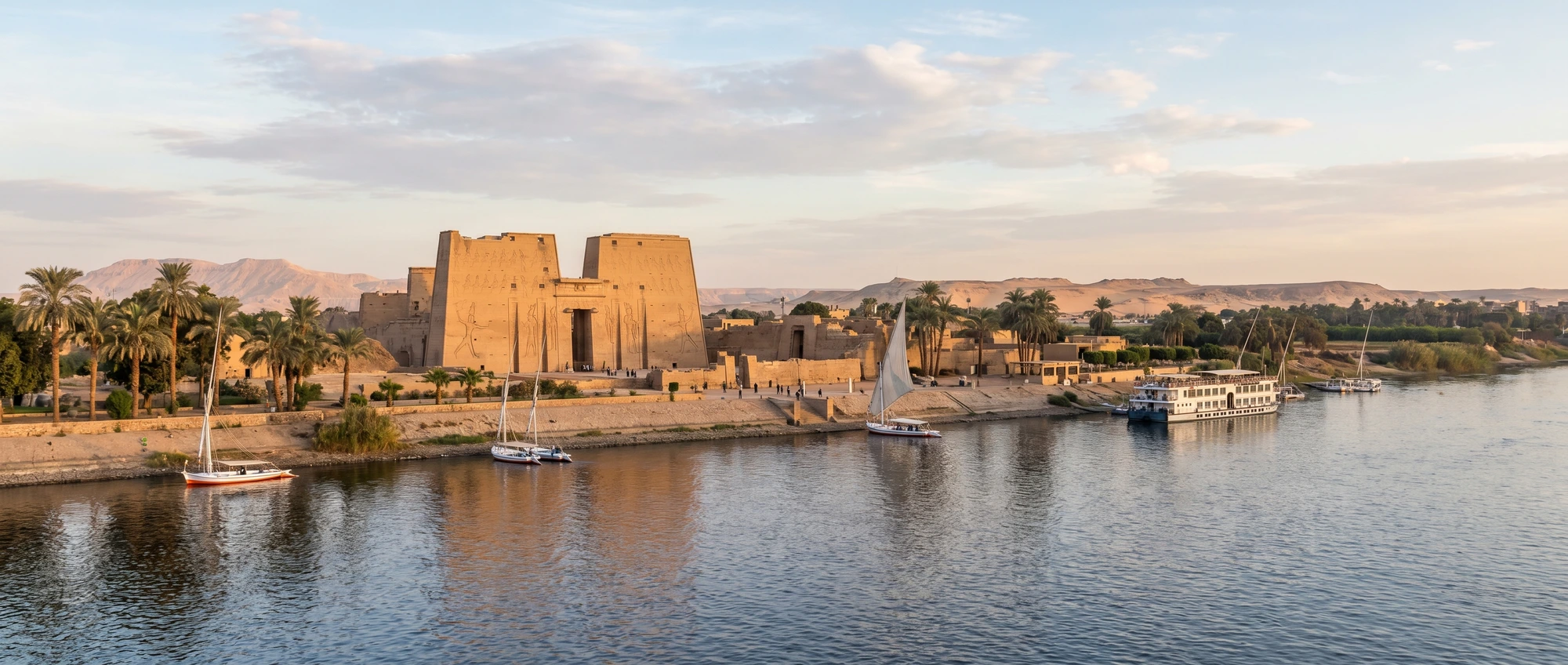
The Nile Valley, for most UK travellers, is shorthand for the 130-mile stretch of river between Luxor and Aswan — and that stretch is almost always seen from a boat. The reason is simple and practical: the temples of Edfu and Kom Ombo sit between the two cities with no comfortable, safe land route linking them, so the river does the work of the road. A cruise is your hotel and your transport at once, sliding you south overnight to wake up at the next set of columns. The big floating hotels carry a hundred-plus guests and sail only a couple of the days; a dahabiya carries a dozen under sail and actually moves slowly, which is the only way a six- or seven-night trip makes real sense.
The two decisions worth getting right are length and timing. Three nights covers the headline temples but rushes them; four nights is the sweet spot, adding deck time and a calmer pace on the same route. Direction is a non-issue — Luxor→Aswan and Aswan→Luxor see the same sites in reverse, so choose on the boat and the strength of its Egyptologist guide rather than the heading. As for when: come October to April, when Luxor and Aswan sit around 22–30°C and a full day of temple-walking is bearable. From May to September the valley regularly clears 40°C, and the same temples that thrill you in winter will flatten you by mid-morning.
Aswan is the gentlest stop and the launch point for the valley’s biggest add-on, Abu Simbel — a 3 to 3.5-hour drive each way (tours leave around 4am) for twin temples that rank just behind Karnak as the most jaw-dropping thing on the river. Wherever you base, the valley’s golden rule never changes: be at every gate when it opens, before the heat and the coaches arrive.
The route
A classic four-night cruise skeleton, written Luxor→Aswan (reverse it if your boat sails the other way — you'll see the same sites). The valley's golden rule applies throughout: be at every temple gate when it opens, before the heat and the coaches arrive. Add the Abu Simbel day trip from Aswan and a second Luxor day to stretch this to a fuller week.
-
Day 1
Luxor — board and the East Bank
Fly Cairo–Luxor (about an hour) and board your boat. Use the afternoon for Karnak and Luxor temples on the East Bank — Karnak's hall of 134 columns is the single most overwhelming thing in the valley. Karnak's sound-and-light show is the better-value of the two evening shows if you've energy left.
-
Day 2
Luxor West Bank, then sail to Edfu
Cross to the West Bank at opening for the Valley of the Kings — pay the extra for Tutankhamun's or Seti I's tomb, and carry a small torch for the dark interiors. Add Hatshepsut's terraces and the Colossi of Memnon, then the boat sails south for Edfu. This is the day that earns a good Egyptologist guide their fee.
-
Day 3
Edfu and Kom Ombo
Edfu's Temple of Horus is the best-preserved temple in Egypt — falcon-god carvings, an intact roof, reached by a short horse-and-cart ride from the dock (agree the price first). Sail on to Kom Ombo, the unusual double temple to Sobek the crocodile god and Horus the Elder; boats often arrive near sunset when the coaches have gone, and the small crocodile-mummy museum is worth the ten minutes.
-
Day 4
Aswan — Philae and the felucca
The gentlest stop: the Temple of Philae on its island (reached by motorboat), the High Dam, and an afternoon felucca sail around Elephantine Island as the light goes gold. Aswan is the calmest, least-touristy of the valley towns — a good place to slow down before flying back to Cairo or pressing on to Abu Simbel.
Where to base yourself
Pick one or two bases rather than moving every night.
On a cruise boat (Luxor–Aswan)
££ mid-rangeFor the valley itself, the boat is your hotel and your transport — you unpack once and wake at a new temple. Choose on recent reviews and the strength of the included Egyptologist guiding, not the brochure photos; standards vary wildly at similar prices, and the guide makes or breaks the trip.
Best for: Seeing the temples with the least faff
Dahabiya (small sailing boat)
£££ premiumA dahabiya carries 8–12 guests under sail rather than 100-plus on a floating hotel — quieter, slower, and able to moor at sandbanks the big boats can't. The only style where a 6–7 night trip genuinely makes sense, because it actually spends the days sailing. Costs noticeably more than a standard cruiser.
Best for: A slower, quieter, longer sail
Luxor (land base, East Bank)
££ mid-rangeIf you'd rather not sleep on a boat, base in Luxor and do the temples as day trips — you get more space, better food off the boat and a proper town to wander. The trade-off is you can't easily reach Edfu and Kom Ombo by land, so a pure land base means skipping the river temples.
Best for: Temple-lovers who dislike cruise boats
Aswan (land base, Nubian south)
££ mid-rangeThe relaxed southern alternative: a Nubian feel, the Old Cataract hotel's terrace, and the launch point for the Abu Simbel day trip. Quieter and a touch cooler-feeling by the wide river than Luxor, and the easiest place in the valley to simply do nothing for a day.
Best for: A calmer base and the Abu Simbel run
Getting around Nile Valley
The river is the road here, and that's the whole point: there is no comfortable, safe land route linking Luxor, Edfu, Kom Ombo and Aswan, which is exactly why almost everyone cruises the corridor rather than driving it. Get into the valley by air — the Cairo–Luxor or Cairo–Aswan hop is about an hour and cheap, far better than the long overnight train or a road transfer. Once you're on a cruise, transport is solved: the boat moves you between temples overnight and minibuses run the short hops from the dock to each site. Within Luxor and Aswan, short taxi rides are cheap but always agreed before you set off, and Aswan adds the felucca and motorboat for the island temples. The one big add-on, Abu Simbel, is a 3–3.5 hour drive each way from Aswan (tours leave around 4am in a security convoy) or a short flight — either way it's a long day, but the twin temples are the valley's most jaw-dropping sight after Karnak. As across Egypt, don't self-drive: a guide-and-driver or organised tour keeps the site touts at arm's length and gives you the context the stones can't.
Book the essentials
Where to stay
Tours & tickets
Airport transfers
Stay connected
Trains & rail passes
Nile Valley FAQs
How many nights should a Nile cruise be — 3, 4 or 7?
Does it matter whether the cruise sails Luxor to Aswan or Aswan to Luxor?
Can you do the Nile Valley without a cruise, from a land base?
What temples do you actually stop at between Luxor and Aswan?
When is the best time for a Nile cruise?
How much does a Nile cruise cost per person?
Ready to book?
Book experiences