Southern Transdanubia (Baranya County)
Cella Septichora and the Early Christian Necropolis
Pécs's UNESCO World Heritage draw: 4th-century painted burial chambers beneath the cathedral square, seen from glass walkways in a modern visitor centre — and when to pre-book.
Where
Pécs, Hungary
Opening hours
Generally open Tuesday to Sunday, daytime hours (often around 10:00 to 18:00, shorter in winter); usually closed on Mondays. Confirm current hours and prices on the official site.
Tickets
Around 2,400 Ft (roughly £5) for an adult, with concessions for students and families. Confirm current hours and prices on the official site.
Time needed
About 45 minutes to an hour to walk the glass routes over the main chambers and read the painted tombs; longer with a guide.
In short
Visiting Cella Septichora and the Early Christian Necropolis
Pécs's UNESCO World Heritage draw is its Early Christian Necropolis: 4th-century painted burial chambers preserved beneath the cathedral square. You view them from glass walkways inside a modern visitor centre built over the excavation, the largest of which is the seven-apsed Cella Septichora. It is a quiet, atmospheric site; pre-book in July and August, when school groups arrive.
Under the cathedral square
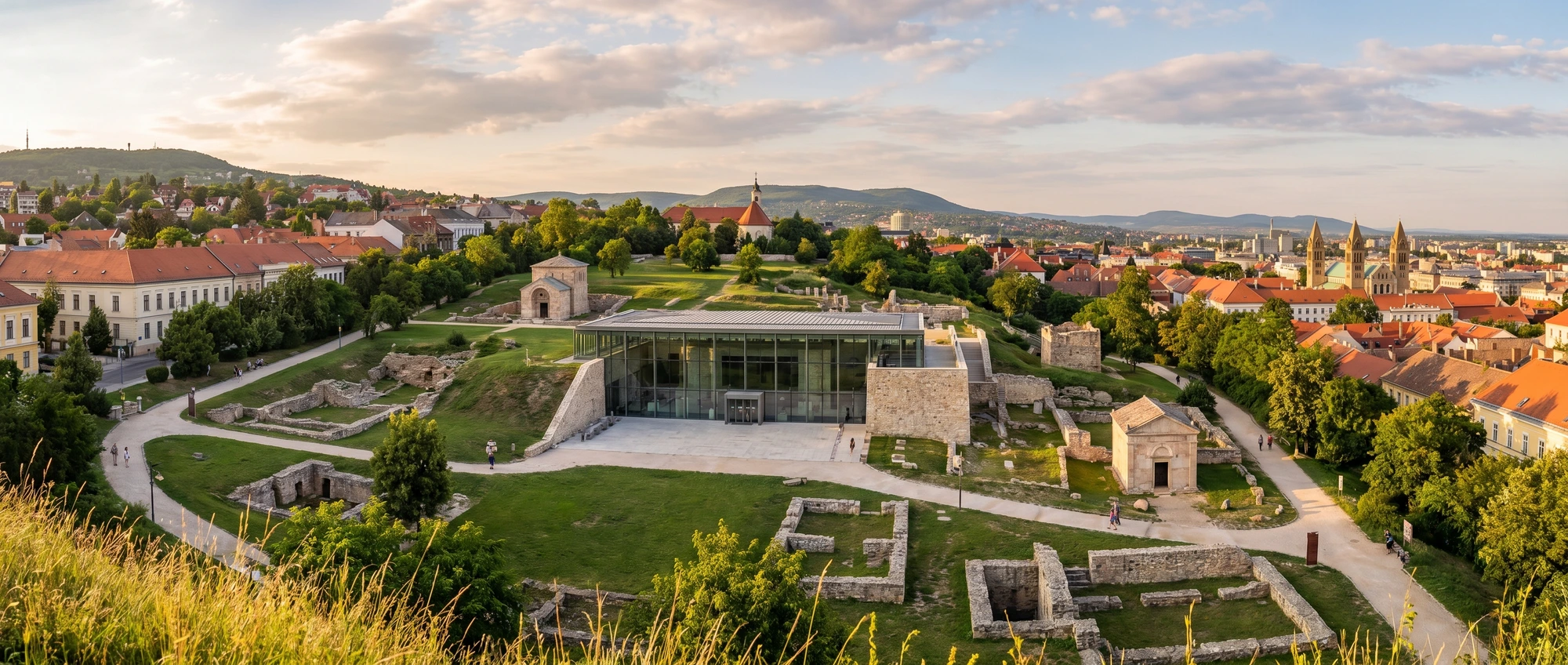
Pécs’s quiet headline act is buried, literally, beneath the cathedral square. The Early Christian Necropolis — the cemetery of Roman Sopianae — is a cluster of 4th-century burial chambers preserved exactly where they were found, now roofed and protected by a modern visitor centre. You walk above and around them on glass walkways, looking down into tombs that have sat here for some 1,700 years. The largest structure, with its seven apses, is the Cella Septichora that gives the site its name.
What lifts it above a row of old graves is the wall paintings. Several chambers keep their original decoration — biblical scenes, figures, garlands — still legible on the plaster. It earned its UNESCO World Heritage listing as one of the best-preserved sets of late-Roman painted burial chambers north of the Mediterranean, which is a genuine surprise to find under a provincial Hungarian square.
Practicalities and timing
Allow 45 minutes to an hour to walk the glass routes and take in the painted tombs; longer if you join a guide, which helps make sense of the layout. Adult entry is around 2,400 Ft (roughly £5); confirm the current price and hours on the official site, and note it is usually closed on Mondays.
The one timing tip worth heeding: pre-book in July and August. The site is normally calm and atmospheric, but in high summer it fills with school and tour groups, and the glass walkways only take so many people at once — turn up at the wrong moment and you’ll be shuffling. Out of season you can comfortably walk in. It sits a couple of minutes from the cathedral and the Pasha Qasim Mosque, so string the three together for an easy, rewarding half-day that shows off just how much history Pécs packs into a small centre.
Planning the rest of your trip? See the Pécs city guide.
More to see in Pécs
Book the essentials
Tours & tickets
Cella Septichora and the Early Christian Necropolis FAQs
What exactly do you see at Cella Septichora?
Why is it a UNESCO World Heritage Site?
Do you need to book ahead?
Ready to book?
Check tickets & tours