North Iceland
Akureyri
Fly the 45 minutes from Reykjavík rather than drive five hours, give North Iceland's fjord capital two or three nights, and reach Goðafoss, Mývatn and Húsavík whale-watching by car.
Best length
2-3 nights
Airport
Akureyri (AEY), 3km / ~5 min south of the centre
From Reykjavík
45-min domestic flight, or ~5-hour 250km Ring Road drive
Best base
Akureyri town centre — compact and walkable
In short
Akureyri at a glance
Akureyri is Iceland's second city and the only practical base for the north: a compact, walkable fjord town that puts Goðafoss, the Lake Mývatn volcanic fields and Húsavík whale-watching inside a day's reach. Get here by flying the 45-minute hop from Reykjavík rather than committing to the five-hour Ring Road drive, give it two to three nights, hire a car for the day trips, and treat the town itself as a calm evening base with the country's clearest aurora and a Forest Lagoon soak rather than as the headline event.
The short version
- Fly: the Reykjavík-Akureyri domestic hop is 45 minutes against a ~5-hour, 250km drive, and it frees a whole day for sights.
- Base here for the north's three big day trips: Goðafoss waterfall, Lake Mývatn's volcanic fields, and Húsavík whale-watching.
- Whale-watch from April to October, peak June-August, when humpbacks and puffins push sighting rates near 100%.
- The town is small and walkable with free buses, but you need a hire car or tours for everything beyond it.
- North Iceland's drier, less windy sky often gives clearer aurora than rainy Reykjavík from September to April.
- Two to three nights is the right length: a town-and-whale day, a Goðafoss-and-Mývatn loop, and a Forest Lagoon soak.
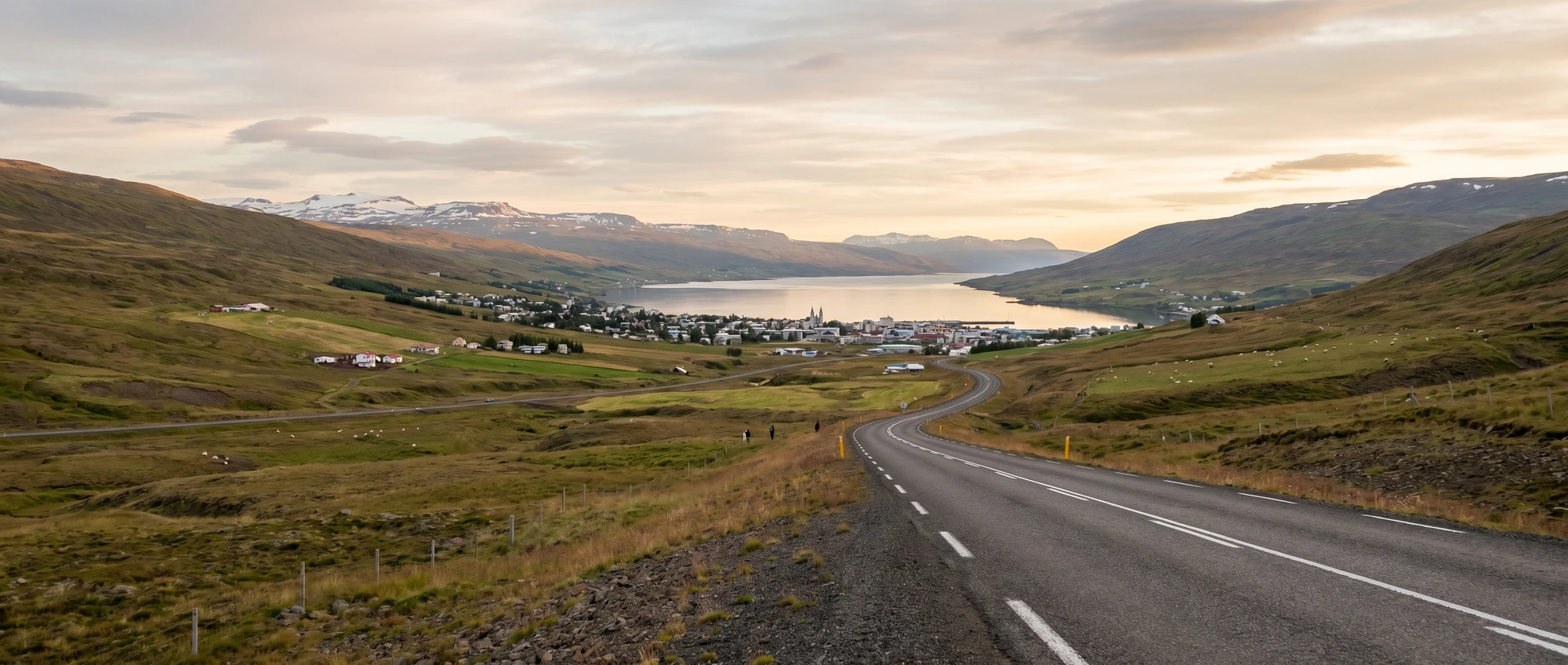
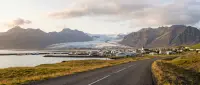
Akureyri is the only town in the north big enough to plan a trip around, and that is precisely its job: a compact fjord base, perched at the head of Eyjafjörður, that puts the region’s three set-piece outings — the Goðafoss waterfall, the volcanic theatre of Lake Mývatn, and humpback whale-watching out of Húsavík — inside comfortable day-trip range. The town itself is a half-day of stepped church, cafes and one of the world’s most northerly botanical gardens. The reason to come is what surrounds it.
The first planning call is how you arrive. The domestic flight from Reykjavík is 45 minutes; the Ring Road drive is closer to five hours over 250km. Unless reaching the north is part of a full island loop, fly — it buys back a whole day for sights. The second call is the calendar. Come June to August for near-endless daylight and whale-watching with sighting rates close to 100%, or September to April for the aurora, which Akureyri’s drier, less windy sky often shows more reliably than rainy Reykjavík, with skiing at Hlíðarfjall five minutes from town as a winter bonus.
Give it two to three nights, keep a hire car only for the day trips rather than the walkable centre, and end with a soak at the Forest Lagoon’s birch-wood infinity pools. Below, the structured planning — the airport transfer, where to stay, the day-trip costs in pounds and a realistic budget — picks up from here. The statutory entry, safety and health facts are inherited from the Iceland country guide, which carries the current GOV.UK review.
Plan your Akureyri trip
Keep a first trip focused: book the big timed sights, then leave room for neighbourhoods and food.
Top things to do in Akureyri
Goðafoss
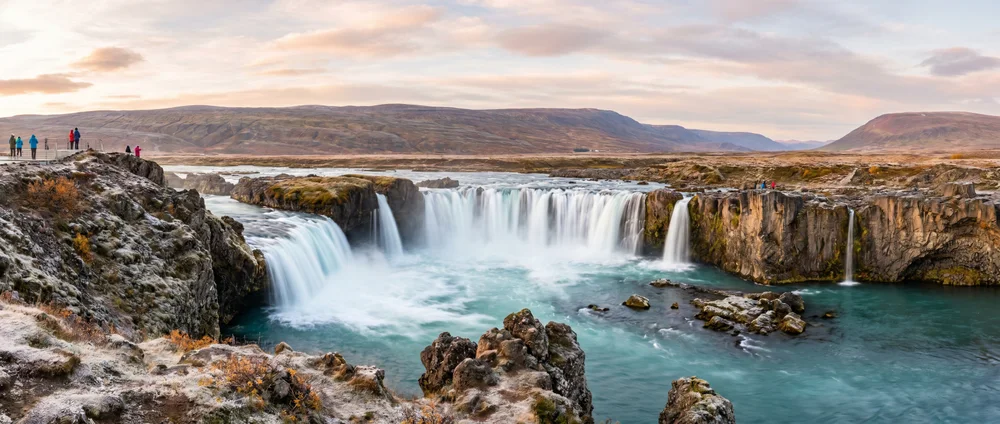
Goðafoss, the 'waterfall of the gods', is a wide horseshoe cascade sitting right off Route 1 about 35 minutes east of Akureyri. A two-minute walk from the car park reaches the lip; loop to the far bank for the classic postcard angle. It is free, quick and the easiest big sight to fold into a Mývatn day trip. Parking and facilities are at the roadside.
Lake Mývatn
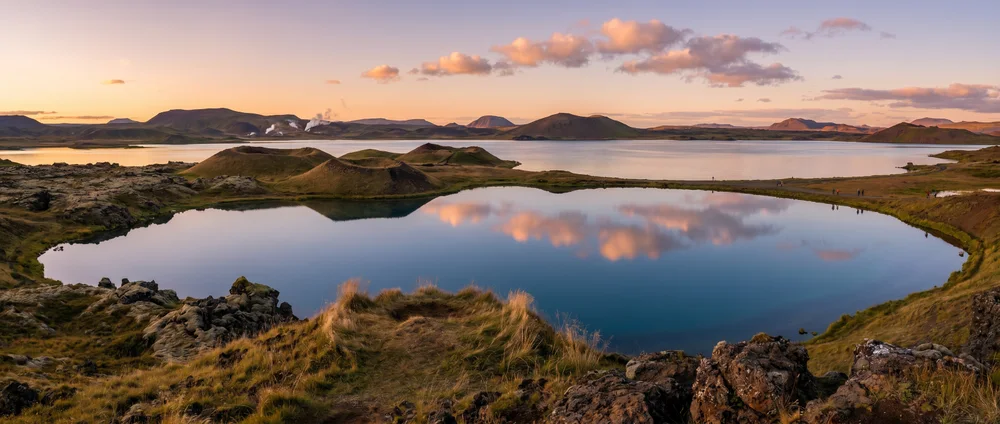
Lake Mývatn is a full day of volcanic oddities about an hour east of Akureyri: the Skútustaðir pseudo-craters, the black lava fortress of Dimmuborgir, and the steaming Námaskarð mud pots over the pass. End at the Mývatn Nature Baths for a quieter, cheaper geothermal soak than the Blue Lagoon. Most sights are free; the Nature Baths are ticketed, from about £40.
Where to stay first
The areas that make a first visit easier — not an exhaustive directory.
Town centre (around Hafnarstræti and the church)
££ mid-rangeThe default base: nearly everything is here or a short flat walk away, including the whale-watching harbour, the church, cafes and the airport bus. Compact enough that you can skip a car in town and only collect the hire vehicle for day trips.
Best for: First-timers, short stays, no-car evenings
Oddeyri and the harbour fringe
£ valueJust north of the core, a quieter residential grid within ten minutes' walk of the centre. Slightly better value for guesthouses and apartments, and handy if your day starts with a fjord whale-watching sailing.
Best for: Value, longer stays, families
Eyjafjörður valley (towards Forest Lagoon)
££ mid-rangeRural guesthouses and farm-stays strung along the fjord south of town. Worth it only if you have a car and want dark-sky aurora views or easy Forest Lagoon access, not for a town-centred trip.
Best for: Aurora hunters, car-based trips
Airport to city centre
| Option | Time | Cost | Book ahead? |
|---|---|---|---|
| Taxi from AEY to the centre | ~5-10 min | metered, roughly ISK 2,500-3,500 / £15-£21 | Usually waiting; can be phoned |
| Walk | ~30-40 min | free | Fine in good weather, light luggage |
| Airport bus (route 100) | ~15 min | low single fare | Runs only for international flights |
| Hire-car pickup at AEY | ~5 min to town | from about ISK 9,000 / £55 per day | Best if you're doing the day trips |
When to go
Sweet spot: Two almost opposite trips. June to August brings near-24-hour daylight, mild 10-15°C weather, peak-rate whale-watching with sightings close to 100%, and open roads to Mývatn and the Highlands beyond. September to April is aurora season: Akureyri's higher latitude, low light pollution and drier sky often beat rainy Reykjavík, and December to March adds skiing at Hlíðarfjall, five minutes from town. May and September are the value shoulders, with shorter queues and a real chance of the lights at the edges.
Whale-watching runs April to October only, so a deep-winter trip is an aurora-and-ski one rather than a boat one. In winter, build slack into the plan: North Iceland roads, including the Mývatn loop, can close on weather and the Dettifoss approach is often shut, so confirm conditions on vedur.is each morning. Summer's catch is that the north's beds and the best whale slots book out months ahead.
What it costs
There are no direct UK flights to Akureyri for most travellers, so the realistic route is a UK return to Keflavík (about £90-£150 off-peak, £180-£300 in summer) plus the domestic hop. Reykjavík-Akureyri returns run from roughly ISK 16,000-27,000 (£95-£165) on Icelandair, with 28 flights a week, and the cheapest fares go to whoever books early.
Daily budget per person
Akureyri is a touch cheaper than Reykjavík for beds and dinner but the gap is small — this is still Iceland, where a bar beer runs £7-£11. The town has Bónus and Nettó supermarkets for self-catering, and the tap water is glacier-fresh, so never buy bottled.
Book the essentials
Where to stay
Tours & tickets
Airport transfers
Car hire
Stay connected
Also in Iceland

Akureyri FAQs
Should you fly or drive from Reykjavík to Akureyri?
How many days do you need in Akureyri?
When can you go whale-watching from Akureyri and Húsavík?
Do you need a car in Akureyri?
Ready to book?
Find hotels in Akureyri