West Coast, India
Goa
Goa for UK travellers: the north-party versus south-resort split, why the airport you fly into changes everything, real scooter and taxi costs, and the honest verdict on when to go.
In short
Goa at a glance
Goa is one state pulling in two directions, and the trip you get depends entirely on which half you pick. North Goa — Baga, Calangute, Anjuna, Arambol — is the busy, built-up, party-and-flea-market end with the most flights and the cheapest rooms. South Goa — Palolem, Agonda, Colva — is the calmer, palm-fringed, resort-and-yoga end where the sand is wider and the nights are quiet. The catch most UK first-timers miss is the airport: Goa now has two, an hour and a half apart, and landing at the wrong one for your beach adds a long, expensive transfer before you've even checked in. Pick your end first, then your airport, then your hotel.
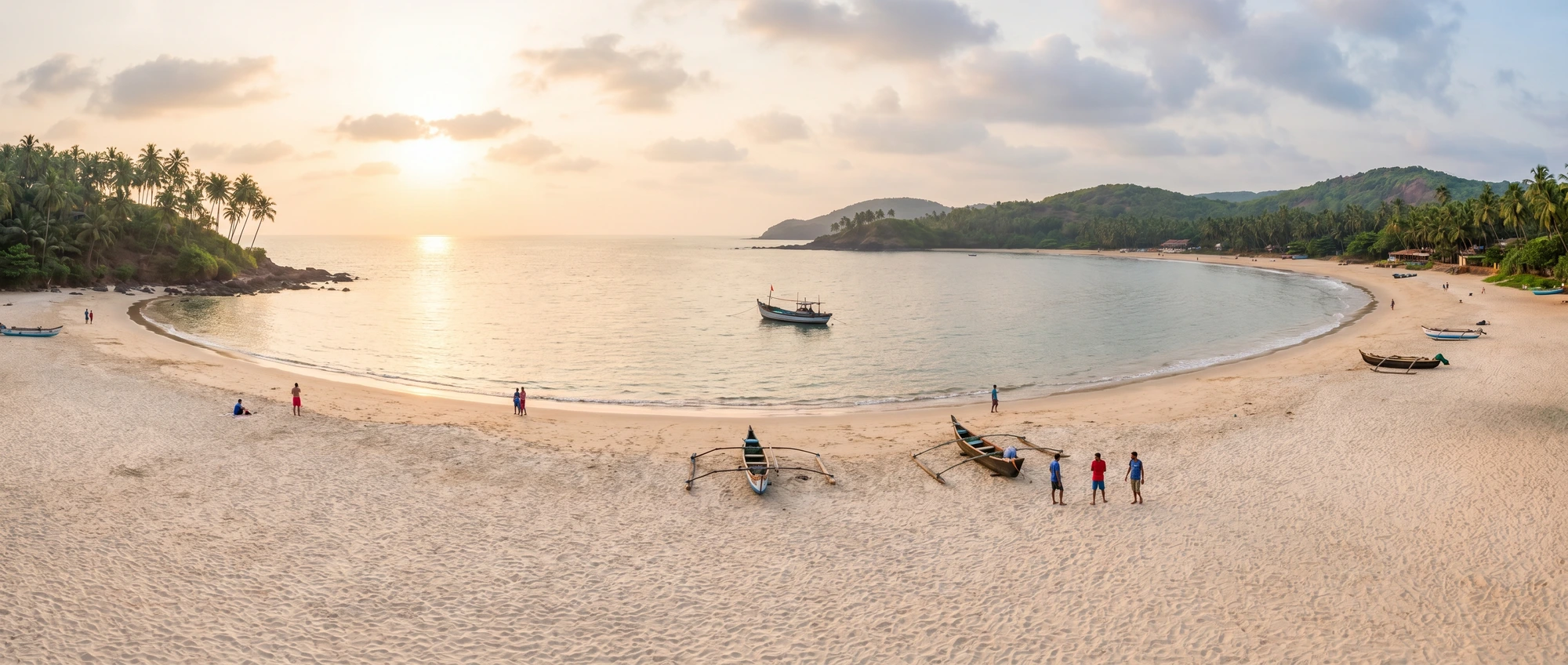
Goa isn’t one place, and treating it as one is how most first-timers get it wrong. It’s a single small state with a split personality: the north — Baga, Calangute, Anjuna, Arambol — is the loud, crowded, market-and-nightlife Goa of package holidays and flea-market Wednesdays, while the south — Palolem, Agonda, Colva — is the slow, palm-shaded, yoga-and-seafood Goa that everyone actually pictures. Neither is better; they’re just different holidays. The mistake is booking a cheap flight, a random beach hut and assuming it all blurs together, then spending half the trip in a taxi crossing from one to the other.
The decision that catches people out is the airport. Goa now has two — Mopa in the far north and Dabolim in the centre-south, an hour and a half apart — and the budget-flight logic of taking whatever’s cheapest can land you the wrong side of the state from your hotel, with a ₹2,500 transfer before you’ve even unpacked. So pick your end first. Then, on the ground, decide early about the scooter: at around ₹400 a day a hired one unlocks the whole coast, but India’s roads are unforgiving, the helmet checks are real, and your travel insurance may quietly exclude two wheels. Get the half, the airport and the scooter question right before you book, and Goa is as easy as its reputation promises.
The route
A relaxed week that lets you sample both ends without living in a taxi. Distances in Goa are short on the map but slow on the ground — the coast road is single-carriageway and the north-to-south run is around 60km but a good 2 hours, so the smart play is to base in one half and day-trip, not hop nightly. Drive and ferry times below are real Goa coast-road figures, not motorway estimates.
-
Days 1–3
North Goa — Baga, Anjuna & the markets
Fly into Mopa (GOX), about 45 minutes by pre-paid taxi to the Baga–Calangute strip. Do the loud bit first: Baga's beach shacks and water sports, Anjuna's Wednesday flea market and a sundowner at a cliff bar. The Saturday Night Market at Arpora is the one to time your week around. This end is busy and built-up — lean into it rather than fighting it.
-
Day 4
Old Goa & Panaji
Break up the beach with a half-day inland: the Portuguese-era churches of Old Goa (the Basilica of Bom Jesus is UNESCO-listed and free to enter) and the Latin-quarter lanes of Fontainhas in the capital, Panaji — about 40 minutes by taxi from the northern strip. This is the bit that reminds you Goa was a Portuguese colony until 1961, not just a beach.
-
Days 5–7
South Goa — Palolem & Agonda
Transfer south (around 2 hours / ₹2,500 by taxi, or fly-and-stay if you swap airports). Palolem's crescent bay and Agonda's quieter strip are the antidote to the north: calmer sea, wider sand, yoga and seafood thalis. From here it's also a short hop to spot dolphins or take the boat to Butterfly Beach. Fly home from whichever airport suits your final base.
Where to base yourself
Pick one or two bases rather than moving every night.
Baga / Calangute (North)
£ valueThe package-holiday heart of Goa: the most hotels, the most restaurants, water sports and nightlife on the doorstep, and the easiest from Mopa airport. It's also the busiest, most built-up and least 'tropical-paradise' of the lot — choose it for convenience and going out, not for a quiet beach.
Best for: First-timers, nightlife, value rooms
Anjuna / Vagator (North)
££ mid-rangeThe cliff-and-cove end of the north with the famous flea market, a bohemian streak and a younger, longer-staying crowd. Prettier and more characterful than Baga but hillier and more spread out, so a scooter earns its keep here. The trance-party legacy still surfaces in season.
Best for: Markets, scooter-mobile travellers, scenery
Palolem / Agonda (South)
££ mid-rangeThe South's signature crescent beaches: calmer water, wider sand, beach huts, yoga and seafood over party. This is the Goa most people picture and the right base for a quiet, slow week — but it's around 2 hours from Mopa, so fly into Dabolim (GOI) instead, roughly an hour away.
Best for: Quiet beaches, yoga, couples and families
Getting around Goa
Most people get around Goa on a hired scooter — about ₹400–500 a day (less by the week, more for a bigger motorbike), and the cheapest way to roam the coast road and reach the quieter beaches. But ride it with eyes open: India has one of the world's highest road-death rates (GOV.UK), the coast road is potholed and chaotic, police do stop tourists to check for a helmet and a licence, and you must carry an International Driving Permit plus your UK licence — check your travel insurance actually covers powered two-wheelers, as many policies exclude them or require the IDP. If you'd rather not ride, Goa runs on taxis: there's a long-standing meterless taxi 'mafia' that keeps fares high and has historically blocked Uber and Ola, so use the airport pre-paid rank (fixed price), the GoaMiles app where it works, or agree the fare before you set off. A pre-paid airport taxi to the northern strip from Mopa runs around ₹1,000–1,400; north-to-south is roughly ₹2,500. There's no useful train along the coast for beach-hopping, though the Konkan Railway is scenic if you're arriving from Mumbai.
Book the essentials
Where to stay
Tours & tickets
Airport transfers
Car hire
Stay connected
Goa FAQs
Is North or South Goa better?
Which Goa airport should I fly into, Mopa or Dabolim?
When is the best time to visit Goa?
Ready to book?
Compare car hire