North India
Himalayas (North India)
The North Indian mountains for UK travellers: how Shimla, Manali, Rishikesh and Ladakh differ, why the season you go decides which one you can reach, and real drive times, toy-train and rafting costs in rupees.
In short
Himalayas (North India) at a glance
"The Himalayas" sells as one trip, but in North India it splits into four very different ones, and the mistake is treating them as interchangeable. Shimla and Manali, in Himachal Pradesh, are the classic hill stations — cool air, pine ridges and the Kalka–Shimla toy train — reachable year-round and the gentlest introduction. Rishikesh, in Uttarakhand on the Ganges, is the yoga-and-rafting town a 6-hour drive from Delhi, low enough to visit any month. Ladakh, around Leh, is the dramatic high-altitude desert that everyone pictures from Instagram — and the one with the catch: at 3,500m and ringed by 5,000m passes, it's only open by road from roughly June to September, and you arrive by flying into thin air that floors the unprepared. Decide which mountains you actually want first, because the season dictates which are even open.
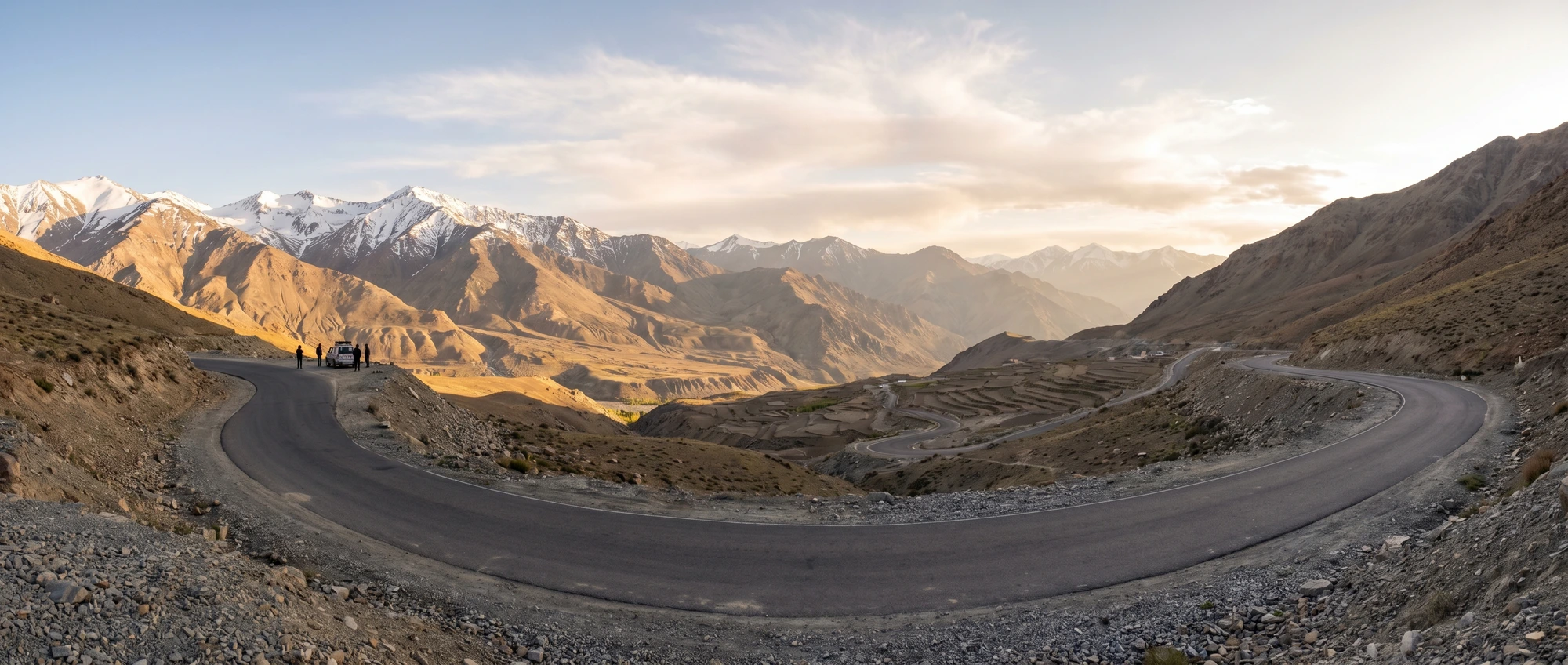
“The Himalayas” is sold as a single destination, and that is exactly how people end up disappointed. In North India it’s really four separate trips that happen to share a mountain range. Rishikesh, on the Ganges in Uttarakhand, is the low, easy one — yoga, riverside cafes and India’s cheapest white-water rafting, about six hours’ drive from Delhi and open every month of the year. Shimla and Manali, over in Himachal Pradesh, are the colonial-era hill stations: cool pine ridges, the Kalka–Shimla toy train, and snow at Manali’s Solang Valley in winter. Leh and Ladakh are the high-altitude desert from every Instagram feed — the most spectacular and the most demanding, at around 3,500m. Booking one expecting another is the classic error.
The thing that catches people out is the season. Ladakh’s road approaches from Manali and Srinagar only clear of snow from roughly June to September, and even then you really want to fly into Leh rather than grind over 5,000m passes — then sit still for two days while your body adjusts to thin air, because altitude sickness floors the unprepared. Rishikesh and the lower hill stations sidestep all of that, but they have their own calendar: the July-to-September monsoon brings landslides and flash floods that shut mountain roads across Himachal and Uttarakhand, and the rafting season pauses. Decide which mountains you actually want, check which are open in your month, and the North Indian Himalayas reward the trip far more than they punish the rushed one.
The route
A two-week loop that takes in the easy mountains first and saves high-altitude Ladakh for the end, when you're already part-acclimatised and the body has settled. Mountain road times here are slow and real — single-lane switchbacks, not motorway — so the plan keeps drives short and builds in altitude buffer rather than chasing distance. This works June to September, the only window all four areas are reachable; outside that, drop Ladakh and lean into the hill stations.
-
Days 1–3
Rishikesh — Ganges, yoga & rafting
From Delhi it's around 6 hours by car or the Dehradun Shatabdi train to Haridwar, then 45 minutes on to Rishikesh. Ease in with the Ganga Aarti ceremony at Triveni Ghat, walk the Lakshman Jhula and Ram Jhula footbridges, and take a half-day white-water rafting trip on the Ganges (the standard 16km Shivpuri-to-Rishikesh run is about ₹600–1,200 a head). This is low altitude, so it's also the gentle warm-up before the high stuff.
-
Days 4–7
Shimla & the Kalka–Shimla toy train
Loop west into Himachal. The set-piece is the Kalka–Shimla narrow-gauge railway — a UNESCO World Heritage line that climbs through 102 tunnels and over 800 bridges in about 5 hours; book the Shivalik Deluxe or a Himalayan Queen seat well ahead. In Shimla itself, walk the colonial-era Mall Road and the Ridge, visit Christ Church, and use it as a cool, 2,200m base. Move on to Manali (around 7–8 hours by road) for Hadimba Temple, Old Manali's cafes and, in winter, Solang Valley snow.
-
Days 8–14
Leh & Ladakh
Fly Delhi to Leh (about 80 minutes) rather than driving in cold, and then do almost nothing for 48 hours — Leh is at ~3,500m and rushing it brings on altitude sickness. Once acclimatised, take the day trip up to the Khardung La pass, visit Thiksey and Hemis monasteries, and run out to Pangong Lake (a long ~5-hour drive each way, requiring an Inner Line Permit, around ₹500–600 with fees). Build genuine slack into every leg — Ladakh's roads and weather don't keep to a schedule, and the thin air slows everything down.
Where to base yourself
Pick one or two bases rather than moving every night.
Rishikesh (Tapovan / Laxman Jhula)
£ valueThe yoga-and-cafe heart on the river's east bank, walkable to the footbridges, ghats and ashrams, with everything from riverside ashram dorms to mid-range hotels. The right base for a low-altitude, all-year mountain stay and the rafting put-ins. Quieter and more spiritual than the package hill stations.
Best for: Yoga, rafting, all-year low-altitude trips
Shimla (The Mall / Ridge)
££ mid-rangeStaying near the pedestrianised Mall and the Ridge puts Christ Church, the viewpoints and the toy-train station within reach, with heritage colonial-era hotels alongside cheaper guesthouses. A cool 2,200m base that runs year-round — snow in winter, an escape from the plains' heat in summer. Steep and car-free in the core, so pack light.
Best for: Hill-station first-timers, the toy train
Leh (Old Town / Changspa)
££ mid-rangeLadakh's only real town and the acclimatisation base before any high passes: guesthouses and homestays cluster around Changspa lane and below Leh Palace. You'll spend your first two days here doing very little on purpose, at ~3,500m. Book ahead for the short June–September season, when demand and prices spike.
Best for: Acclimatising before Ladakh's high passes
Getting around Himalayas (North India)
These mountains are too far apart to treat as one base, so plan each leg separately. For Rishikesh, the easy route from Delhi is the Dehradun-bound Shatabdi or Jan Shatabdi train to Haridwar (about 4.5–5 hours) and a short taxi on, or a ~6-hour car. For Himachal, the iconic approach is the Kalka–Shimla toy train (a UNESCO narrow-gauge line, roughly 5 hours and from about ₹300–800 a seat depending on class), with onward road transfers to Manali. Don't self-drive in the mountains: the roads are single-lane, exposed and prone to landslides, and India has one of the world's highest road-death rates (GOV.UK) — hire a car with a driver, or use the shared taxis (HRTC and HPTDC also run buses, including overnight Volvo coaches Delhi–Manali for around ₹1,200–1,800). For Ladakh, fly into Leh rather than drive in cold; the road from Manali or Srinagar only opens roughly June to September and crosses 5,000m passes. Inner Line Permits are needed for Ladakh's outlying areas like Pangong and Nubra — your guesthouse or a Leh travel agent arranges them for a small fee (around ₹500–600 including the daily wildlife and environment charges). Altitude is the real constraint everywhere above Shimla: ascend slowly, take a rest day on arrival in Leh, and treat any headache or breathlessness seriously.
Book the essentials
Where to stay
Tours & tickets
Airport transfers
Car hire
Stay connected
Himalayas (North India) FAQs
Should I go to Shimla, Manali, Rishikesh or Ladakh?
When can you visit Ladakh, and is altitude sickness a problem?
How do I get from Delhi to the North Indian Himalayas?
Is it safe to travel in the North Indian mountains?
Ready to book?
Compare car hire