Java (Special Capital Region)
Kota Tua (Old Batavia) & Fatahillah Square
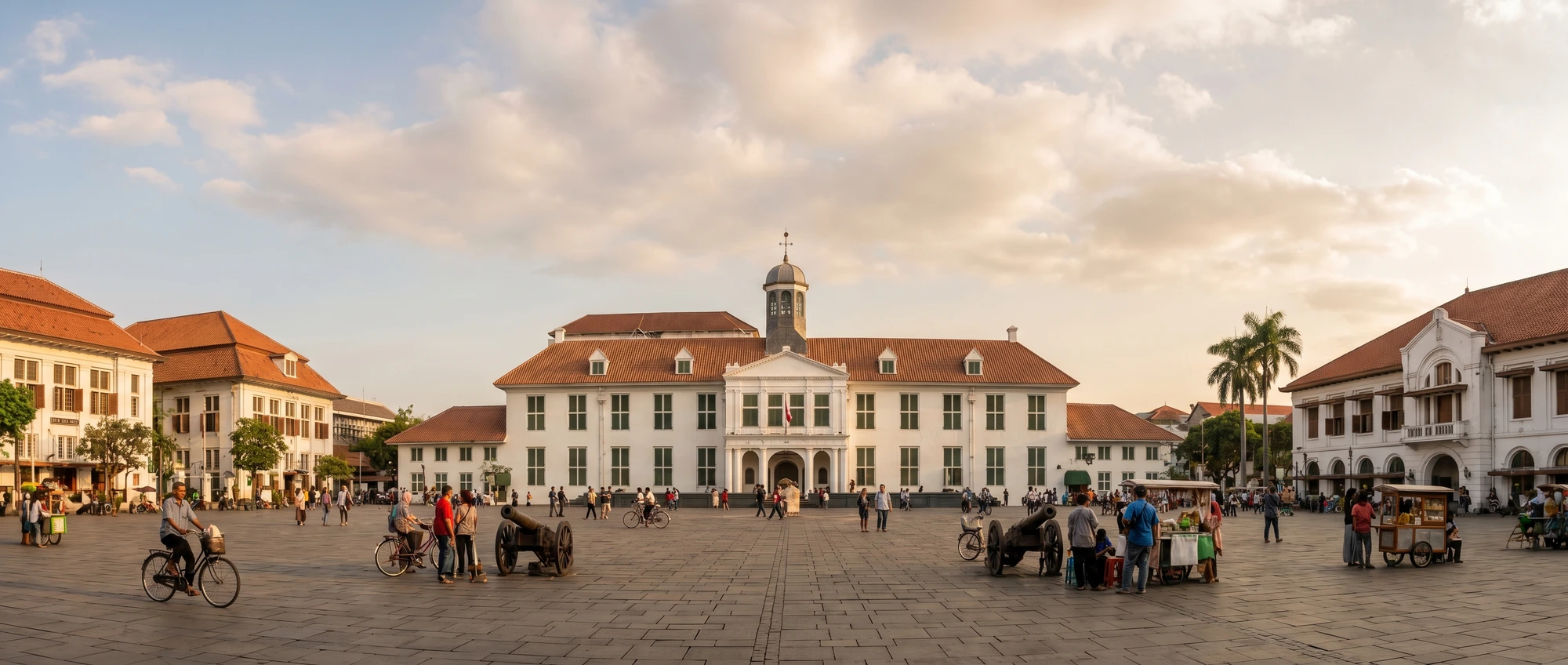
Jakarta's colonial Dutch old town: a cobbled square, the Jakarta History Museum in the old city hall and the Wayang puppet museum. Come in the cooler morning before the square bakes and the weekend crowds arrive.
Where
Jakarta, Indonesia
Opening hours
The square is open access (always open). The museums around it generally open daytime hours Tuesday to Sunday and tend to close on Mondays; times vary, so confirm current hours and prices on the official site.
Tickets
Wandering Fatahillah Square is free. The museums charge a token entry, broadly from about Rp 5,000 each. Prices change, so confirm current hours and prices on the official site.
Time needed
Two to three hours to walk the square and dip into one or two of the museums.
In short
Visiting Kota Tua (Old Batavia) & Fatahillah Square
Kota Tua is Jakarta's colonial Dutch old town, centred on the cobbled Fatahillah Square. Ringing it are the Jakarta History Museum, housed in the old city hall, and the Wayang puppet museum, plus cafes and the famous Café Batavia. The square itself is free to wander; museums charge a token entry from around Rp 5,000. Come in the cooler morning before it bakes and weekend crowds pour in.
The square and its buildings
Kota Tua — Old Batavia — is the surviving heart of Jakarta’s Dutch colonial city, and it centres on Fatahillah Square, a large cobbled plaza ringed by faded white-and-ochre buildings. Just walking the square is free, and that is genuinely most of the experience: the colonial facades, the cyclists hiring out bright vintage bikes and sun hats, the buskers, and the bustle of locals out for the day. On the square stand the Jakarta History Museum, set in the imposing old city hall, and the Wayang puppet museum, devoted to Indonesia’s shadow-puppet tradition; museum entry is a token sum, broadly from about Rp 5,000 each, so carry small notes.
Café Batavia, in a colonial building on the square, is the famous (and pricier) place to sit, though plenty of cheaper stalls and cafes line the surrounding lanes.
Timing it right
Be honest with yourself about the heat and the crowds. The square is wide, cobbled and almost entirely unshaded, so it bakes from late morning, and at weekends it fills with day-trippers and can feel overwhelming. The fix is simple: come early in the morning, ideally on a weekday, when the light is kind, the temperature is bearable and you can actually move and photograph the buildings.
With limited time, do the square first, then pick one museum rather than trying to do them all — the History Museum for the grand old city hall, or the Wayang museum if puppets intrigue you. Allow two to three hours overall. Note that the museums generally close on Mondays and keep their own daytime hours, so check before a special trip. Pair Kota Tua with a wander down to the old Sunda Kelapa harbour nearby if you want to extend the morning.
Planning the rest of your trip? See the Jakarta city guide.