Connacht (West Coast / Wild Atlantic Way)
Latin Quarter and Spanish Arch
Galway's compact medieval core — Quay Street, Shop Street and the river running down to the 16th-century Spanish Arch — best taken slowly on foot, with pub stops, rather than as a checklist.
Where
Galway, Ireland
Opening hours
Open access (always open). The streets, the Spanish Arch and the riverside are public at any hour; the busking, atmosphere and pub trad sessions peak in the late afternoon and evening, especially at weekends. Shops, pubs and the nearby city museum keep their own hours.
Tickets
Free — no ticket needed to wander the Latin Quarter, see the Spanish Arch or walk along the Corrib. You only spend on food, drink, music and shopping. The adjacent Galway City Museum is also free to enter.
Time needed
An afternoon to wander the streets and reach the Spanish Arch; an evening if you settle into the pubs and trad-music sessions, which is rather the point.
In short
Visiting Latin Quarter and Spanish Arch
The Latin Quarter is Galway's compact medieval core: Quay Street and Shop Street, packed with pubs, buskers and shopfronts, running down to the 16th-century Spanish Arch on the river Corrib. It is free to wander and best done slowly on foot, with pub and trad-music stops, rather than ticked off as a sight.
The streets, not the sights
Galway’s Latin Quarter is the city’s compact medieval heart, and the trick to enjoying it is to stop treating it as a list of things to see. It is essentially two linked, pedestrianised streets — Shop Street and Quay Street — that run down towards the river Corrib, lined with brightly painted shopfronts, pubs, restaurants, craft shops and a near-permanent rotation of buskers. It is free, always open, and small: you can walk its length in fifteen minutes flat, which is exactly why you shouldn’t.
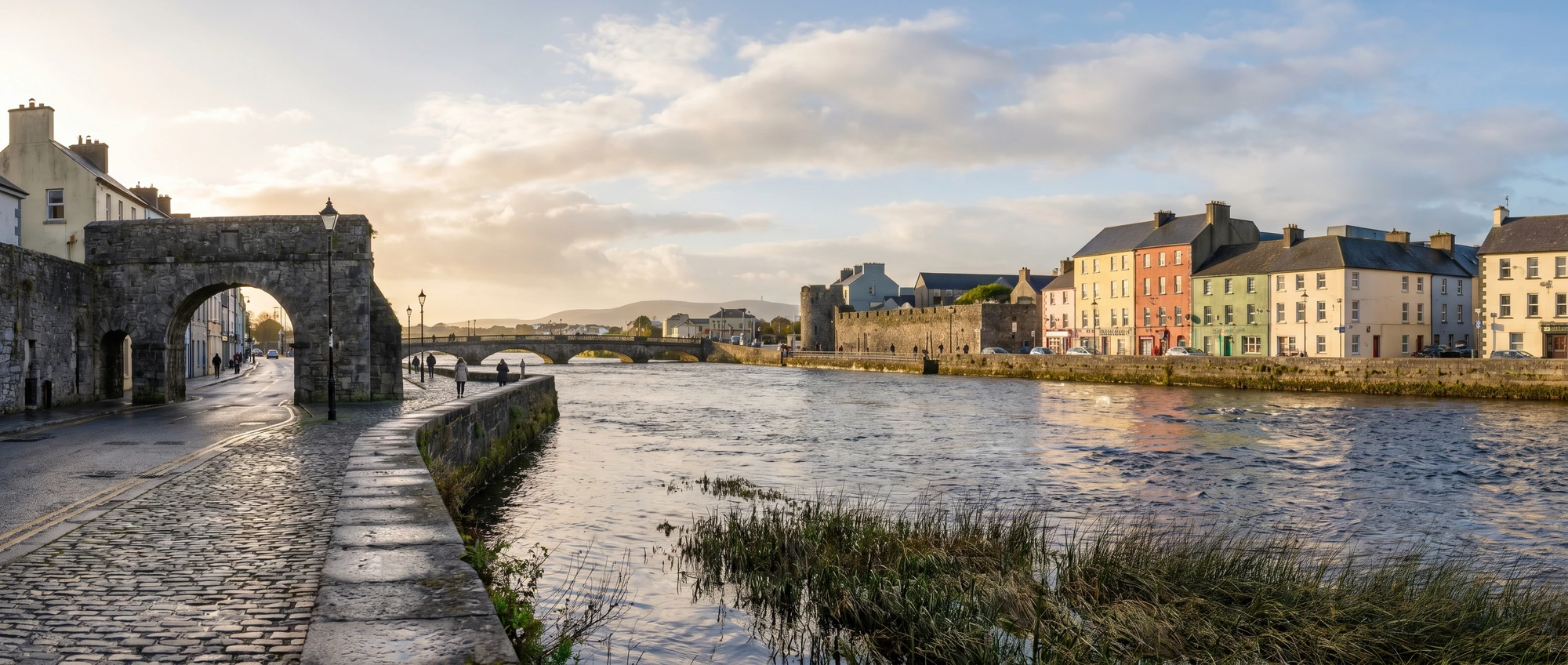
At the bottom, where Quay Street meets the water, is the Spanish Arch — a surviving 16th-century chunk of the old city walls. Be honest with yourself about it: it is modest, a low stone arch rather than a grand monument, and it takes thirty seconds to look at. Its real worth is as the riverside full-stop to a wander, with the free Galway City Museum right beside it and the Corrib, the Claddagh and Galway Bay opening up just across the water.
How to actually spend the time
The Latin Quarter peaks in the late afternoon and evening, especially at weekends. That’s when the buskers are at full tilt, the pubs fill, and the traditional music sessions start up in places like the long-established bars off Quay Street. Daytime suits browsing the shops, grabbing a coffee or seafood lunch, and seeing the museum in calm; the evening is for sinking into a pub, hearing live trad and letting one drink become three.
So give it an afternoon and an evening rather than a quick loop. Walk Shop Street and Quay Street down to the Arch, cross to look back over the river, then double back into a pub when the music starts. The pleasure here is atmosphere and pace — the colour, the sound, the easy walkability — not any single landmark. Pair it with a stroll along the Corrib or out to Salthill promenade, and you have the best free day Galway gives you.
Planning the rest of your trip? See the Galway city guide.