Sicily
Catania Cathedral
How to visit Catania Cathedral: the free Sant'Agata Duomo, the €7 Diocesan Museum with its Etna terrace, and whether the lava-stone elephant fountain outside is the real draw.
Where
Catania, Italy
Opening hours
Cathedral (free): roughly Mon–Sat 07:00–12:00 and 16:00–19:00; Sun 07:30–12:00 and 16:30–19:00, with access limited during Mass. Diocesan Museum (per museodiocesanocatania.com): Mon–Sat 10:00–15:00, with extra Tue/Thu afternoons 15:00–20:00; Sundays and public holidays by group booking only. Confirm on the day.
Tickets
Cathedral: free. Diocesan Museum about €7 (~£6), reduced ~€4. Combined with the underground Achillian Roman baths about €10 (~£8.60); about €12 (~£10.30) for the guided dome-and-terrace tour. Elephant fountain: free.
Time needed
10–15 minutes in the cathedral itself; 45 minutes to an hour if you add the Diocesan Museum and the terrace; a couple of minutes for the elephant in the square.
In short
Visiting Catania Cathedral
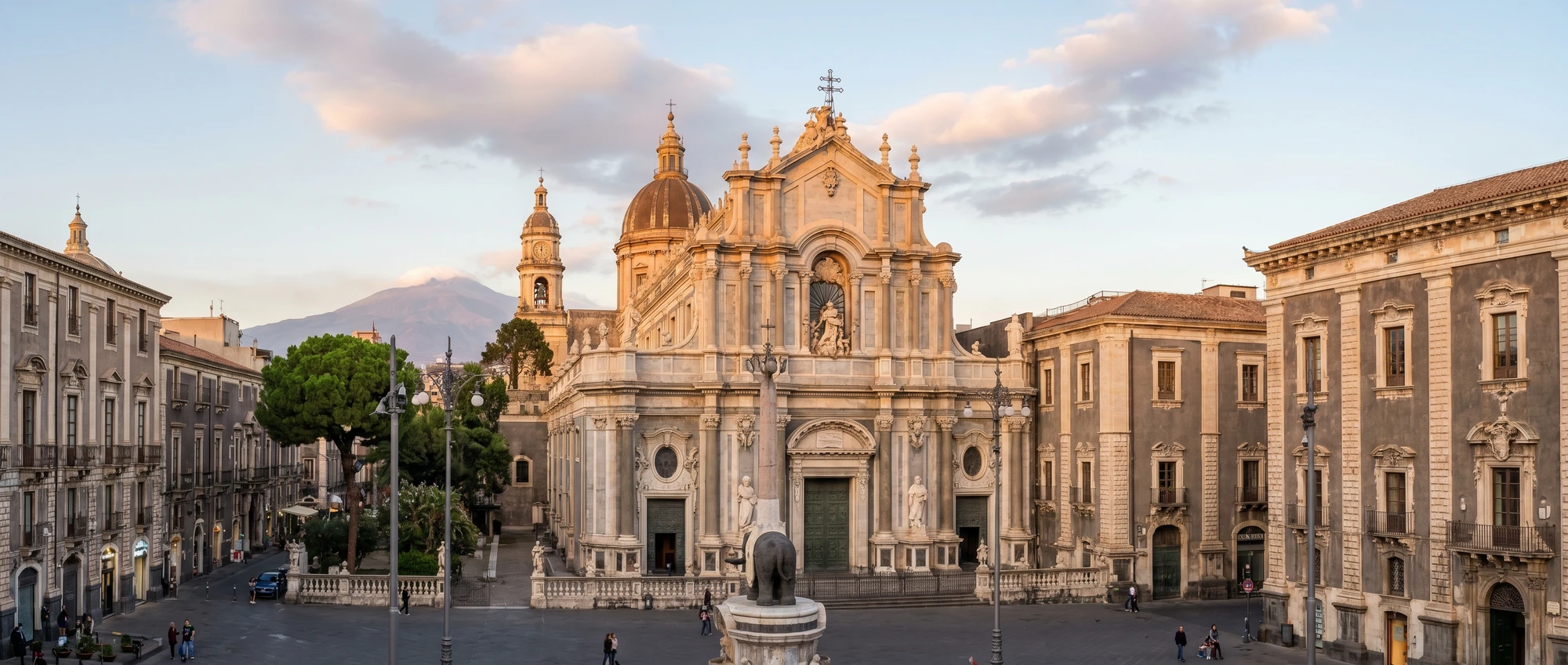
The cathedral itself — the Duomo di Sant'Agata on Piazza del Duomo — is free to walk into, so don't pay an agency for 'entry'. Pop in for ten minutes to see the Baroque interior rebuilt after the 1693 earthquake and Bellini's tomb, then spend your money on the separate Diocesan Museum next door (about €7) if you want the rooftop terrace looking over the piazza to Etna. The black lava-stone elephant fountain out front, u Liotru, is the photo everyone actually comes for, and it costs nothing.
How to visit without overpaying
The thing to know first is that the cathedral — the Duomo di Sant’Agata on Piazza del Duomo — is free to walk into. If a booking site is selling you a “Catania Cathedral entry ticket”, you’re paying for something that costs nothing at the door. Step inside during visiting hours (broadly mornings and late afternoons, with access limited while Mass is on), give the Baroque interior ten or fifteen minutes — it was rebuilt after the 1693 earthquake flattened the old church, and the composer Bellini is buried in here — and you’ve seen it.
What you can pay for is the Diocesan Museum next door, around €7, housed in the old seminary building. On its own it’s mostly Sant’Agata sacred art and silverware, but it’s the route up to the rooftop terraces that look straight across the piazza to Mount Etna, and that view is the actual reason to buy a ticket. Bundles run to about €10 with the underground Achillian Roman baths and about €12 for a guided dome-and-terrace tour. Decide before you go in: if you only want the church and the square, you don’t need any of it.
The elephant, and is it worth it?
Out in the middle of Piazza del Duomo sits u Liotru, a black lava-basalt elephant on a fountain that Vaccarini designed in 1735–37. It’s carved from solidified Etna lava, it’s the symbol of the city, and it’s free — and honestly it’s the better photo than the cathedral facade. Most people spend longer here than inside the church.
Treat this as a fifteen-minute stop, not a half-day sight, and that’s fine — Piazza del Duomo is the centre of Catania, so you’ll pass through anyway. Look in at the cathedral, photograph the elephant, and only pay for the museum if the Etna terrace appeals. Then walk two minutes to La Pescheria, the lava-walled fish market behind the square, which is the more memorable Catania experience and also costs nothing to wander.
Planning the rest of your trip? See the Catania city guide.
More to see in Catania
Book the essentials
Tours & tickets
Catania Cathedral FAQs
Is Catania Cathedral free to enter?
Is the Diocesan Museum worth the ticket?
What is the elephant fountain outside the cathedral?
Ready to book?
Check tickets & tours