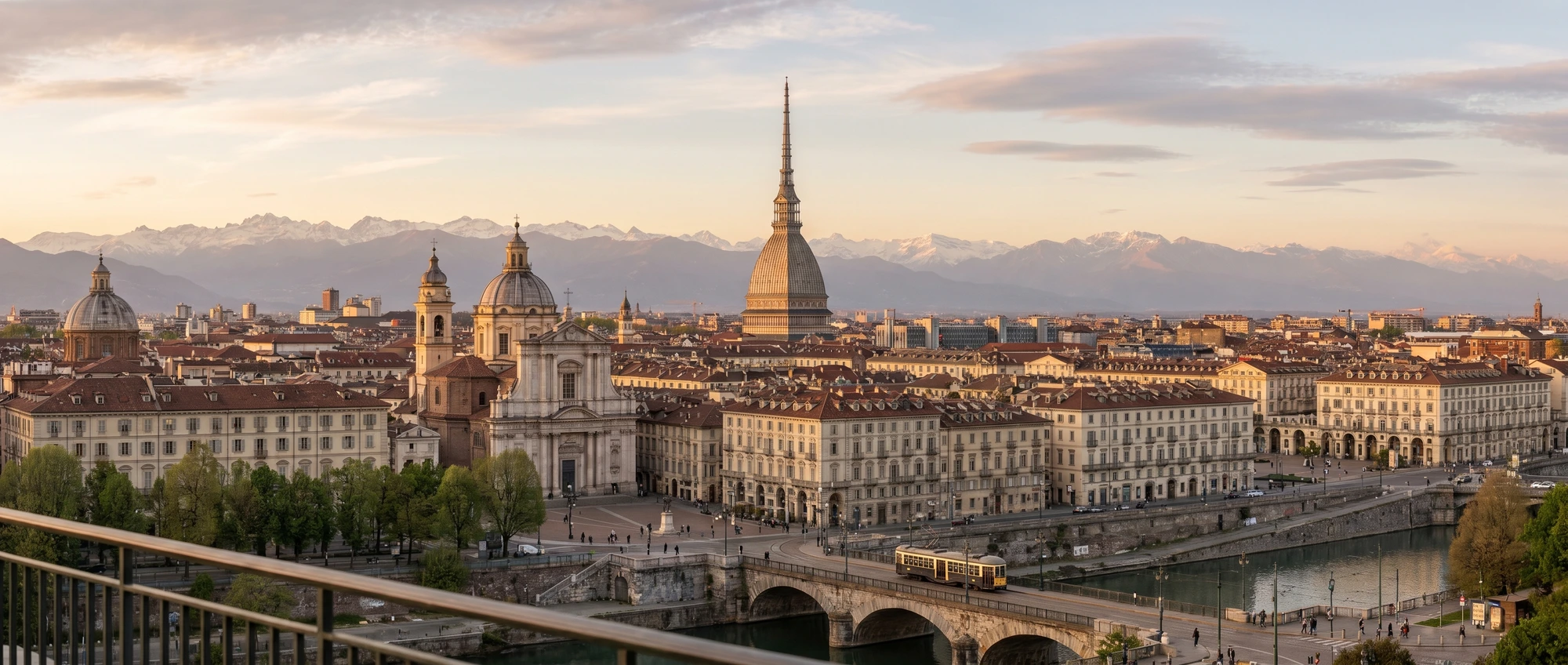
Piedmont
Turin
Two or three arcaded nights with the Egyptian Museum and the Mole booked ahead, a bicerin in a grand cafe, and the city doubling as a launchpad for the Alps and the Langhe wine country.
Best length
2-3 nights
Airport
Turin Caselle (TRN), ~16km north
Airport to centre
GTT train ~19 min; SADEM coach ~45 min to Porta Nuova
Best base
Centro for first-timers; San Salvario for value and nightlife
In short
Turin at a glance
Turin works best as a 2- or 3-night city break or as a base for the Alps and the Langhe wine country: stay in the arcaded centre or San Salvario, book the Egyptian Museum and the Mole Antonelliana lift ahead, walk almost everything, and budget time for a bicerin in a grand cafe rather than rushing.
The short version
- Stay in the Centro for first trips: the Egyptian Museum, Mole and royal palaces are all an easy walk under porticoes.
- San Salvario by Parco del Valentino is the better-value, livelier base if you want bars and trattorias on the doorstep.
- Book the Egyptian Museum (Museo Egizio) ahead: it is the second-largest in the world after Cairo and the one queue that bites.
- Take the GTT airport train (about €3.20, ~19 min) or the SADEM coach to Porta Nuova rather than a €35-€40 taxi.
- Two full days covers the museums and cafes; add a third for Venaria Reale, Sacra di San Michele or a Langhe wine day.
Turin is the grand Italian city that most British travellers skip, which is exactly why it works. As the first capital of unified Italy and the old Savoy royal seat, it has baroque squares, kilometres of covered porticoes you can shelter under in the rain, and a museum — the Museo Egizio — that holds the largest collection of Egyptian antiquities anywhere outside Cairo. But it carries none of the queue-and-crowd tax of Florence or Venice, and hotels and restaurants cost noticeably less. The trade-off is that it rewards a slower, café-and-architecture rhythm rather than a tick-list sprint.
Two full days is the practical sweet spot: one for the Egyptian Museum and the Mole Antonelliana, one for a royal palace and the historic cafés around Piazza San Carlo, with a bicerin — the local espresso-chocolate-cream drink — somewhere in between. Stay a third night and Turin turns into a base: the Reggia di Venaria, the cliff-top Sacra di San Michele at the mouth of the Susa Valley, and the Langhe wine villages are all easy day trips, and in winter the Alpine ski resorts are within reach too. Below, the structured planning — where to stay, what to book, how to get in from Caselle, and a realistic budget in pounds — picks up from here.
Keep a first trip focused: book the big timed sights, then leave room for neighbourhoods and food.
Top things to do in Turin
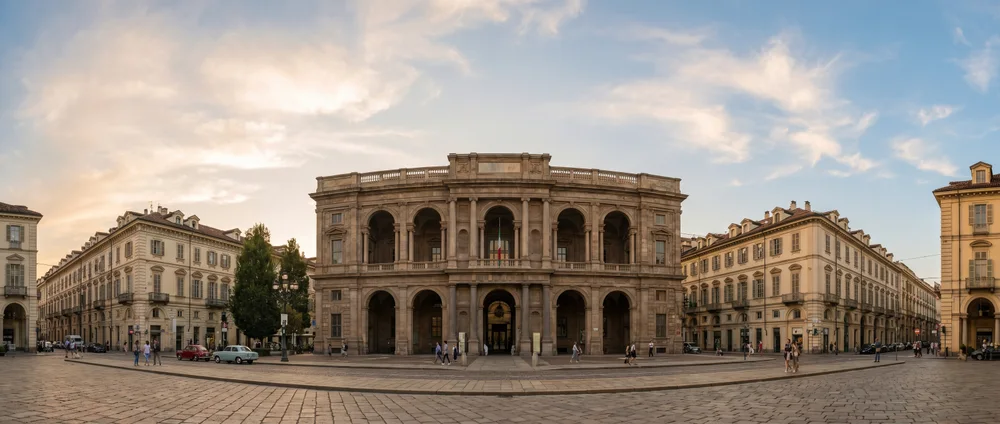
Egyptian Museum of Turin
Book a timed Museo Egizio ticket online before you go — it's online-only and sells out on weekends and during exhibitions. Download the museum's free audio web app and bring your own earphones rather than paying for a guided tour: it's genuinely good and self-paced. Allow 2.5–3 hours; this is a research institution-sized collection, not a quick stop, and the second-floor galleries are where people run out of energy.
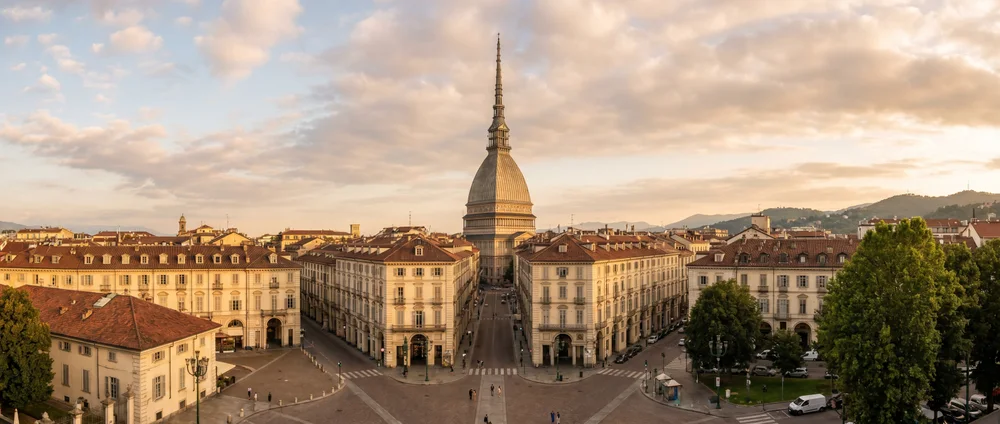
Mole Antonelliana
The Mole is two things at once: the National Cinema Museum spirals up the inside, and a glass lift shoots to a viewing deck at 85 metres in under a minute. Decide before you book — museum only (€18), lift only (€9), or both (€23) — because the prices and the queues are different. Buy the combined ticket online if you want both, go on a clear day for the dome view, and remember it's closed every Tuesday.
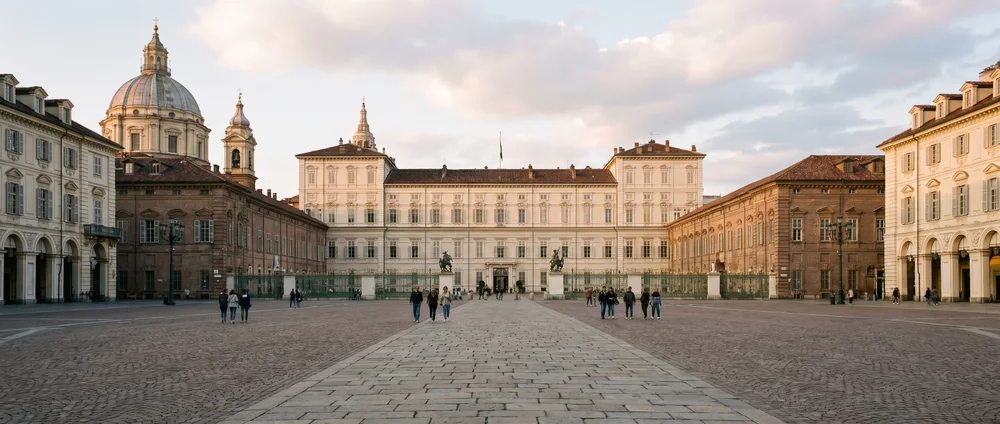
Royal Palace of Turin
Your €15 ticket isn't just the palace — it's the whole Musei Reali complex: the Savoy state rooms, the Royal Armoury, the Sabauda Gallery, the Museum of Antiquities and Guarini's restored Holy Shroud Chapel, all under one roof on Piazzetta Reale. The trap is the Wednesday closure, when the entire site shuts. Allow 2.5–3 hours to do it justice, and don't expect to see the Shroud itself — the relic lives sealed in the neighbouring Cathedral and is not on display.
Where to stay first
The areas that make a first visit easier — not an exhaustive directory.
Centro (historic centre)
££ mid-rangeThe grand royal core: arcaded streets, baroque squares and every headline museum within a 15-minute walk. The priciest area to sleep, but it saves you a tram every single day on a short trip.
Best for: First-timers, couples, short stays
San Salvario
£ valueTurin's liveliest neighbourhood, between Porta Nuova station and Parco del Valentino. Multicultural, packed with bars and trattorias, and better value than the centre. Choose it for evenings and a younger feel; expect some weekend noise.
Best for: Value, food and nightlife, repeat visitors
Quadrilatero Romano
££ mid-rangeThe tighter old-Roman grid northwest of the centre: narrow lanes, the Porta Palazzo market on its edge and the densest aperitivo scene. Atmospheric and central, but rooms are smaller and the streets are loud at weekends.
Best for: Food-led trips, aperitivo, atmosphere
Crocetta
££ mid-rangeAn elegant, leafy residential district southwest of Porta Nuova with wide boulevards and a famous street market. Quieter and good for families who want calm, though it has few sights of its own beyond the GAM modern-art gallery.
Best for: Families, quieter stays
Airport to city centre
| Option | Time | Cost | Book ahead? |
|---|---|---|---|
| GTT train (Torino Airport to Dora) | ~19 min plus a short change | about €3.20 (Integrato B ticket) | Cheapest and fastest; change at Dora for the centre |
| SADEM/Arriva coach to Porta Nuova | ~45 min | about €7.50 (€8.50 on board) | Most direct to the two main stations |
| Taxi | ~30-40 min | usually €35-€40+ | Good for late arrivals or with luggage |
When to go
Sweet spot: May, June, September and early October are the sweet spot: mild for walking the porticoes, comfortable for day trips into the Alps foothills, and clear enough to see the mountains from the Mole. The Langhe wine harvest and white-truffle season peak in October.
Summer can be hot and humid and the city empties in August as locals leave. Winter is cold and often foggy, but it is also when Turin doubles as a cheap base for the Via Lattea and other nearby ski resorts. Spring and autumn are the all-round best.
What it costs
UK return flights to Turin are often £20-£90 outside school holidays when booked ahead, with Ryanair from London and Bristol and a roughly 2-hour hop; ski-season weekends and late booking push fares much higher.
Daily budget per person
Turin is noticeably cheaper than Florence, Venice or Rome for hotels and restaurants. The easiest false economy is paying tourist-square prices for a coffee standing up; do as locals do and order at the bar, or sit properly for an aperitivo where the snacks are included.
Book the essentials
Where to stay
Tours & tickets
Airport transfers
Stay connected
Trains & rail passes
Also in Italy
Turin FAQs
How many days do you need in Turin?
Where should first-timers stay in Turin?
Is Turin worth visiting over Milan or Florence?
Ready to book?
Find hotels in Turin