Northern Maldives
Baa Atoll
An honest UK guide to Baa Atoll: the UNESCO Biosphere Reserve where mantas and whale sharks pile into Hanifaru Bay from roughly May to November — how the ranger-controlled snorkel works, the seaplane in, and resort versus a Dharavandhoo guesthouse.
In short
Baa Atoll at a glance
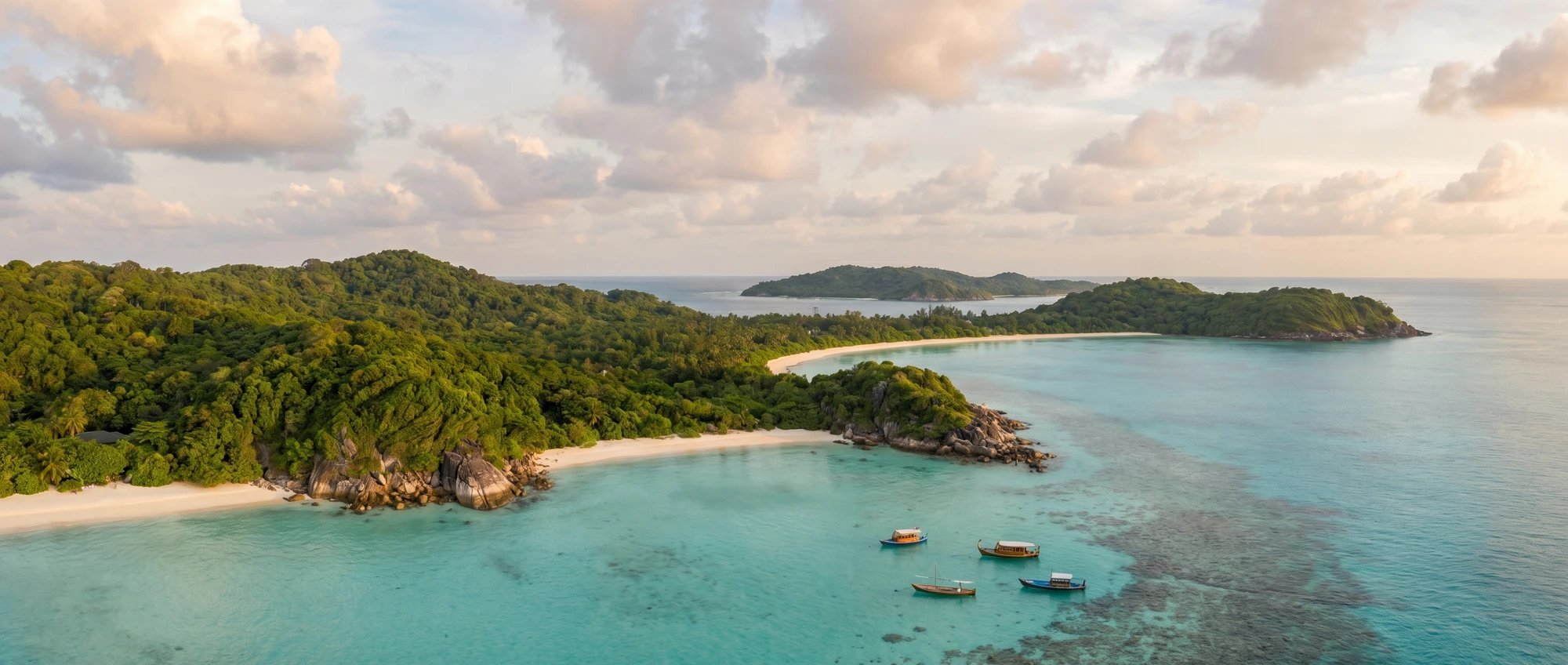
Baa Atoll is the northern Maldivian atoll that travellers cross the Indian Ocean for one thing in particular: Hanifaru Bay, a small protected feeding bowl where dozens — sometimes hundreds — of reef mantas and the odd whale shark gather to feed on plankton, roughly from May to November. It became Maldives' first UNESCO Biosphere Reserve in 2011, and that status is why the bay is rationed: you can only snorkel it (no diving, no fins-off touching, no flash), in ranger-controlled slots of about 45 minutes, in capped numbers of boats and swimmers. Practically, you reach the atoll by a roughly 35-minute seaplane from Malé, or fly to Dharavandhoo's small domestic airport and base yourself in a guesthouse there for a fraction of a resort's price. The choice that shapes the whole trip is resort versus local island: Soneva Fushi, Four Seasons Landaa Giraavaru and Anantara Kihavah sit on private islands at the top of the market, while Dharavandhoo lets budget travellers reach the same Hanifaru mantas by shared boat.
Baa Atoll is the one northern Maldivian atoll people plan a whole trip around a single bay. Hanifaru Bay is a small, shallow feeding bowl where reef mantas — sometimes more than a hundred at once — and the occasional whale shark gather to hoover up plankton, roughly from May to November when the southwest monsoon pushes the feed in. It made Baa the country’s first UNESCO Biosphere Reserve in 2011, and that’s exactly why the bay is rationed: snorkel-only, no diving, no flash, no touching, in ranger-controlled slots of about 45 minutes with capped boats and swimmers. On a busy morning the rangers simply turn full boats away, so the trick is several attempts, not one.
What first-timers get wrong is assuming you have to book a five-figure resort to see it. You don’t: the local island of Dharavandhoo has its own domestic airport and guesthouses at a fraction of the price, and shared snorkel boats from there reach the same mantas for around £40–70 a head. The trade is private-island polish — Soneva Fushi’s barefoot villas, the Manta Trust research base at Four Seasons Landaa Giraavaru, Anantara Kihavah’s undersea restaurant — against a village base with cafés and a local dive centre. Either way the transfer shapes the trip: resorts are a roughly 35-minute seaplane from Malé that flies in daylight only, so a UK arrival landing after mid-afternoon can cost you a night near the airport before you reach the water.
The route
Baa Atoll rewards picking one base and working the manta season around it, because every island move means another paid boat or seaplane. If you stay at a resort you fly straight to it and the resort runs the Hanifaru trips; if you go the guesthouse route, you fly to Dharavandhoo and book shared snorkel boats locally. This is a 5-night skeleton built around the manta window — shift it earlier or later in the May-to-November season rather than expecting sightings outside it.
-
Day 1
Fly in to your base
Resort guests take the roughly 35-minute seaplane from Malé and are met on arrival; daylight-only floatplanes mean a morning landing in the capital matters. Guesthouse guests instead take the ~20-minute domestic flight to Dharavandhoo, then a short boat or buggy to the guesthouse. Either way, plan nothing else — the transfer eats the day. Confirm your Hanifaru excursions before anything else, because slots are capped.
-
Day 2
First Hanifaru Bay snorkel
Go on the first manta call your base puts out. The bay is snorkel-only and ranger-controlled — you get roughly 45 minutes in the water when mantas are present, no diving, no flash, no touching. From Dharavandhoo the boat ride is short and trips run around £40–70 a head; resorts include it or charge per excursion. If the bay is full when you arrive, boats wait or are turned back, so go early and be ready to go again.
-
Day 3
House reef and a boat dive
Even off-bay, Baa's reefs are strong: snorkel your resort or guesthouse house reef at slack tide, and divers can take a boat trip to channel and thila sites (roughly $60–90 per dive, gear extra). Local dive centres on Dharavandhoo are noticeably cheaper than resort centres. Keep an afternoon free in case the rangers call another manta aggregation.
-
Day 4
A local island or a sandbank
Take a half-day to Thulhaadhoo, known for its hand-turned lacquerwork boxes, or the atoll capital Eydhafushi, or book a deserted-sandbank picnic — most guesthouses and resorts run these. It's the cheapest cultural day on the trip and a break from the boat schedule. Bank a slow beach afternoon afterwards.
-
Day 5
Last manta window, then out
Use the morning for one more Hanifaru attempt if the season is on, then build a generous buffer for the trip back — the seaplane or domestic flight to catch an onward UK departure can leave hours early. Settle resort bills in US dollars the night before; guesthouses take cards but keep some dollars for tips and the boat crew.
Where to base yourself
Pick one or two bases rather than moving every night.
Soneva Fushi
£££ premiumThe atoll's original barefoot-luxury island on Kunfunadhoo — large sandy villas, an observatory, an open-air cinema and a strong house reef, with its own marine team running Hanifaru trips. The benchmark splurge in Baa and one of the most expensive resorts in the country.
Best for: Milestone trips, families wanting space, barefoot luxury
Four Seasons Landaa Giraavaru
£££ premiumA large, conservation-minded resort that hosts the Manta Trust's research base, so its guided manta and turtle programmes are a cut above. Overwater and beach villas, a big spa and a serious dive operation make it the science-led top-end pick.
Best for: Manta-focused trips, divers, families
Anantara Kihavah & mid-luxury islands
£££ premiumAnantara Kihavah pairs overwater villas with an undersea restaurant and observatory; Vakkaru, Amilla, Milaidhoo and the Westin Miriandhoo sit a notch below the very top but still run their own Hanifaru excursions. The sweet spot for couples who want a private island without Soneva pricing.
Best for: Honeymoons, couples, overwater villas
Dharavandhoo guesthouses
£ valueThe local island with Baa's domestic airport and the budget route to the same mantas — simple beachfront guesthouses, a 'bikini beach', local dive centres and shared Hanifaru snorkel boats. A fraction of resort prices, with cafés and a village rather than a private island.
Best for: Budget travellers, independent snorkellers, longer stays
Getting around Baa Atoll
Getting around Baa Atoll means choosing your base first, because every island move is a paid boat or flight. Resorts are reached only by a roughly 35-minute seaplane from Malé, costing around £300–500 per adult return; floatplanes fly in daylight only, so a UK arrival that lands after mid-afternoon can mean an overnight near the airport before you fly on. The cheaper route is the ~20-minute domestic flight from Malé to Dharavandhoo's airport (a fixed-wing service, not a seaplane), from which guesthouses are a short boat or buggy ride. There's no realistic speedboat from the capital — Baa sits about 120km north of Malé — so the transfer is a seaplane or domestic-flight decision, not a road one. Once you're based, the only meaningful movement is the Hanifaru Bay snorkel boats and dive dhonis your resort or guesthouse runs; on a local island like Dharavandhoo you walk or cycle, and resorts are walking, bicycle or buggy. Book the Hanifaru trips before you arrive, because the bay's swimmer and boat caps mean slots sell out in peak manta season.
Book the essentials
Where to stay
Tours & tickets
Airport transfers
Car hire
Stay connected
Baa Atoll FAQs
When is the best time to see mantas at Hanifaru Bay?
Can you dive in Hanifaru Bay?
Do I have to stay in a resort to visit Baa Atoll?
How do you get to Baa Atoll from the UK?
Ready to book?
Compare car hire