Maltese Islands
Gozo
Malta's quieter, greener sister island, decoded for UK travellers: how the Ċirkewwa ferry actually works, why an overnight beats a day-trip, and what the Cittadella, Ramla Bay and the Ġgantija temples really cost.
In short
Gozo at a glance
Gozo is the slower, greener second island of the Maltese archipelago, a 25-minute car ferry from the top of Malta. It's rural where Malta is busy — terraced fields, sleepy villages, a fortified hilltop Cittadella over the capital Victoria, and the red sand of Ramla Bay — and it holds the Ġgantija temples, which are older than Stonehenge or the pyramids. Most people give it a rushed afternoon off a Comino boat trip; the move that transforms the island is two or three nights in a converted farmhouse, when the day-trippers leave and Gozo turns quiet. You inherit everything that makes Malta easy for Brits — UK plugs, English spoken, driving on the left, the euro — just at half the pace.
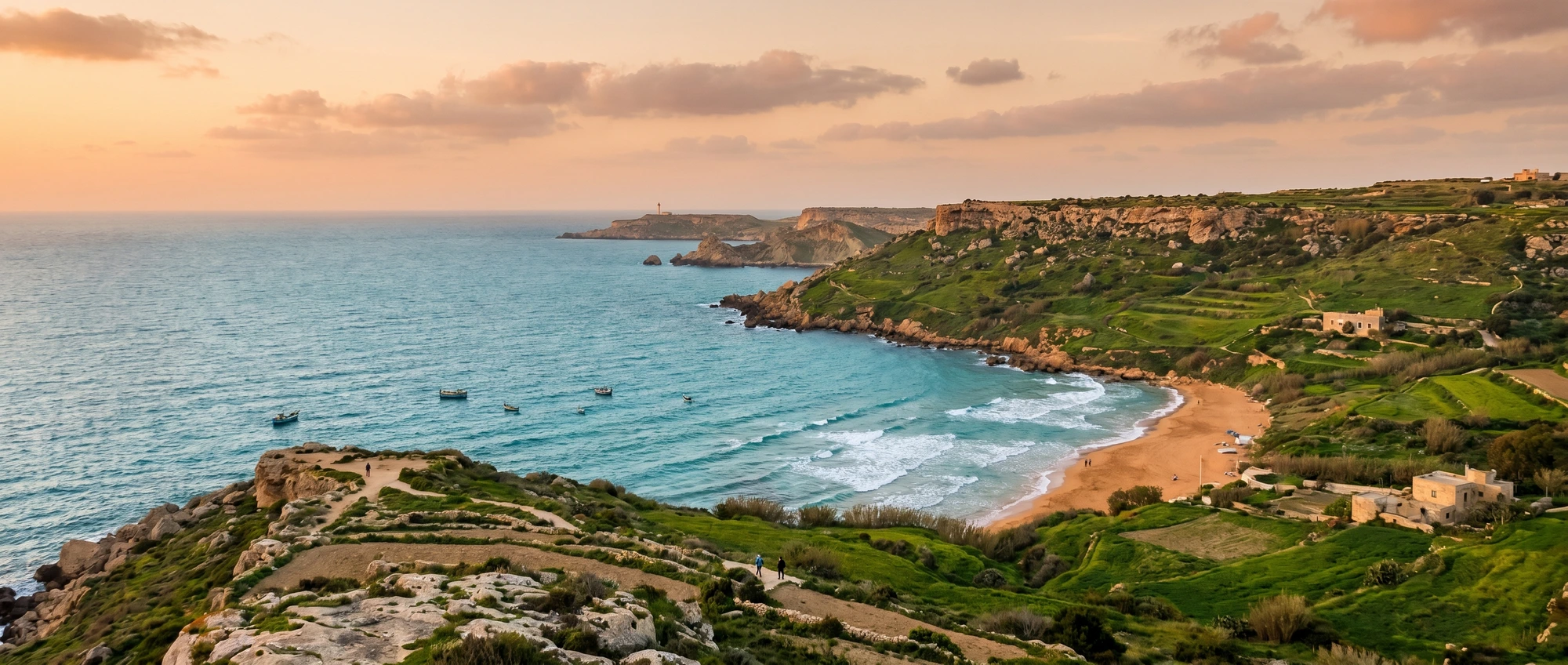
Gozo is what Malta looked like before the cranes arrived: terraced fields, a hilltop Cittadella over a sleepy capital, red-sand bays and a pace that drops the moment the car ferry pulls out of Mġarr. It’s only 25 minutes across the channel from Ċirkewwa, and it inherits everything that makes Malta painless for Brits — UK three-pin sockets, English spoken everywhere, driving on the left, the euro — but it spends them at half the speed.
The mistake almost everyone makes is treating Gozo as an afternoon. Coach tours and Comino boat trips deposit you for two or three hours, you tick off the Cittadella and a quick swim, and you spend the rest of the time worrying about the last ferry — which is exactly the wrong way round. Gozo is at its best in the evening, once the day-trippers have gone and the island goes quiet. Book two or three nights in a stone farmhouse with a pool, hire a car for the thin rural bus links, and let the place be slow. That’s the whole point of crossing the water.
The route
Gozo is small — roughly 14 km end to end — so a trip isn't about covering ground, it's about slowing down. Two to three nights is the sweet spot: enough to see the headline sights without racing the ferry, and enough to enjoy an evening in Victoria's square once the coaches have gone. Below is a relaxed three-night shape; drive times are short, but the island's narrow lanes and roundabouts make everything take a little longer than the map suggests.
-
Day 1
Arrive at Mġarr, settle in Victoria
Take the ferry from Ċirkewwa to Mġarr (about 25 minutes), then the 6 km up to Victoria, the island's central hub. Walk up to the Cittadella for the free ramparts and the 360° view over the whole island, and have your first evening in It-Tokk square.
-
Day 2
Ġgantija, Ramla Bay & the north
Start at the Ġgantija temples near Xagħra (€9, opens 09:00 — go early before the tour groups), then drop down to Ramla Bay for the island's best swim on its distinctive red sand. Finish at Marsalforn for an evening meal by the water, about a 10-minute drive.
-
Day 3
Dwejra, the west coast & Xlendi
Head west to Dwejra and the Inland Sea (boat trips through the tunnel run €4–€5 per person when the sea is calm), then San Lawrenz, and end at the pretty fjord-like inlet of Xlendi for a swim and a long lunch. Catch a later ferry back or stay a third night to do it unhurried.
Where to base yourself
Pick one or two bases rather than moving every night.
Victoria (Rabat)
££ mid-rangeThe island's central town and bus hub, with the Cittadella above it and It-Tokk market square at its heart. The most practical base if you're relying on buses, with everything radiating from here — but it's a working town a couple of kilometres inland, not a seaside spot, so you'll travel for a swim.
Best for: Bus-only travellers and a central base
Marsalforn & Xlendi
££ mid-rangeGozo's two main seaside villages: Marsalforn is the larger, with a curved bay and the salt pans nearby, while Xlendi is a tighter, prettier inlet hemmed by cliffs. Both have a strip of waterfront restaurants and small hotels and make an easy first-trip base with a swim on your doorstep.
Best for: First-timers wanting a seaside village
Rural farmhouse (San Lawrenz, Għarb, Nadur)
£££ premiumThe classic Gozo stay — a converted stone farmhouse with its own pool and walled garden in a quiet village. This is the reason to come to Gozo rather than Malta: total peace, terraced fields, and stars at night. The trade-off is you'll want a hire car, as rural bus links are thin.
Best for: Couples and families wanting peace and a pool
Getting around Gozo
Getting to Gozo means the Gozo Channel ferry from Ċirkewwa at the northern tip of Malta to Mġarr harbour — about 25 minutes, running every 45 minutes by day and roughly hourly through the night, so there's no real timetable to plan around. You pay on the way back, not on the outward leg: €4.65 return for a foot passenger, €17.50 for a car (the driver and passengers travel free in that fare). On the island, Gozo has its own Tallinja bus network all radiating from Victoria, and the same €25 Explore card from Malta covers it — but services are infrequent in the rural west, so for farmhouses and the Dwejra coast a hire car earns its keep quickly. A faster passenger-only Gozo Fast Ferry also runs direct from Valletta (about 45 minutes) if you're based in the capital and skipping the Ċirkewwa drive. Remember it's left-hand driving and the lanes are narrow.
Book the essentials
Where to stay
Tours & tickets
Airport transfers
Car hire
Stay connected
Gozo FAQs
How do you get to Gozo from Malta?
Is Gozo worth staying overnight or just a day trip?
Do you need a car on Gozo?
Ready to book?
Compare car hire