Oaxaca (Southern Mexico)
Centro Historico and the Zocalo
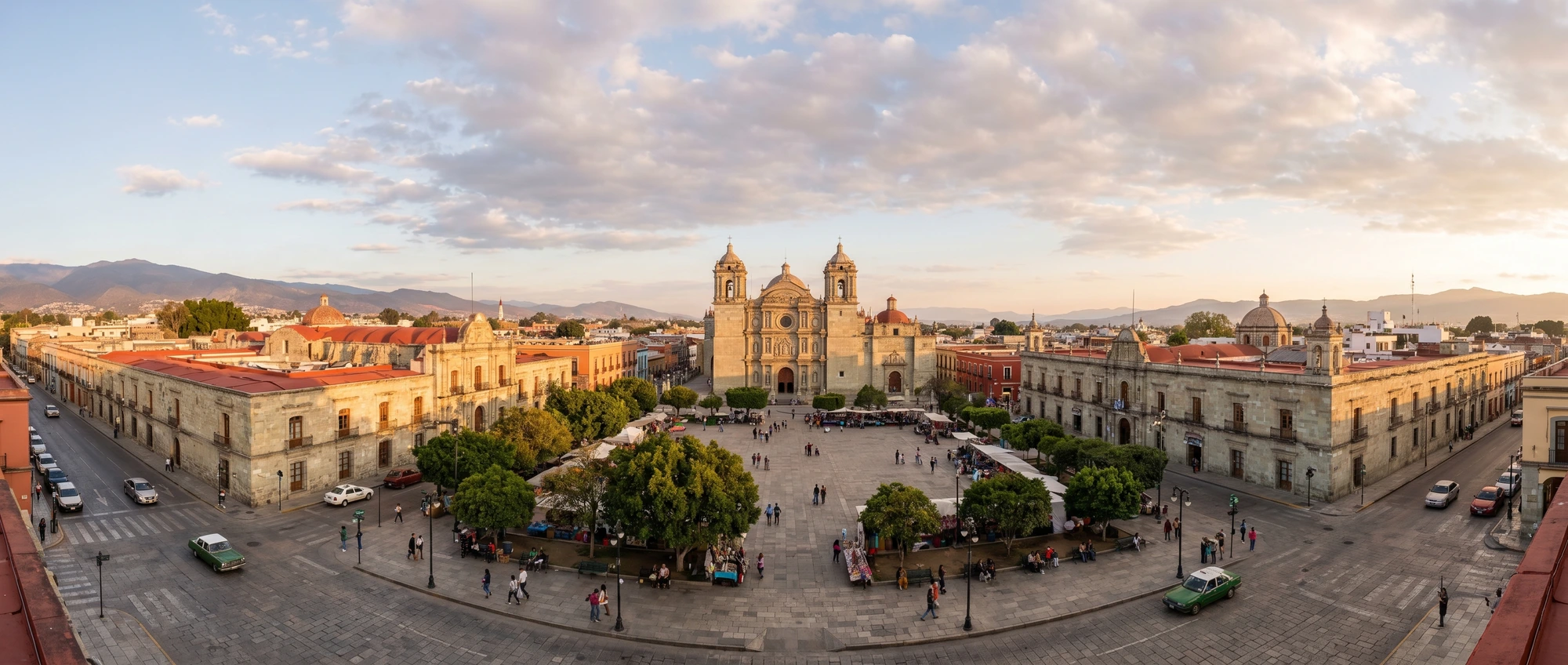
Oaxaca's old centre on foot: the gold-leaf Santo Domingo church, the Andador Macedonio Alcala, and the markets for tlayudas and mole. The heart of the trip.
Where
Oaxaca, Mexico
Opening hours
Open access (always open) for the Zocalo, the Alcala and the streets. Santo Domingo church, the markets and the cultural museum keep their own hours, with the markets busiest from late morning, so confirm current hours and prices on the official site.
Tickets
Free — no ticket needed to wander the Zocalo, the Alcala and the markets. The Santo Domingo cultural museum (Museo de las Culturas) charges a separate entry of around 95 pesos; the church itself is free to enter.
Time needed
A full day in pieces: mornings in the markets, a slow midday around Santo Domingo and the Alcala, and the Zocalo in the evening.
In short
Visiting Centro Historico and the Zocalo
Oaxaca's Centro Historico is the heart of the trip and best done slowly on foot: the gold-leaf interior of Santo Domingo, the pedestrian Andador Macedonio Alcala, the leafy Zocalo, and the 20 de Noviembre and Benito Juarez markets for tlayudas and mole. Wandering is free; the Santo Domingo cultural museum is a separate ticket of around 95 pesos.
The walk through the centre
Oaxaca rewards walking more than almost anywhere in Mexico, and its Centro Historico is the trip — not a box to tick on the way to ruins, but the thing itself. Start at the Templo de Santo Domingo, whose plain stone front gives nothing away before you step inside to a ceiling of swirling gold leaf and painted figures that genuinely stops people in the doorway. The church is free to enter; the cultural museum next door (the old convent, with the Monte Alban treasure) is a separate ticket of around 95 pesos and worth it if you want the context.
From Santo Domingo, walk the Andador Macedonio Alcala, the pedestrian street that links the church to the Zocalo, the leafy main square ringed with arcaded cafes. It’s all open and free; the cost is only whatever coffee or mezcal you stop for along the way.
Eat your way around it
The real heart of the centre is its markets. The 20 de Noviembre and Benito Juarez markets are where Oaxaca eats: tlayudas the size of a steering wheel, tasajo grilled to order over coals, stacks of the region’s celebrated moles, and stranger pleasures like chapulines (toasted grasshoppers) and frothy tejate. Go hungry and graze across several stalls rather than committing to one sit-down meal.
A few honest notes. The markets are busiest and best from late morning; the Zocalo comes alive in the evening with families, balloon sellers and the odd protest banner strung across it. It’s a walkable, friendly centre by day and into the night, but keep an eye on your bag in the crush and follow current UK government travel advice for Mexico.
Worth it? It’s the reason to come to Oaxaca. Give it a full day in pieces — markets in the morning, churches at midday, the square at dusk — and don’t rush it.
Planning the rest of your trip? See the Oaxaca city guide.