Quintana Roo (Riviera Maya)
Riviera Maya
Mexico's Caribbean resort coast decoded for UK travellers: where to base along the Cancún–Tulum strip, the sargassum-season trap, cenote and ruins day trips with real costs, and how to use the ADO bus and Tren Maya instead of overpriced taxis.
In short
Riviera Maya at a glance
The Riviera Maya is the 130km Caribbean coast running south from Puerto Morelos through Playa del Carmen and Akumal to Tulum — the strip where most UK package and all-inclusive holidays to Mexico land. Everyone arrives at Cancún airport, so the first decision is how far south to base: Playa del Carmen for walkable restaurants and the Cozumel ferry, Tulum for boho beach clubs and the cenote country, or one of the quieter towns (Puerto Morelos, Akumal, Puerto Aventuras) if you want calm over nightlife. The thing the brochures don't mention is sargassum — the brown seaweed that can bury the beaches from roughly April to October, with June and July the worst — so when you go matters as much as where. The set-piece days out are the cenotes and the Mayan ruins, and you can do the coast cheaply on the ADO bus, the new Tren Maya and the colectivo vans rather than the notoriously overpriced taxis.
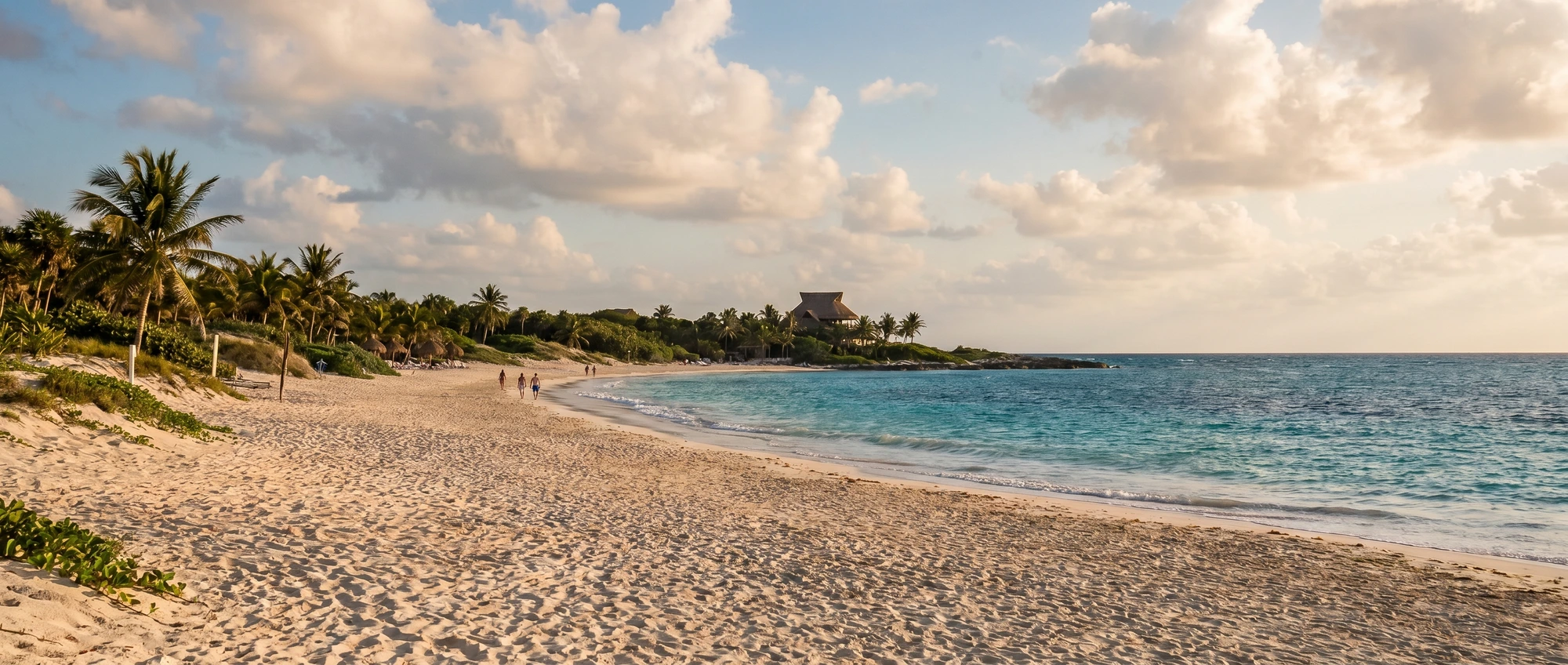
The Riviera Maya is the 130km of Caribbean coast that runs south from the little reef town of Puerto Morelos, through Playa del Carmen and the quieter enclaves of Akumal and Puerto Aventuras, down to Tulum and its clifftop ruins. It’s where most UK holidays to Mexico actually land: you fly into Cancún, and almost everything worth doing is strung along a single road, Highway 307, heading south. The honest framing is that this is a beach base with a string of brilliant day trips attached — the cenotes, the Mayan ruins and the reef island of Cozumel — rather than a place you tour.
The decision that shapes the trip is where to base, and the runner-up is when to go. Playa del Carmen is the most walkable and best-connected base; Tulum is the prettiest and the priciest; Puerto Morelos and Akumal are the calm, family-friendly alternatives. But cutting across all of that is sargassum — the brown seaweed that can bury these beaches from roughly April to October, worst in June and July, and worst of all on the open-facing Tulum and Playa shores. It’s the thing the brochures leave out, and it’s why December to April, or the shoulder months of November and May, are the sweet spot despite the higher prices.
Getting around is cheaper and easier than the resort transfer desks suggest. The ADO first-class bus and the new Tren Maya both link the airport with Playa del Carmen and Tulum for a few pounds, and the colectivo shared vans cover the short hops to the cenotes for about £2. The one thing to avoid is the unmetered coastal taxi, which is where tourists routinely get stung — agree the fare before you get in, or don’t get in.
The route
The Riviera Maya isn't a touring route — most people pick one base and day-trip up and down Highway 307. This is a relaxed week built around Playa del Carmen, the best-connected base, with the cenotes, Tulum and Cozumel as the three days out that show you what the coast actually has beyond the resort pool. Times assume the ADO bus or a colectivo; a hire car cuts the cenote runs roughly in half but isn't needed for the towns.
-
Days 1–2
Settle into Playa del Carmen
Base here first: Quinta Avenida (5th Avenue) for walkable restaurants and bars, a town beach that's cleaned daily, and the Cozumel ferry on the doorstep. Spend day one finding your feet and checking the beach — if sargassum is in, the morning is your best window before the afternoon brings more in. Pay your Quintana Roo Visitax online during this stretch so it's done before you fly home.
-
Day 3
Cozumel by ferry
The Ultramar or Winjet ferry from Playa del Carmen takes 30–40 minutes and costs about £11 each way (£21 return), running roughly every half hour. Cozumel sits behind a reef so it's the most reliable snorkelling and diving on this coast, and it usually escapes the worst of the sargassum — a good plan-B beach day when the mainland is weeded up.
-
Day 4
Cenote day
The freshwater sinkholes are the one thing here you can't get anywhere else. Take a colectivo (about £2) or hire a car towards Tulum and pick one: Gran Cenote (around £21 with snorkel gear) for swimming among turtles, or Dos Ojos (from about £15) for the cathedral-like caverns. Bring reef-safe sunscreen — most cenotes make you rinse off any other kind before you get in.
-
Day 5
Tulum — ruins and beach
Hop down to Tulum (about 45 minutes by ADO bus, Tren Maya or colectivo). The clifftop Mayan ruins overlooking the sea are the photo everyone comes for — go at opening to beat the heat and the tour buses. Then it's the beach-club strip, which is gorgeous but pricey and the most sargassum-prone on the coast, so check conditions before you commit a whole day.
-
Days 6–7
Chichén Itzá, then slow down
Give one day to a Chichén Itzá tour (from about £30–60pp including a cenote swim and the colonial town of Valladolid) — it's a long day inland but it's the headline Mayan site. Keep the last day light: a final beach, a reef snorkel or just the pool, and don't book a morning tour the day you fly. Confirm your Visitax payment is logged before you head to the airport.
Where to base yourself
Pick one or two bases rather than moving every night.
Playa del Carmen
££ mid-rangeThe coast's most walkable base and the all-round best first choice: restaurants and bars along Quinta Avenida, a town beach cleaned daily, the Cozumel ferry on the doorstep and the best bus and Tren Maya links. Lively without being a sealed resort bubble, and the most central for cenotes and ruins. Pick a block or two back from the beach for quieter nights.
Best for: First-timers, independent travellers, walkability, day trips
Tulum
£££ premiumDesign-led beach clubs, the clifftop ruins and the cenote country, with prices that have climbed sharply and a beach-road hotel zone that's a pricey taxi from Tulum Pueblo. The setting is the best on the coast — but it also gets the heaviest sargassum, faces an open south coast with no protecting reef, and the beach hotels can sting. Worth it for the vibe; stay in the Pueblo if the budget's tight.
Best for: Design hotels, cenotes, a boho beach scene, at a premium
Puerto Morelos
£ valueA small, genuinely Mexican fishing town between Cancún and Playa del Carmen, with a protecting offshore reef, good snorkelling straight off the beach and a relaxed, low-rise feel. The closest base to the airport, cheaper to eat than Playa or Tulum, and far quieter — best for travellers who want calm and a real town over nightlife.
Best for: Quiet, value, snorkelling, families
Akumal & Puerto Aventuras
££ mid-rangeTwo calm, family-leaning bases between Playa del Carmen and Tulum. Akumal is a tiny snorkel town famous for the turtles in its bay (you now need a guide and a small fee to swim with them); Puerto Aventuras is a gated marina community with protected, calm coves. Sleepy by night — Akumal effectively shuts by 10pm — so good for a switch-off family week, less so if you want to walk to a bar.
Best for: Families, calm coves, turtle snorkelling, all-inclusives
Getting around Riviera Maya
Everything funnels through Cancún airport, and the good news is you don't need a taxi for the long runs. The ADO first-class bus is the workhorse: comfortable, air-conditioned coaches from the airport to Playa del Carmen take about 1h15 for roughly £12 (270 pesos), running every half hour, and continue to Tulum. The new Tren Maya now links the airport with Playa del Carmen and Tulum too, at similar prices and sometimes faster — book the coastal corridor ahead as it sells out on Fridays and Sundays. For short coastal hops between Playa del Carmen, the cenotes and Tulum, the colectivo shared vans are the local way: about £2 (50 pesos) Playa to Tulum, flagged down on Highway 307. The thing to avoid is the taxi: coastal cabs are unmetered and notoriously overpriced for tourists, and a Tulum-Pueblo-to-beach run can cost more than the bus from the airport, so agree the fare before you get in or pre-book a private transfer (around £35–65 from the airport to Playa). Hire a car only if you want to chase the quieter cenotes and ruins on your own schedule — it's useful here in a way it isn't in Cancún town.
Book the essentials
Where to stay
Tours & tickets
Airport transfers
Car hire
Stay connected
Riviera Maya FAQs
Where should I stay on the Riviera Maya?
When is sargassum season on the Riviera Maya and how bad is it?
How do I get from Cancún airport to Playa del Carmen or Tulum?
Are the cenotes and Mayan ruins worth it, and what do they cost?
What is the best time to visit the Riviera Maya?
Ready to book?
Compare car hire