Casablanca-Settat
Art Deco city centre
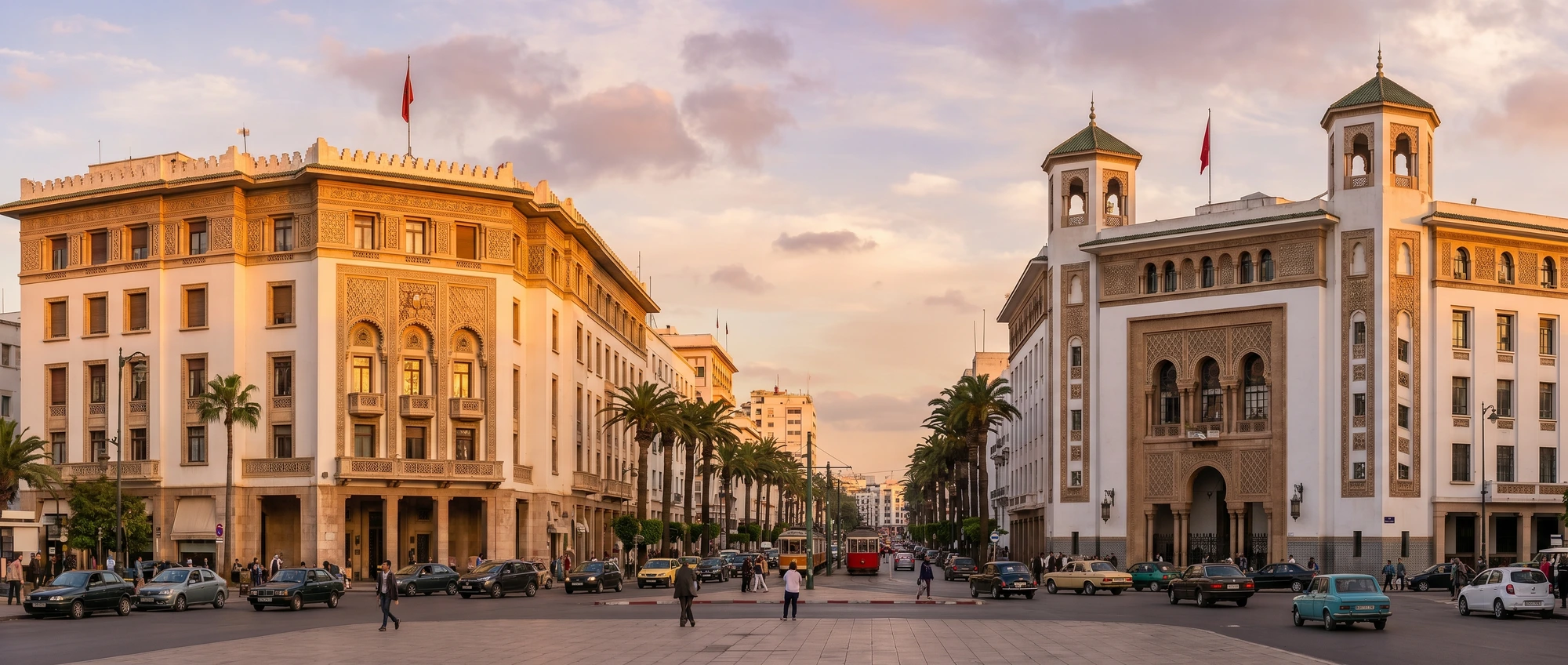
Casablanca was a 1930s French Art Deco showpiece, and the streets around Place Mohammed V, the Cinema Rialto and the old Post Office are the best free walk in town — faded rather than restored.
Where
Casablanca, Morocco
Opening hours
Open access (always open) to walk the streets and squares. The interiors you can enter — the post office, cinema and cafes — keep their own hours; best wandered in daylight.
Tickets
Free to wander — no ticket needed for the streets and squares. You only pay if you go inside a venue, take a guided tour or stop for a coffee.
Time needed
Two to three hours on foot to loop the main square and the Art Deco streets, longer with coffee stops and a look inside the cinema or post office.
In short
Visiting Art Deco city centre
Casablanca's downtown was a 1930s French Art Deco showpiece, and the streets around Place Mohammed V, the Cinema Rialto and the old Post Office make the best free walk in the city. Expect faded grandeur rather than polished restoration — flaking facades and worn detail — which is much of the appeal. Go on foot by day with your eyes up.
The best free walk in the city
Under the French protectorate in the 1920s and 30s, downtown Casablanca was built as an Art Deco showpiece, and that ambition is still legible in the streets if you know where to look. The natural anchor is Place Mohammed V, the grand civic square ringed by administrative buildings, with its fountain and pigeons. From there, walk Boulevard Mohammed V toward the Marche Central and you’ll pass the elegant lines of the old Post Office (La Poste), the curved frontage of the Cinema Rialto, and block after block of geometric balconies, rounded corners and faded plasterwork above the shopfronts. It’s all free to wander; you only spend money if you step inside a venue or stop for a coffee.
The single best tip is simple: look up. The ground floors have been re-tenanted and modernised, so the Art Deco lives above the awnings — in the railings, friezes and window detailing of the upper storeys.
What to expect, and is it worth it
Set your expectations honestly. This is faded grandeur, not a restored quarter. Many facades are weathered, stained and patched, the streets are busy and workaday, and there’s no museum gloss. For a lot of visitors that decay is precisely the appeal — a real, lived-in city centre rather than a polished set piece — but if you’re hoping for a tidy heritage district, you’ll be underwhelmed.
Give it two to three hours on foot by daylight; a local walking tour is worth it if you want help reading the buildings, though you can happily explore solo. Pair the walk with a coffee in one of the old downtown cafes and a look inside the Rialto or the post office hall. As a free attraction it earns its place easily — it’s the most distinctive thing to do in central Casablanca, provided you come for the patina rather than perfection.
Planning the rest of your trip? See the Casablanca city guide.