Pomerania
European Solidarity Centre
How to visit the European Solidarity Centre in Gdańsk: what the 40 zł ticket covers, which day it closes, how long the seven-hall route really takes, and the free rooftop and shipyard-gate monument most visitors miss.
Where
Gdańsk, Poland
Opening hours
Permanent exhibition: summer (May–September) Monday–Friday 10:00–19:00, Saturday–Sunday 10:00–20:00; winter (October–April) Monday and Wednesday–Friday 10:00–17:00, Saturday–Sunday 10:00–18:00. Closed every Tuesday (a technical/maintenance day) year-round, and on some public holidays. Entry is by timed slot, so confirm your date and time on ecs.gda.pl before travelling.
Tickets
Adult permanent-exhibition ticket 40 zł (about £8) with the English audio guide included; reduced (students, seniors 65+) 35 zł (about £7); family tickets from 100 zł (about £20) for two adults and a child. Under-7s and a long list of categories go free. The rooftop terrace and the shipyard-gate monument outside are free to everyone.
Time needed
Allow 2–3 hours for the seven-hall audio-guide route — it is detailed and reading-heavy — plus 15–20 minutes for the free rooftop terrace and the monument outside.
In short
Visiting European Solidarity Centre
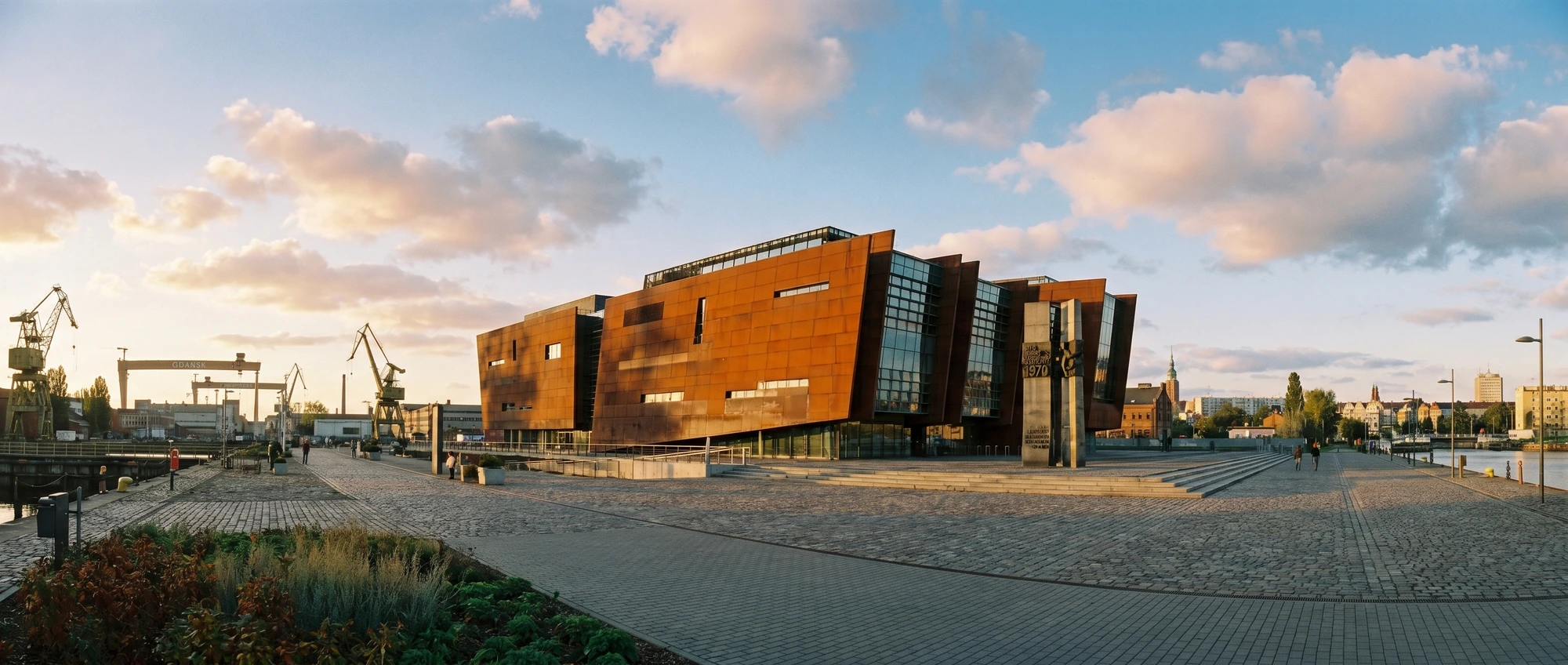
The 40 zł (£8) adult ticket buys the permanent exhibition across seven halls with the English audio guide included — start in Hall A, 'The Birth of Solidarność', built around the original plywood board of 21 Demands that the strikers hung on the shipyard's Gate No. 2 in August 1980. Allow 2–3 hours: the route is long and text-heavy, and the late-morning school and coach groups bunch up around 11:00, so go at opening or after about 16:00. The exhibition closes every Tuesday for maintenance, which catches a lot of people out. Two things outside cost nothing — the rooftop terrace and garden on the top floor, and the Monument to the Fallen Shipyard Workers (three steel crosses with anchors) on Solidarity Square in front of the building.
How to visit, and what the ticket covers
The thing to know first is that the permanent exhibition is closed every Tuesday for maintenance — that single fact catches more visitors out than anything else. On any other day the 40 zł (about £8) adult ticket covers the whole route across seven halls with the English audio guide included, so you don’t pay extra for it. Reduced entry is 35 zł (about £7), under-7s are free, and family tickets start at 100 zł for two adults and a child. Entry runs on timed slots that cap numbers, so in July, August and on summer weekends the mid-morning windows do sell out a day or two ahead — book on ecs.gda.pl and lock in your time.
The route starts in Hall A, “The Birth of Solidarność”, built around the original plywood board of 21 Demands the strikers hung on the shipyard’s Gate No. 2 in August 1980 — the centrepiece object, and worth slowing down for. From there the halls run through the world before the strikes (“The Power of the Powerless”), martial law, and the road to the 1989 elections, with the Hall of John Paul II looking out towards the shipyard crosses. It is detailed and reading-heavy, so give it the full two to three hours rather than treating it as a quick stop.
Worth it? Give it the time it needs
Go at opening or after about 16:00 to sit between the school parties and coach groups, which bunch up around 11:00. In summer the centre stays open to 19:00 on weekdays and 20:00 at weekends, so a late-afternoon slot is the quiet one and still leaves time for the rooftop terrace and garden on the top floor — free to anyone, with a long view back over the old Gdańsk Shipyard. It’s a flat 15-to-20-minute walk north from Długi Targ to plac Solidarności, or a short SKM hop to Gdańsk Stocznia station by the gates.
It earns the visit if you give it the time. This is one of the best modern-history museums in Poland, and the story lands harder for being told on the exact ground where it happened. The catch is that it is long and text-heavy — fine if you like a proper museum, less so if you want a 40-minute walk-through. Before you go in, take five minutes for the Monument to the Fallen Shipyard Workers out front: three steel crosses with anchors, raised in 1980 to the workers killed in the 1970 protests, and free to stand under. Pair the centre with the nearby Museum of the Second World War only if you have the stamina — both are half-day weights, and one heavyweight museum a day is plenty here.
Planning the rest of your trip? See the Gdańsk city guide.
More to see in Gdańsk
Book the essentials
Tours & tickets
European Solidarity Centre FAQs
Do you need to book European Solidarity Centre tickets in advance?
Is the European Solidarity Centre worth it?
What is the best time of day to visit?
How do you get to the European Solidarity Centre from Gdańsk Main Town?
Ready to book?
Check tickets & tours