Madeira
Madeira
Madeira for UK travellers: where to base yourself, the new levada-walk booking rules, whether you need a hire car, and what a week of mountains, gardens and poncha really costs in pounds.
In short
Madeira at a glance
Madeira is a steep, green Atlantic island three and a half hours from the UK, and almost everyone bases themselves in Funchal — the only town with a real seafront, restaurants and bus links. The draw is the interior: levada walks beside the old water channels, the Pico do Arieiro ridge to Pico Ruivo, and gardens like Monte Palace above the city. From 1 January 2026 the headline trails need a paid online reservation, so book those before you fly. It's a year-round island rather than a beach one — there's barely any sand — so come for walking, gardens and the dramatic coast, not a sunbed.
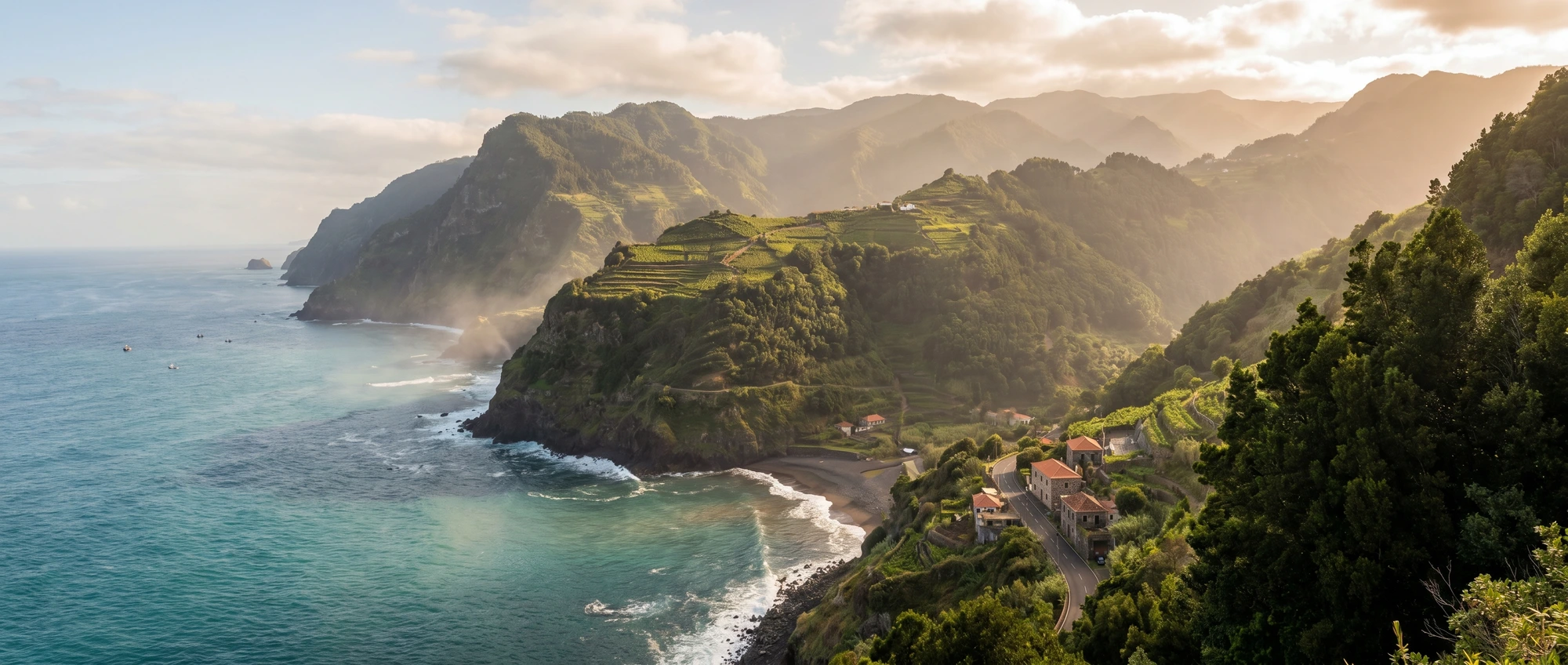
Madeira is a volcano sticking out of the Atlantic, three and a half hours from the UK, and it rewards walkers far more than sun-seekers. There’s almost no natural sand — the coast is black rock and man-made lidos — so people come for the interior: the levadas, those centuries-old irrigation channels you walk beside on the flat, and the high ridge from Pico do Arieiro to Pico Ruivo, the island’s 1,862m roof. Almost everyone bases themselves in Funchal, because it’s the only place with a real seafront, a spread of restaurants and bus links worth the name. The Lido end is flat, walkable and full of pool hotels; the Old Town’s cobbled Zona Velha has the poncha bars and the best food.
The big change for 2026 is that the headline trails now need paying for. Since 1 January the classified levada and mountain walks run on a timed online booking — the SIMplifica system — at €4.50 for most PR routes and €10.50 for the Pico do Arieiro to Pico Ruivo PR1. Reserve your dates before you fly, because the popular slots go in season. The other honest warning is the driving: a hire car opens up the scattered walks and viewpoints, but the roads are steep, narrow and full of tunnels with no guardrails, and Madeira is the priciest place in Portugal to rent. Plenty of first-timers skip it, stay in Funchal and let guided day-tours handle the mountains.
Time it for April or May if you can. That’s peak bloom, the Flower Festival fills Funchal, and the rain is at its lightest. June often disappoints with weeks of low cloud the locals call “June gloom” — though the mountains are frequently clear above it when the city sits under grey, so keep your plans loose and chase the sun uphill.
The route
A relaxed week built around Funchal, with day trips out to the mountains, the north coast and a couple of the best levada walks. Book the PR1 Pico do Arieiro ridge and any other classified trail online before you arrive — slots for the popular ones go fast in season.
-
Days 1–2
Funchal
Settle into the Lido or Old Town. Take the cable car up to Monte (€18 return), walk the Monte Palace Tropical Garden (€18), and ride the wicker toboggan back down with the straw-hatted carreiros (about €35 for two). Evening: poncha and grilled espetada in the Zona Velha — a glass of poncha is €3–4 if you avoid the tourist-strip bars.
-
Day 3
The mountain ridge
The headline walk: the PR1 from Pico do Arieiro to Pico Ruivo, the island's roof at 1,862m. Now a one-way, booked trail (€10.50 per person via SIMplifica) — go at dawn to get above the cloud. About 7km and 3–4 hours one way, so arrange a transfer or tour rather than leaving a car at the far end.
-
Day 4
Rabaçal & the west
Drive or join a tour to Rabaçal for the Levada das 25 Fontes (PR6, €4.50 booked) — a gentle 4km channel-side walk to a spring-fed pool. Carry on to the natural lava pools at Porto Moniz on the north-west tip (€3 entry to the managed pools) for a swim in the Atlantic surf.
-
Day 5
South coast & Cabo Girão
An easy day along the south: Câmara de Lobos, the fishing village Churchill painted, then the Cabo Girão skywalk — a glass platform on one of Europe's highest sea cliffs (around 580m). Both are short hops west of Funchal and pair with a long lunch and more poncha.
-
Days 6–7
Slow days or Porto Santo
Bank a slower levada (the Levada do Caldeirão Verde or Balcões is easier than the ridge), or take the 2h15 ferry to Porto Santo — Madeira's flat sister island and the only place with a proper golden-sand beach. Day-return ferry fares run roughly €60–70 return; check sailings, as winter crossings thin out.
Where to base yourself
Pick one or two bases rather than moving every night.
Funchal — Lido / Ponta da Cruz
££ mid-rangeThe easiest first base: flat, walkable and lined with big ocean-view hotels, pools and saltwater swim complexes, plus a seafront promenade into town. It's the resort end and a bit characterless, but it's the most practical for a first trip — buses and Bolt taxis run into the Old Town in 10–15 minutes.
Best for: First-timers, pools, families, easy walking
Funchal — Old Town (Zona Velha)
££ mid-rangeThe atmospheric choice: cobbled lanes, the Sé cathedral, the painted doors of Rua de Santa Maria and the island's best concentration of restaurants and poncha bars. Hotels here are smaller and pools are rare, and the streets can be noisy at night — pick a side street off the main run.
Best for: Atmosphere, dining, walkability, couples
Monte
££ mid-rangeUp in the hills above Funchal, reached by the cable car. Cooler, quieter and green, with the Monte Palace garden on the doorstep — but it's residential, steep and short on restaurants, so you'll be commuting down for dinner. Best for a calmer, view-led stay if you have a car.
Best for: Quiet, gardens, cooler nights, drivers
Getting around Madeira
A hire car gives you the whole island — the best walks, viewpoints and the north coast are scattered and poorly served by bus — but Madeira's roads are steep, narrow, tunnel-heavy and often without guardrails, and it's the priciest place in Portugal to rent (roughly £25–45 a day in season, more at Christmas). Plenty of people skip the car: base in Funchal, use the Aerobus (€6.70) or bus 113 (€3) from the airport, and pick guided day-tours for the mountains and the north. If you do hire, get a small, gutsy car for the hairpins and remember the classified trails now need a separate online booking whether you drive or not.
Book the essentials
Where to stay
Tours & tickets
Airport transfers
Car hire
Stay connected
Madeira FAQs
Do you need a car in Madeira?
Do I need to book levada walks in advance?
Does Madeira have beaches?
When is the best time to visit Madeira?
Ready to book?
Compare car hire