Eastern Cape
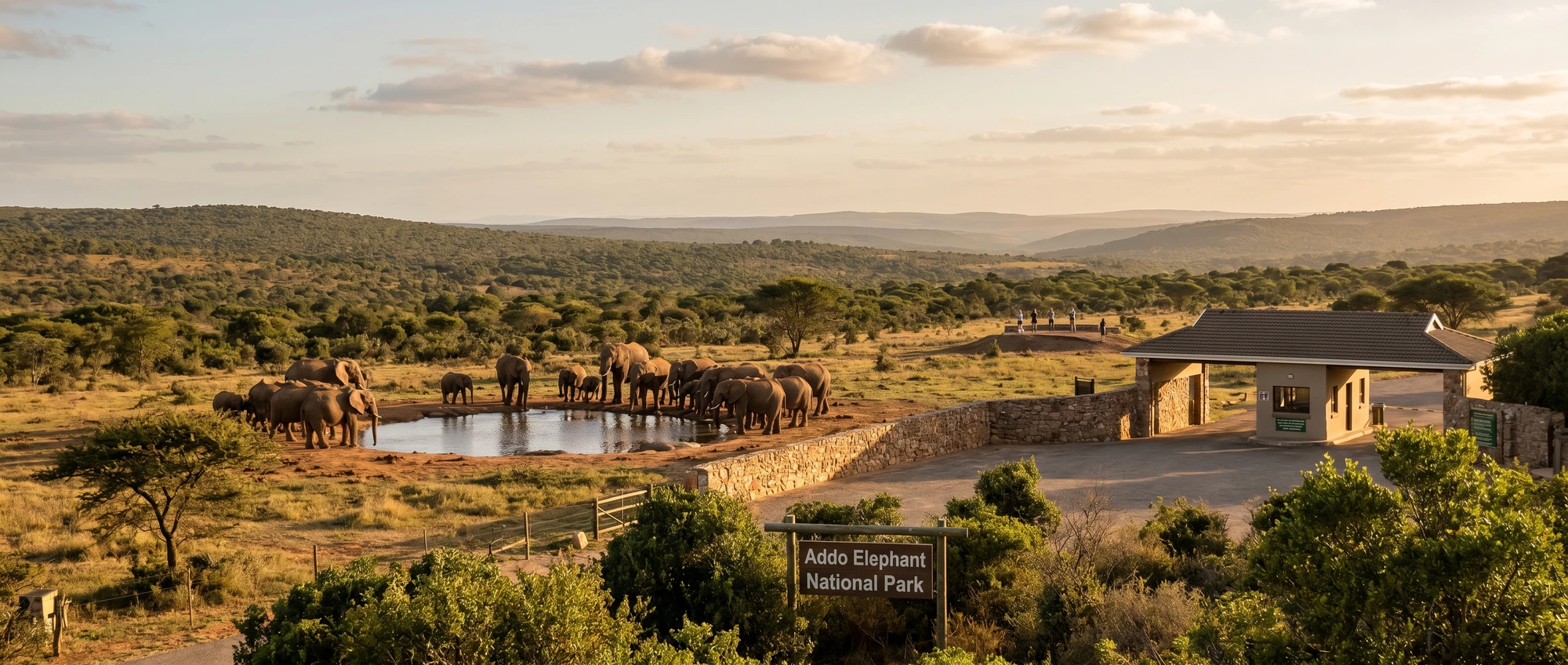
Addo Elephant National Park
A malaria-free Big Five park about 70km north of Gqeberha with over 600 elephants — easy to self-drive in your hire car, or take a guided game drive, with no tablets and no fuss.
Where
Gqeberha (Port Elizabeth), South Africa
Opening hours
The main gate generally opens around sunrise and closes at sunset, with gate times shifting through the year (typically about 07:00 to 18:00 or 19:00 in summer, a little shorter in winter). The rest camp and shop keep their own hours. Confirm current hours and prices on the official site.
Tickets
International visitors pay a daily SANParks conservation fee of around R384 per adult (about £17.50), with reduced rates for children; self-drive entry is included once you've paid the fee. Guided game drives and a Wild Card are extra. Prices change each SANParks year, so confirm current hours and prices on the official site.
Time needed
A full day. The drive from Gqeberha takes around an hour each way, and you want unhurried hours in the park to find elephants and the rest of the Big Five.
In short
Visiting Addo Elephant National Park
Addo is the reason many travellers base themselves in Gqeberha: a malaria-free Big Five park roughly 70km north of the city, home to more than 600 elephants. You can self-drive the main southern section in an ordinary hire car on good gravel and tar, or book a guided game drive. The international conservation fee runs to around R384 per adult per day (about £17.50). Allow a full day.
Getting there and getting in
Addo is the headline reason to base yourself in Gqeberha (Port Elizabeth). The main gate sits roughly 70km north of the city, about an hour’s drive on good road, and the great practical draw is that it’s malaria-free — no tablets, no fuss, which is exactly why families with young children pick the Eastern Cape over the Kruger.
International visitors pay a SANParks daily conservation fee of around R384 per adult (about £17.50), with cheaper rates for children. That fee covers self-driving the main southern section, and the roads here are graded gravel and tar that an ordinary hire car handles easily — no 4x4 needed. If you’d rather not navigate yourself, the park and city operators run guided game drives in open vehicles, which cost extra but put a ranger’s eyes on the bush. Fill up with fuel and water before you arrive, and check current gate times and fees on the official SANParks site, as both shift through the year.
What the day is actually like
Be realistic about the wildlife. With over 600 elephants, sightings of them are close to guaranteed — often at the waterholes or ambling across the road in front of you. The rest of the Big Five (lion, buffalo, leopard, rhino) are present but far less reliable on a single self-drive, and leopard in particular is a rare treat. Go slowly, stay in the car except at the marked picnic spots and viewpoints, and keep a respectful distance from elephants, who always have right of way.
Set aside a full day: an early start gives the best game viewing, and the light softens again late afternoon. There’s a rest camp with a shop and restaurant for a midday break. Treat it as a genuine safari rather than a quick photo stop, bring binoculars and patience, and Addo rewards you — an easy, accessible Big Five park within striking distance of the coast.
Planning the rest of your trip? See the Gqeberha (Port Elizabeth) city guide.
More to see in Gqeberha (Port Elizabeth)
Book the essentials
Tours & tickets
Addo Elephant National Park FAQs
Can I self-drive Addo in a normal hire car?
Is Addo really malaria-free?
Will I actually see the Big Five?
Ready to book?
Check tickets & tours