Balearic Islands
Mallorca
Mallorca for UK travellers: which coast to base on, the Tramuntana mountains versus the beach resorts, real costs in pounds, and whether you actually need a hire car.
In short
Mallorca at a glance
Mallorca is the largest and most varied of the Balearics: Palma is a proper city with a cathedral and a serious food scene, the Serra de Tramuntana mountains run the whole west coast, and the north around Alcúdia and Pollença has the long, shallow family beaches. The mistake is treating it as one place — the island is big enough that where you base yourself decides the holiday. Fly into Palma (PMI), pick one coast, and you can do most of it on the TIB bus network and the historic Sóller train without ever hiring a car.
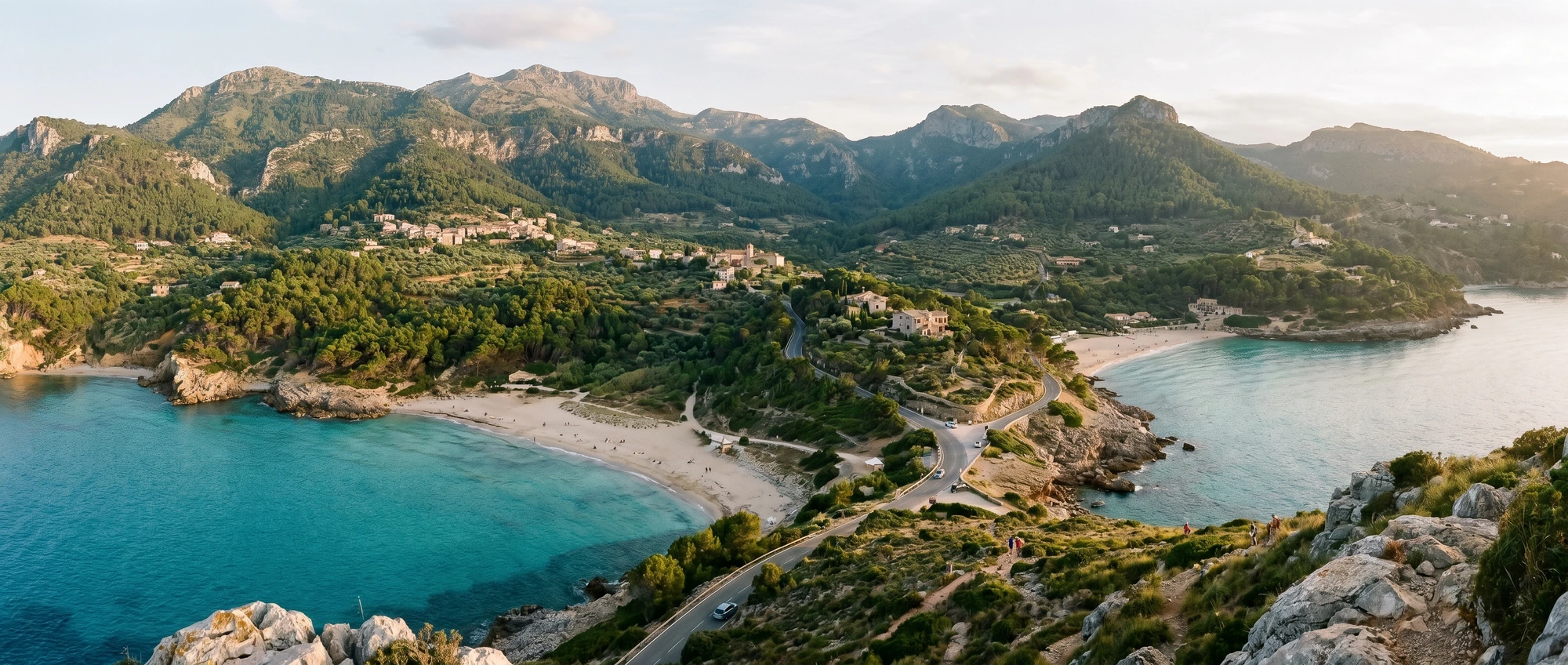
Mallorca is the largest of the Balearics and, more than most islands, it is really several holidays sharing one airport. Palma is a proper working city — a Gothic cathedral on the water, a tangle of old-town tapas streets and the cluster of good restaurants in Santa Catalina — and nothing like the resort strips people sometimes picture. Run northwest and the Serra de Tramuntana mountains drop straight into the sea at Port de Sóller and the lighthouse road at Cap de Formentor. Go north instead and you get the long, shallow, gently-shelving beaches around Alcúdia and Playa de Muro that make it the island’s strongest family base. The island is big enough — up to about 90 minutes across by road — that the coast you pick decides the holiday, so the one mistake to avoid is hotel-hopping daily between them.
The question most UK visitors ask is whether they need a hire car, and the honest answer is usually no. The TIB bus network is cheap (from €1.80 a trip) and reaches the main towns and resorts, the historic 1907 Sóller train and its vintage tram cover the west coast as an outing in their own right, and Palma is entirely walkable. Base yourself in Palma, Sóller or Alcúdia and a full week is comfortably car-free. Hire a car — roughly £40–£70 a day, and much more if you leave it to the last minute in peak season — only for the back roads of the Tramuntana and the remote east-coast coves the bus can’t reach. The week below assumes no car; add one for the east-coast caves day if you want the freedom.
The route
A relaxed week that samples all three Mallorcas — the city, the mountains and the northern beaches — without renting a car. Times are TIB bus or train estimates from Palma; hire a car only for the day you want the remote coves.
-
Days 1–2
Palma
Base here first: the cathedral (La Seu), the old town tapas streets around La Lonja, and a city beach at Portixol or Cala Major. Everything is walkable, so don't hire a car yet. The A1 airport bus drops you in the centre for €5.
-
Day 3
Sóller & the Tramuntana
Take the 1907 wooden Sóller train from Palma (€30 return, about an hour through 13 mountain tunnels), then the vintage tram down to Port de Sóller (€10 each way). It's the most-recommended single day on the island and you don't need a car for any of it.
-
Days 4–5
Alcúdia & the north
Move up to Alcúdia or Port de Pollença for the long, shallow family beaches and a walled medieval old town. The TIB 301/302 buses link them to Palma; Cap de Formentor's lighthouse drive is the scenic add-on (go before 10am in summer for parking).
-
Days 6–7
East coast caves & coves
Day-trip to the Cuevas del Drach at Porto Cristo (€18 adult) — an underground lake with a live classical concert and a boat ride — then the calas (small coves) of the east. This is the one stretch where a hire car earns its keep.
Where to base yourself
Pick one or two bases rather than moving every night.
Palma (Old Town / Santa Catalina)
££ mid-rangeThe best all-round base and the only one you can do car-free with ease: walkable old town, the cathedral, a real restaurant scene in Santa Catalina, and the airport 15 minutes away. Better for a city-plus-beach trip than for a pure beach holiday — the city beaches are decent, not spectacular.
Best for: First-timers, city-plus-beach, car-free trips
Port de Sóller (the west coast)
££ mid-rangeA horseshoe bay in the Tramuntana mountains, linked to Palma by the historic train and tram, so you can stay here without a car. Calm, shallow water and dramatic scenery; quieter and more scenic than the big resort strips, but smaller and pricier.
Best for: Mountains, scenery, calm swimming
Alcúdia & Port de Pollença (the north)
££ mid-rangeThe strongest family base: a long, shallow, gently-shelving beach at Playa de Muro, plenty of family hotels, and a walled medieval old town inland at Alcúdia. Logistics are easy with young children. The northern tip and Cap de Formentor are on your doorstep.
Best for: Families, long sandy beaches, first family trips
Getting around Mallorca
Mallorca is bigger than people expect — Palma to the north coast is about an hour, and the island is genuinely several holidays in one. The good news is the TIB bus network is cheap and reaches the main towns and resorts from €1.80 a trip, and the historic Sóller train and tram link Palma to the west coast. If you base in Palma, Sóller or Alcúdia you can do a full week without a car. Hire one (roughly £40–£70 a day, far dearer if booked late in peak season) only for the remote east-coast coves and the back roads of the Tramuntana, and book it well ahead — walk-up summer prices spike.
Book the essentials
Where to stay
Tours & tickets
Airport transfers
Car hire
Stay connected
Mallorca FAQs
Do you need a car in Mallorca?
How do you get from Palma airport to the city?
When is the best time to visit Mallorca?
Which part of Mallorca is best to stay in?
Ready to book?
Compare car hire