Andalusia
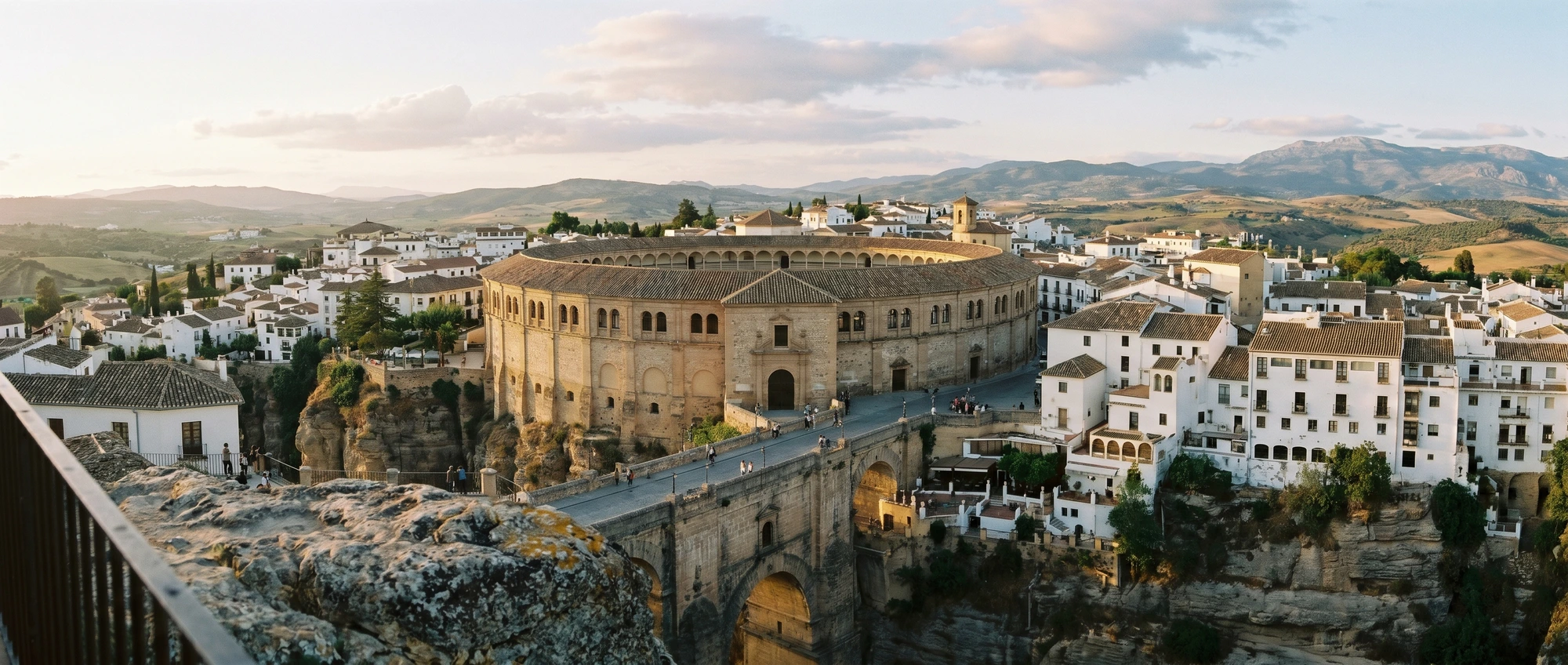
Ronda Bullring
How to visit Ronda's Plaza de Toros: the €9 ticket, what's actually inside Spain's oldest bullring, and whether it earns a stop beside the El Tajo gorge.
Where
Ronda, Spain
Opening hours
10:00–18:00 November–February, 10:00–19:00 in March and October, and 10:00–20:00 April–September. Open daily; last entry is shortly before closing. Confirm your date on rmcr.org.
Tickets
€9 (about £7.70) general admission, or €10.50 (about £9) with the audio guide. Reduced group rate around €7. The same ticket covers the arena and the museum.
Time needed
About an hour for a self-guided walk round the arena and museum; closer to 90 minutes if you take the audio guide and read everything.
In short
Visiting Ronda Bullring
The Plaza de Toros is a five-minute walk from the Puente Nuevo, so you can fold it into a Ronda day trip without backtracking. You don't need to book ahead — buy the €9 ticket at the door and walk straight in, which is rare for a sight this famous. Allow about an hour: it's one open arena plus a small bullfighting museum, not a vast complex, so it suits a roadTrip stop rather than a half-day.
How to visit without overthinking it
The Plaza de Toros sits on Virgen de la Paz, a five-minute walk from the Puente Nuevo bridge, so it slots into a Ronda day trip without any backtracking — most people pair it with the gorge in one loop. There’s no timed-entry system and it almost never sells out: buy the €9 ticket at the door (about £7.70), or pay roughly €10.50 for the version with an audio guide, and walk straight in. That alone makes it a refreshingly low-stress sight by Spanish standards. The same ticket covers both the arena and the small Museo Taurino off the inner ring.
Inside, you’re looking at one open arena rather than a sprawling complex: a 66-metre sandy ring — the widest in the world — circled by two tiers of covered seating on 136 Tuscan sandstone columns. The museum holds bullfighting costumes, Goya-era prints and the Real Maestranza’s weapons collection. Allow about an hour for a self-guided walk, or closer to 90 minutes if you take the audio guide and read everything. Hours run 10:00–20:00 from April to September, shorter in winter (to 18:00 November–February); always confirm your date on rmcr.org.
Is it worth it, and what to skip
As a standalone destination it isn’t worth a special trip, but if you’re already in Ronda for the gorge — and you should be — the bullring is a cheap, quick add-on that explains why the town matters in Spanish bullfighting. The one time it transforms is the Corrida Goyesca on the first weekend of September (5 September in 2026), the costumed fight tied to the Feria de Pedro Romero, when the arena actually fills; those tickets are sold separately and cost far more. The ring reopened in 2026 after two years of restoration, so the rest of the year it’s a calm, freshly-spruced museum visit rather than a working bullfighting venue.
If bullfighting history leaves you cold, skip the interior and spend your time on the free clifftop view from the Puente Nuevo and the Alameda del Tajo gardens behind the ring instead — that gorge, dropping almost 100 metres, is the real reason to come to Ronda. Most travellers reach the town by car on an Andalusia road trip; without one, it’s a train via Antequera-Santa Ana from Málaga or a direct bus from Seville, both of which leave you a short walk from the bullring.
Planning the rest of your trip? See the Ronda city guide.
More to see in Ronda
Book the essentials
Tours & tickets
Ronda Bullring FAQs
Do you need to book Ronda Bullring tickets in advance?
Is the Ronda Bullring worth it?
Can you see a bullfight at the Ronda Bullring?
Ready to book?
Check tickets & tours