Canton of Zurich
Grossmünster
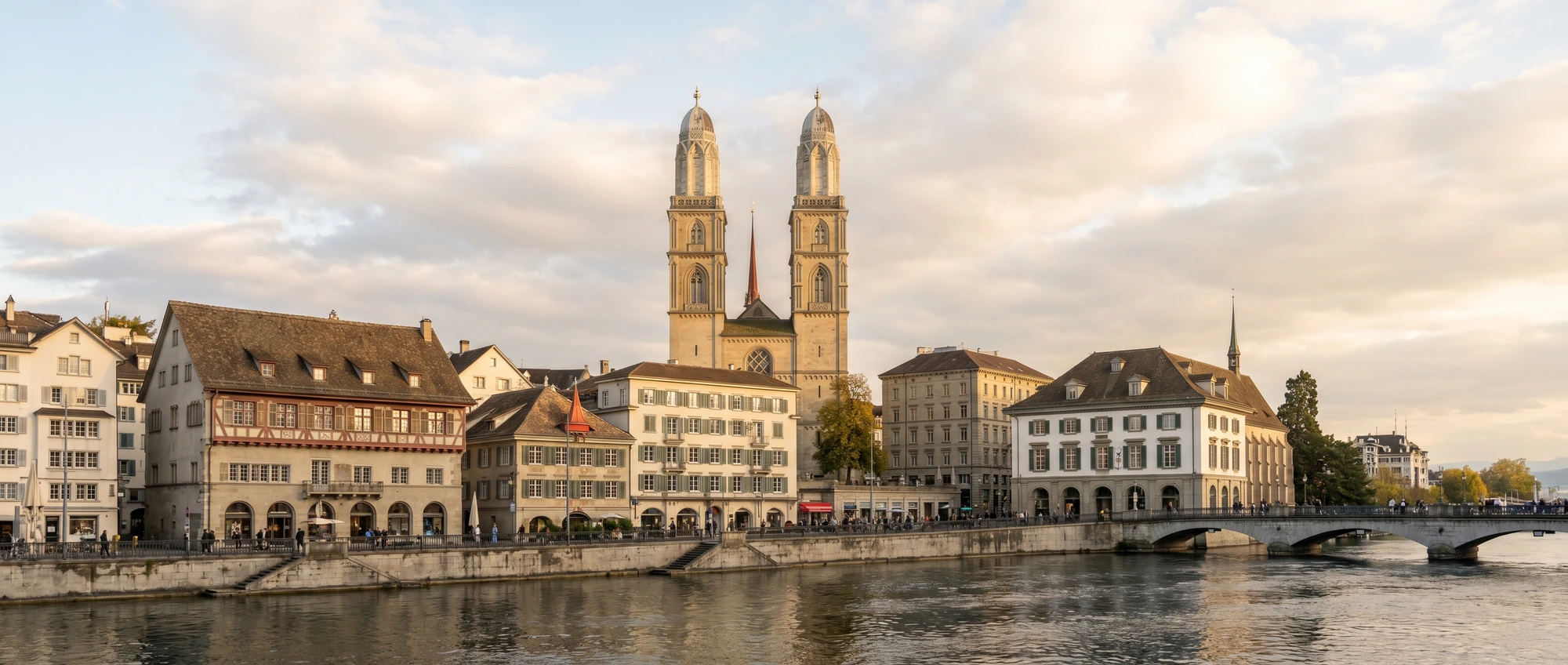
Zurich's twin-towered Romanesque landmark and the cradle of the Swiss Reformation. The church itself is free to enter; the bit worth a small fee is the climb up the Karlsturm tower for the rooftop view.
Where
Zurich, Switzerland
Opening hours
The church is generally open daily, with shorter hours on Sundays around services; the Karlsturm tower keeps its own, usually slightly shorter, daytime hours and may close in poor weather. Times shift seasonally, so confirm current hours and prices on the official site.
Tickets
Entry to the church is free. Climbing the Karlsturm tower carries a small charge of around CHF 5 (children cheaper); this is the only part you pay for. Prices and hours change, so confirm current hours and prices on the official site.
Time needed
About an hour: time inside the plain Reformation interior, plus the climb up the Karlsturm tower if it's open.
In short
Visiting Grossmünster
Zurich's twin-towered Romanesque church is the city's signature landmark and the cradle of the Swiss Reformation under Zwingli. Entry to the church is free; the part worth paying for is the climb up the Karlsturm tower — a fee of around CHF 5 — for a rooftop view over the old town and the Limmat. Spare an hour. Go early to beat queues for the narrow tower stair.
Free church, paid view
The Grossmünster’s twin towers are Zurich’s signature on the skyline, and stepping inside costs nothing. This is the cradle of the Swiss-German Reformation — the reformer Huldrych Zwingli preached here in the early 1500s — which is exactly why the interior feels so bare next to most grand European churches. There’s no gilt and little decoration; the drama instead comes from the modern stained glass and the heavy Romanesque stonework. It’s worth a quiet look, and you can come and go freely.
The part you actually pay for is the climb up the Karlsturm tower, usually a small fee of around CHF 5. That’s the bit worth the francs: a steep, narrow spiral stair leads up to a viewing level with one of the finest outlooks over the old town rooftops, the Limmat and, on a clear day, the lake and hills beyond.
Timing and honest notes
Allow about an hour in total — a short visit inside, then the tower if it’s open. The Karlsturm keeps its own, generally shorter, hours than the church and may shut in poor weather, so check before you climb.
Come early in the day. The staircase is genuinely tight, single-file in places, and queues form once the tour groups arrive; first thing you’ll often have it almost to yourself. The climb isn’t suited to anyone wary of confined spaces or unsteady on steps, so judge it honestly before you start up.
Is it worth it? Yes — for a free church and a five-franc view, it’s one of Zurich’s best-value sights and a genuine landmark rather than a tourist trap. Keep expectations realistic about the interior: it’s deliberately plain, a piece of Reformation history rather than a soaring showpiece. Pair it with a wander over to the Lindenhof terrace and the Niederdorf lanes just across and along the river.
Planning the rest of your trip? See the Zurich city guide.