Central Switzerland
Lake Lucerne
Postcard central Switzerland from a single base: how to use Lucerne as a hub, which of Pilatus, Rigi and Stanserhorn is actually worth the cogwheel fare, and whether to buy a pass or pay per ride.
In short
Lake Lucerne at a glance
Lake Lucerne (the Vierwaldstättersee) is the easiest slice of classic Switzerland to do well: base yourself in Lucerne, 50 minutes by train from Zurich airport, and almost everything is a lake-steamer or cogwheel-railway ride away. The fjord-like lake is ringed by three big day-trip peaks — Pilatus, Rigi and Stanserhorn — plus the Bürgenstock plateau, and you reach them by boat-and-train combinations that are half the pleasure. You don't need a car, and you don't need to move hotels; two or three nights in Lucerne covers it, four if you want a full day on each mountain.
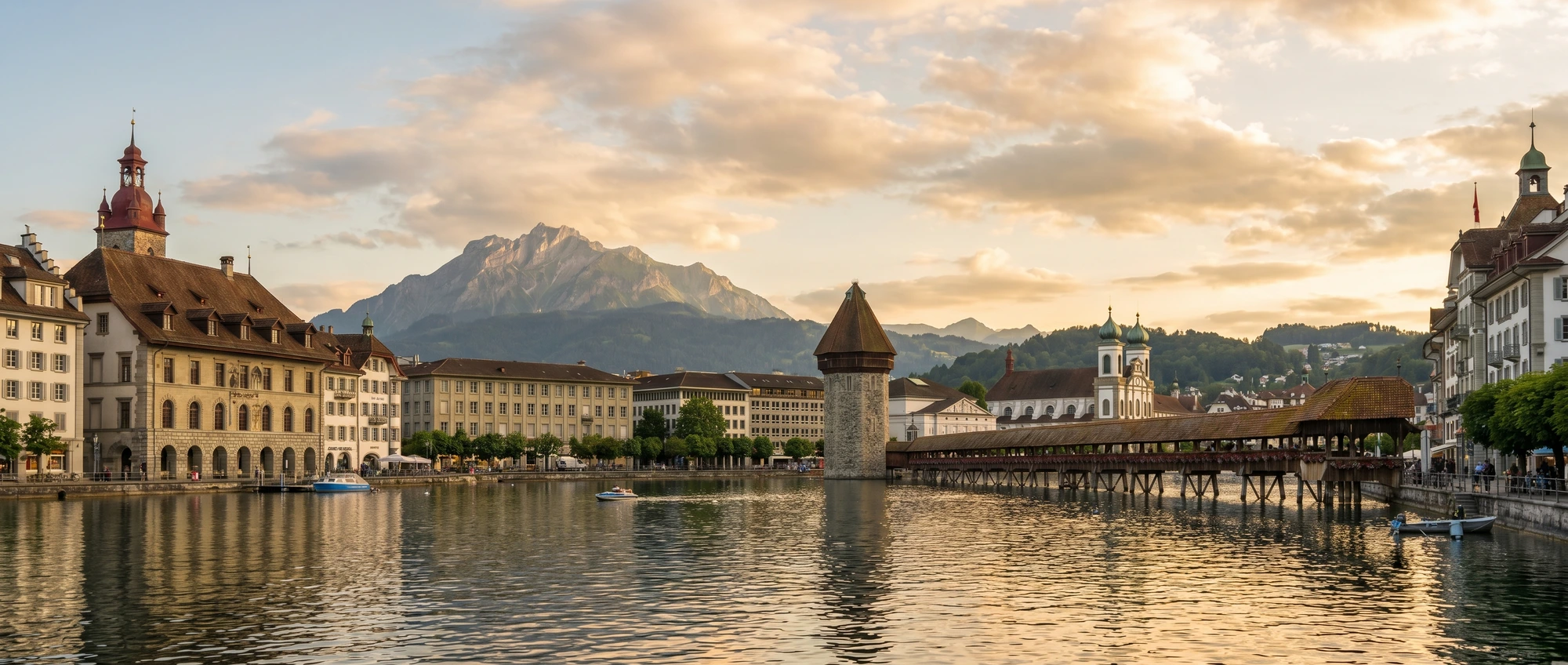
Lake Lucerne is the bit of Switzerland the brochures are usually selling: a fjord-shaped lake of blue-green water hemmed in by green-then-grey peaks, with paddle steamers crossing it and cogwheel railways climbing out of it. The thing that makes it so easy for a first trip is that you don’t have to construct a route — you base yourself in Lucerne, 50 minutes from Zurich airport, and the lake itself does the work, ferrying you to the foot of each mountain. The town is small and walkable, the boats leave from the lakefront, and you can have a complete central-Switzerland trip without ever moving hotels or touching a car.
The mistake first-timers make is trying to bag all three big mountains — Pilatus, Rigi and Stanserhorn — in a rushed few days, and then doing each as a there-and-back slog. You don’t need three; pick one. Pilatus is the dramatic summit and the one worth the splurge (the boat-cogwheel-cable-car ‘Golden Round Trip’ is the way to ride it); Rigi is the gentle, walkable viewpoint; Stanserhorn is the quiet local one. And whichever you choose, ride the scenic leg one way and take the train back the other — a steamer the full length of the lake is three hours, glorious once, tedious twice. Get a clear-weather day for the summit and the whole region pays you back.
The route
A relaxed two-to-three-day plan built around a single Lucerne base, using the lake steamers and cogwheel railways rather than a car. Times are real boat and rail durations; ride a scenic boat out and train back rather than doubling the same route.
-
Day 1
Lucerne town and the lake
Settle into Lucerne: the Chapel Bridge and Water Tower, the Lion Monument, and the medieval Old Town, then a short evening lake cruise (the round-trip 'small lake' boats run about 1 hour). Pick up a Tell-Pass or your Swiss Travel Pass here so the boats and railways are sorted before you start the mountains.
-
Day 2
Mount Pilatus, the Golden Round Trip
The headline day. Take the lake steamer from Lucerne to Alpnachstad (~1h30), ride the world's steepest cogwheel railway up Pilatus, then descend by cable car and bus back to the city — the classic 'Golden Round Trip', about CHF 126 / £111 without a pass. Allow a full day and go in clear weather; the summit is pointless in cloud.
-
Day 3
Rigi or Stanserhorn
For a gentler second mountain, take the boat to Vitznau (~1h) and the Rigi cogwheel railway — Europe's first mountain railway — up the 'Queen of the Mountains' for wide, easy-walking summit views. For something quieter, train to Stans (~15 min) and ride the open-top CabriO cable car up Stanserhorn instead. One mountain a day is plenty.
-
Day 4 (optional)
Full lake crossing to Flüelen
If you've a spare day, ride a steamer the full length of the lake to Flüelen (around 3 hours one way) through the wildest, steepest scenery at the southern end, near the Rütli meadow of Swiss founding legend. Train back from Flüelen to Lucerne in under an hour rather than sitting through the boat both ways.
Where to base yourself
Pick one or two bases rather than moving every night.
Lucerne Old Town & lakefront
£££ premiumThe obvious and best base: the Chapel Bridge, the boat piers and the train station are all within a 10-minute walk, so every steamer and cogwheel day-trip starts from your door. Atmospheric and walkable, but the most expensive part of an already-expensive city — book the riverside and old-town lanes early in summer.
Best for: First-timers wanting everything on the doorstep
Weggis & Vitznau (Rigi shore)
£££ premiumLakeside resort villages on the Rigi side, reached by steamer in 40–60 minutes or a short drive. Quieter and more scenic than the city, with the Rigi cogwheel railway from Vitznau on your doorstep — but you trade the town's restaurants and nightlife for calm, and you'll boat in for a Lucerne day.
Best for: A calmer lakeside stay with Rigi access
Stans & the Bürgenstock side
££ mid-rangeThe southern shore around Stans and the Bürgenstock plateau is the value-and-views option: Stans is 15 minutes by train from Lucerne with the Stanserhorn CabriO cable car, while the Bürgenstock resort delivers the famous cliff-edge lake views. Less buzz than the Old Town, but cheaper rooms and quick rail links back.
Best for: Better value and the Stanserhorn/Bürgenstock views
Getting around Lake Lucerne
This is a boat-and-train region, not a driving one. Lucerne sits 50 minutes by direct train from Zurich airport, and from the city's lakefront piers the SGV lake steamers fan out to every shore village and the foot of each mountain railway, with the cogwheel and cable-car lines taking over from there. Don't hire a car: parking in central Lucerne is dear, the cogwheel railways are the whole point and a car can't drive up them, and the steamer-plus-rail combinations are more scenic anyway. The money question is which pass. A Swiss Travel Pass gives free lake steamers and free or half-price mountain railways; the regional Tell-Pass (from around CHF 200 for a few days in summer) covers the boats and most central-Switzerland peaks together. If you're only doing one mountain and a short cruise, paying per ride can work out cheaper — price your exact plan before committing.
Book the essentials
Where to stay
Tours & tickets
Airport transfers
Car hire
Stay connected
Trains & rail passes
Lake Lucerne FAQs
How many days do you need for Lake Lucerne?
Which is better, Pilatus or Rigi?
Do you need a car around Lake Lucerne?
Ready to book?
Compare car hire