Sahel (Central Coast)
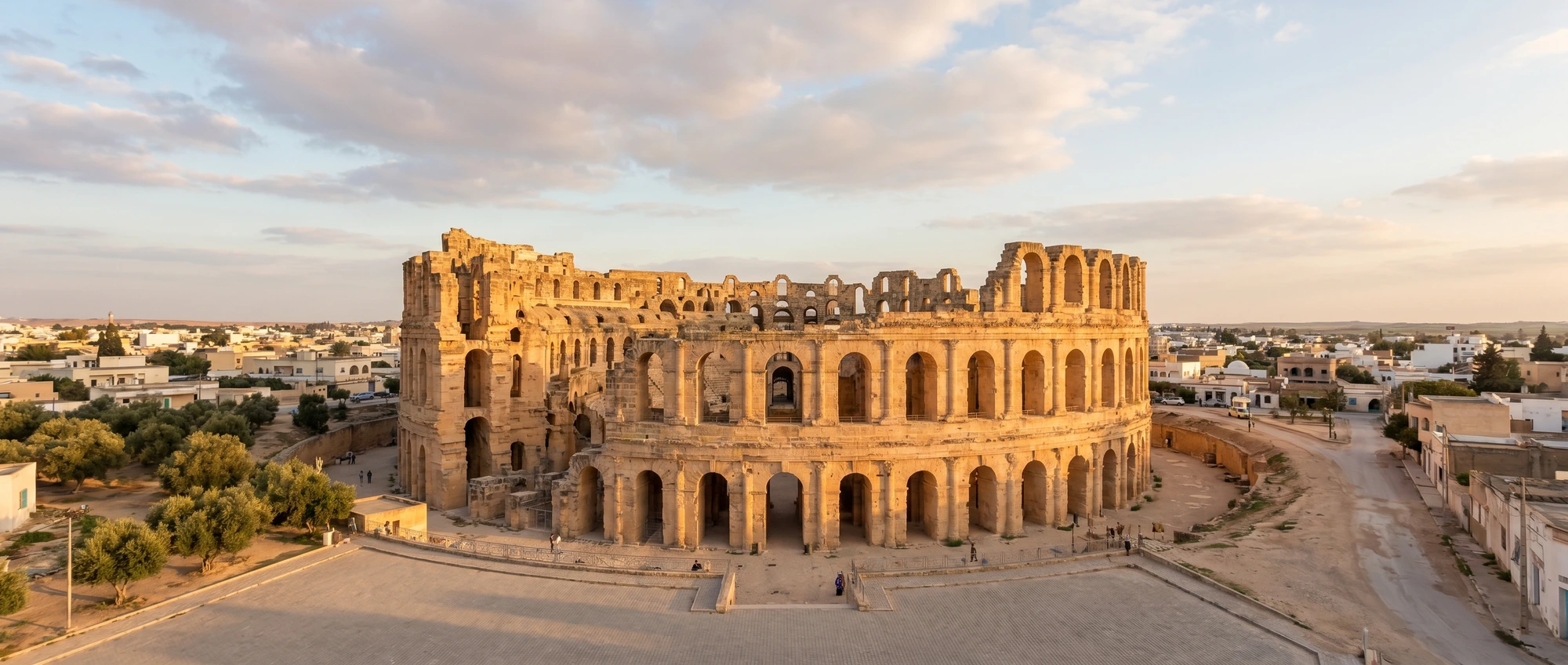
El Djem Amphitheatre
How to do the El Djem amphitheatre day trip from Sousse: the louage that beats the coach tour, going at opening before the heat, and whether the world's third-biggest Roman colosseum is worth the hour inland.
Where
Sousse, Tunisia
Opening hours
Roughly 08:00–19:00 in summer (around April to September) and 08:00–17:00 or 17:30 in winter. Always allow that the gate can close earlier on Tunisian public holidays — go in the cooler morning regardless.
Tickets
Around 12 DT (~£3) for a combined ticket covering the amphitheatre and the nearby El Djem Archaeological Museum, plus about 1 DT (~£0.30) for a photo permit. Cash dinars only — there is no card machine at the gate.
Time needed
1.5–2 hours at the amphitheatre; add 45 minutes if you also do the mosaic museum a 10-minute walk away.
In short
Visiting El Djem Amphitheatre
El Djem is the rare ruin that beats its photos, and it does not need pre-booking — you pay at the gate, so the real decision is how you get there. Take the louage (shared minibus) from Sousse's Souk el Ahad station rather than a packaged coach tour: it is about 1h–1h15 each way for a few pounds, and it drops you steps from the arena. Go for the 08:00 opening before the coaches arrive and the Sahel heat builds, climb to the upper tiers, then walk the underground passages where the gladiators and animals waited.
How to visit without wasting the morning
The thing to fix first is the journey, because the entry itself is the easy part — there is no timed ticket and no online booking, you simply pay around 12 DT (~£3) in cash at the gate for the combined amphitheatre-and-museum ticket. Where people go wrong is paying a resort rep for a coach excursion that turns the hour-and-a-bit drive into a half-day with a carpet-shop detour. Take the louage instead: the shared minibuses leave when full from Sousse’s Souk el Ahad station, cost a few pounds, run about 1h–1h15, and drop you a short walk from the arena. If you would rather not navigate the station, a private driver or a small-group guided tour is the next-best option and still beats the big coach.
Once inside, do not just photograph it from the floor and leave. Climb to the upper tiers for the view back across the town’s flat roofs, then find the stairs down into the hypogeum — the underground passages where gladiators and animals were held before being winched up into the arena. That walk underground is the part day-trippers skip and the part that makes the place land.
Is El Djem worth the detour?
Be at the gate for the 08:00 opening. El Djem stands inland on the Sahel plain with no coastal breeze, so the arena bakes by late morning, and the air-conditioned coaches from Sousse and Hammamet usually arrive around eleven. The early hour buys you the tiers and the passages almost to yourself, in tolerable heat and softer light. Allow an hour and a half to two hours, and add three-quarters of an hour if you walk the ten minutes to the El Djem mosaic museum your ticket already covers.
This is the single best half-day on the central coast. It is the third-largest Roman amphitheatre in the world, more complete than most, and you can roam the tiers and the underground freely with none of the Colosseum’s queues or fences — for about three pounds. Pair it with the Sousse medina and Ribat on another day rather than stacking two big sights together, and carry small dinar notes and water, because there is no card machine and no shade once the sun is up.
Planning the rest of your trip? See the Sousse city guide.
More to see in Sousse
Book the essentials
Tours & tickets
El Djem Amphitheatre FAQs
Do you need to book El Djem amphitheatre tickets in advance?
What is the best time of day to visit El Djem?
Is El Djem worth the trip from Sousse?
Ready to book?
Check tickets & tours