Marmara
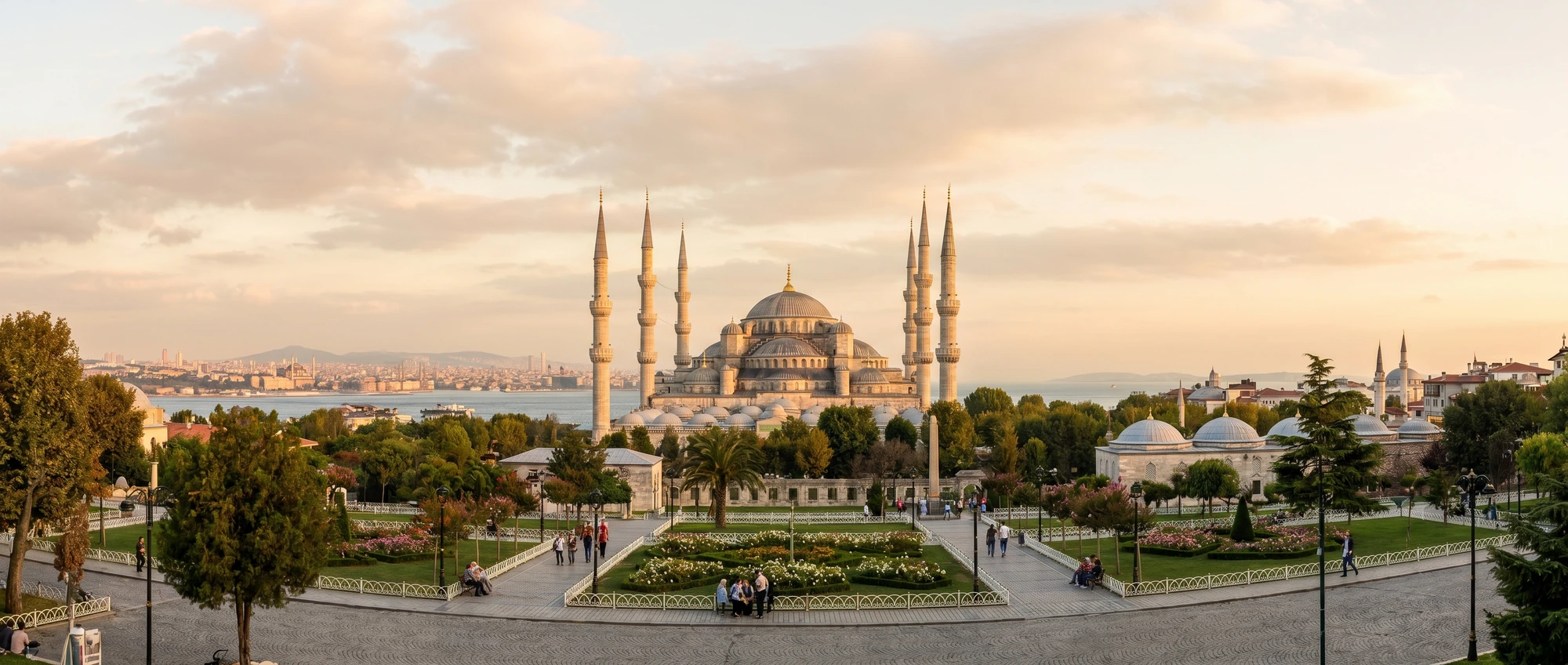
Blue Mosque
How to visit Istanbul's Blue Mosque: it's free, but the dress code, shoe-off rule and prayer-time closures catch people out — here's how to get it right.
Where
Istanbul, Turkey
Opening hours
Daily from about 08:30, closing roughly an hour before dusk, but it shuts to visitors during each of the five daily prayers (closures of 30–45 minutes). On Fridays it's closed to tourists all morning, reopening around 14:30 after the main sermon. Typical visiting windows are roughly 08:30–12:15, 13:45–16:30 and after the early-evening prayer; always check the day's prayer times.
Tickets
Free. There is no entry fee and no ticket — like every working mosque in Turkey. A donations kiosk near the exit is voluntary (a £1–2 / ₺40–80 coin is a fair gesture if you've had a good look round). You don't need a paid tour to get in.
Time needed
30–45 minutes inside is plenty to take in the dome, the tilework and the mihrab. In peak season add 20–40 minutes for the visitor queue and the shoe-off bottleneck at the door.
In short
Visiting Blue Mosque
Entry is free — there's no ticket and no tour you need to buy. The catch is etiquette: shoulders and knees covered for everyone, a headscarf for women (lent free at the door), shoes off and carried in a bag, and the mosque shuts to tourists during each of the five daily prayers and all of Friday morning. Use the tourist entrance on the south side, or the west gate facing Hagia Sophia — the north gate facing the Hippodrome is for worshippers only. Since the five-year restoration finished in 2023 the İznik-tiled interior is fully open and the painted domes are back to their original colours. Allow 30–45 minutes inside.
It’s free — the dress code is the real ticket
Nobody charges you to enter the Blue Mosque (properly the Sultan Ahmed Mosque), and you don’t need a tour to get in — it’s a working mosque, so entry is free for everyone. What actually gates your visit is etiquette. Shoulders and knees must be covered for both men and women, women need to cover their hair, and everyone takes their shoes off and carries them in a bag handed out at the door. Headscarves and wrap skirts are lent free at the entrance, but the queue for them is slower than just turning up in long trousers and bringing your own scarf. Skin-tight leggings and see-through tops get knocked back even though they “cover” you, so it’s worth dressing for it before you leave the hotel.
Use the tourist entrance on the south side, or the west gate facing Hagia Sophia — the north gate facing the Hippodrome (At Meydanı) is reserved for worshippers, and that’s the wrong-side mistake people make. The mosque shuts to visitors during each of the five daily prayers, usually for 30 to 45 minutes, and it’s closed to tourists every Friday morning until around 14:30 for the weekly sermon. Prayer times slide with the sun through the year, so check the day’s schedule and aim for a gap mid-morning.
What it’s like inside, and is it worth it?
Since the five-year restoration wrapped in 2023, the interior is fully open again and the painted domes have been brought back to their original colour scheme — the “blue” is the cascade of İznik tiles and the more than two hundred stained-glass windows, best in late-morning light. Most people spend 30 to 45 minutes inside, which is enough to stand under the central dome, look up at the tilework and take in the mihrab without rushing.
Yes, go — and because it costs nothing, there’s no “is the ticket worth it” maths to do. The thing to manage is timing, not money. It sits right across Sultanahmet Square from Hagia Sophia (a two-minute walk) with the Basilica Cistern five minutes away, so pair them in one morning rather than treating the mosque as a standalone trip. The nearest tram is Sultanahmet on the T1 line, a five-minute walk. If you only have an hour and the queue is long, the courtyard and exterior are genuinely worth a look on their own.
Planning the rest of your trip? See the Istanbul city guide.