Inland Aegean (Denizli)
Pamukkale Travertines & Hierapolis
How to visit Pamukkale's white travertine terraces and the Hierapolis ruins above them: one €30 ticket, the barefoot rule, the Cleopatra's Pool extra, and whether the long day trip from the coast is worth it.
Where
Pamukkale, Turkey
Opening hours
Roughly 08:00–20:00 in summer (the south gate opens as early as 06:30) and 08:00–18:00 in winter. Last entry is about an hour before close. Confirm your date locally, as gate hours shift with the season.
Tickets
€30 combined entry (about £26), covering the travertines, Hierapolis and the museum — set in euros for foreign visitors but payable in Turkish Lira, roughly 1,100–1,400 TL depending on the rate. Cleopatra's Pool swim is an extra ~€6 (about £5). Cards and contactless are accepted at the south gate.
Time needed
2–3 hours for the terraces and the main Hierapolis ruins; closer to a half-day if you swim in Cleopatra's Pool and visit the museum.
In short
Visiting Pamukkale Travertines & Hierapolis
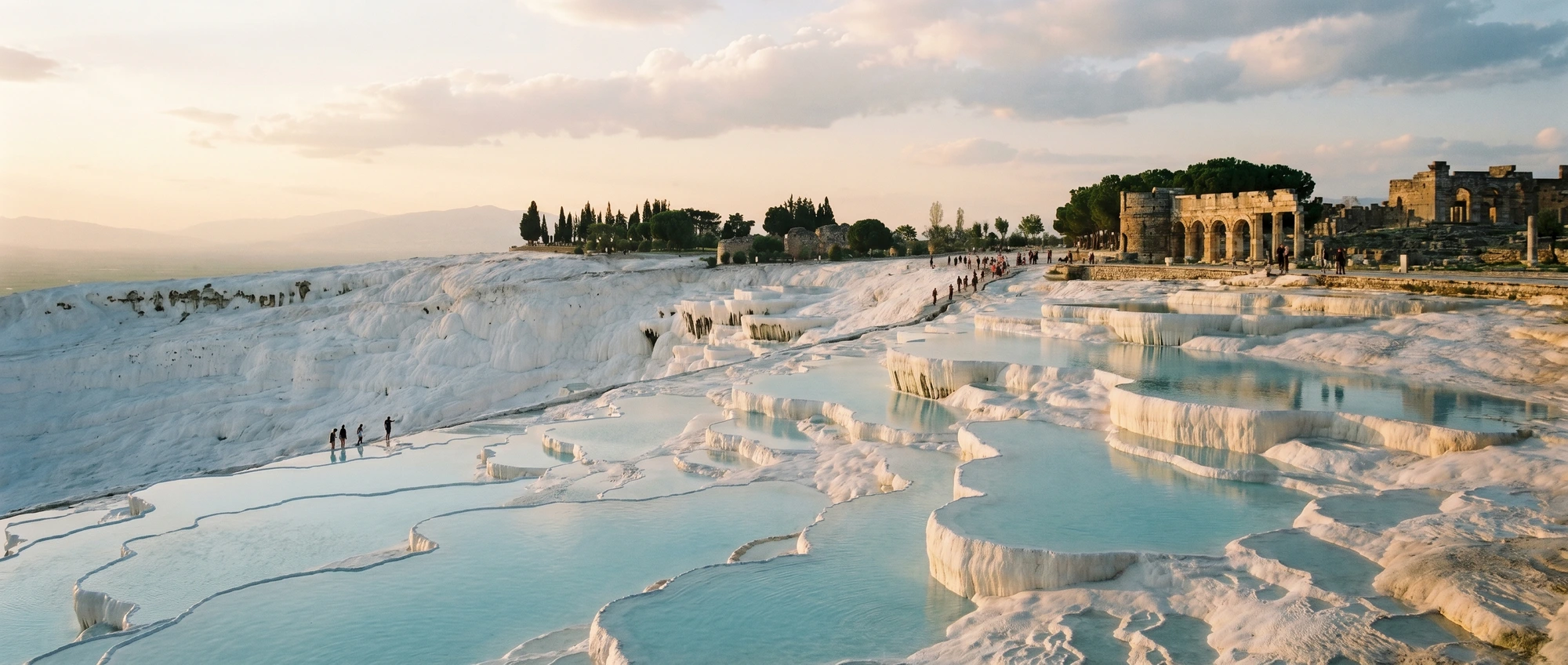
One ticket (€30, paid in Turkish Lira at the gate) covers the whole site: the white travertine terraces, the Hierapolis ruins above them and the archaeology museum. You must walk the terraces barefoot — shoes are banned on the calcium surface — so carry a small bag for them. Enter at the south gate, near the top, and walk down the terraces rather than slogging up; arrive at opening or after 4pm to dodge the midday tour-bus crush. Cleopatra's Pool, with its sunken Roman columns, is a separate swim fee on top.
One ticket, two sights, and a barefoot walk
People picture Pamukkale as just the white terraces, but the €30 ticket (about £26, paid in Turkish Lira at the gate) buys the whole hillside: the travertines, the sprawling Roman-Byzantine ruins of Hierapolis sitting on top of them, and the archaeology museum. It’s one combined entry, not three separate fees, which makes the price look steeper at the booth than it really is for what you get.
The one rule everyone trips over is the barefoot rule — shoes are banned on the travertines to stop them staining and wearing the soft calcium, so you carry yours in a bag and walk the marked path through ankle-deep warm water. The surface is chalky and rough in patches and properly slippery where it’s wet, so it’s a shuffle, not a stride. Enter at the south gate near the top of the hill and walk down through the terraces toward the village; doing it the other way means a hot, hard climb up the calcium in bare feet.
When to go, the pool, and the verdict
Go at opening or after about 4pm. The terraces fill with hundreds of day-trippers between mid-morning and mid-afternoon when the coach tours unload all at once, and the white surface is harsh under flat midday light. Early or late sun is when it actually looks like the photos. Up at the ruins, Cleopatra’s Pool — a warm thermal pool scattered with toppled Roman columns you can swim around — is a separate swim fee of roughly €6 on top of entry; it’s a fun novelty rather than essential, and it does close periodically for maintenance, so check before you bank on it.
The terraces and Hierapolis together are worth the trip, but the day tour from the coast is a brutal day — three to four hours each way from Antalya, often a 5am pickup for a few rushed hours on site. If you possibly can, stay overnight in Pamukkale village and be on the terraces when the gate opens, before the buses. Allow two to three hours for the terraces and the main ruins, or a half-day if you’re swimming and doing the museum too.
Planning the rest of your trip? See the Pamukkale city guide.
More to see in Pamukkale
Book the essentials
Tours & tickets
Pamukkale Travertines & Hierapolis FAQs
How much is the entrance fee for Pamukkale?
Do you have to walk on the travertines barefoot?
Is Pamukkale worth it as a day trip from the coast?
When is the best time of day to visit Pamukkale?
Ready to book?
Check tickets & tours