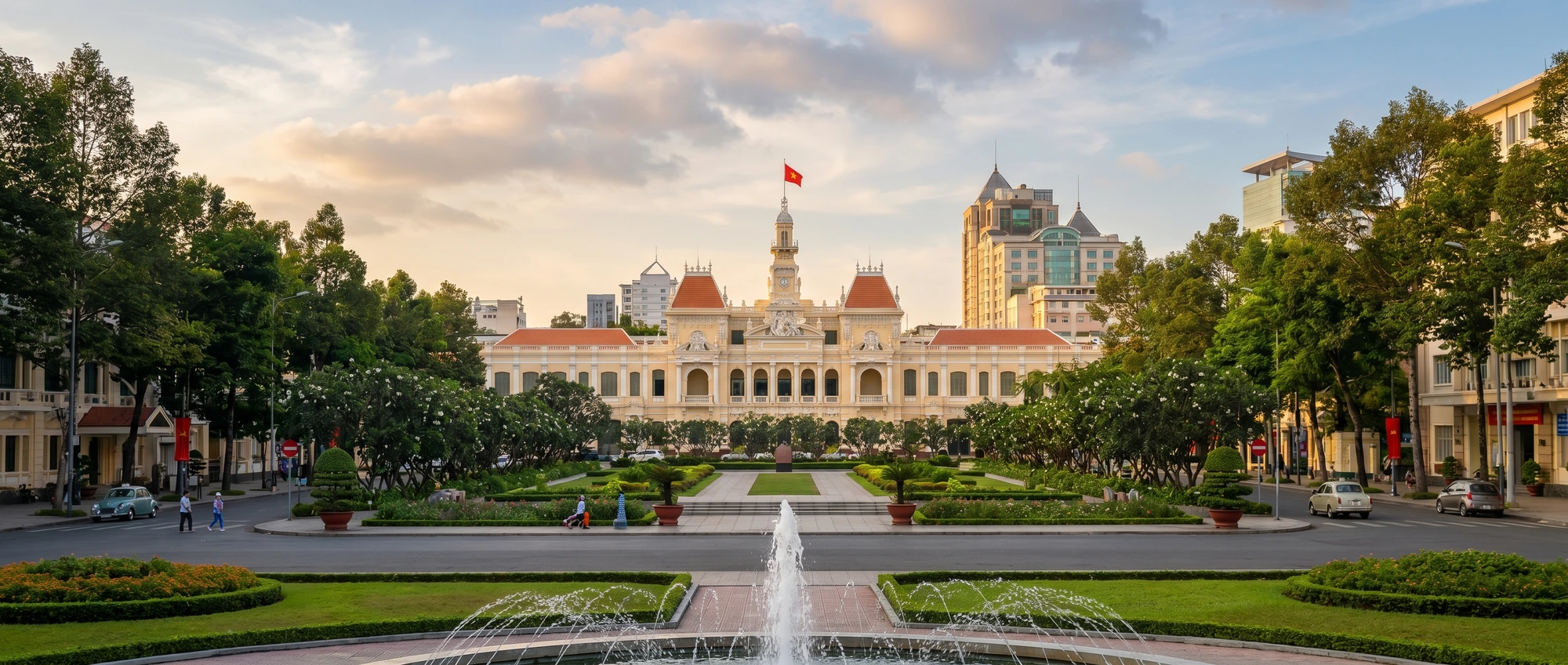
Southern Vietnam
Independence Palace
How to visit Independence Palace (Reunification Palace) in Ho Chi Minh City: the ₫65,000 ticket, the basement command bunker, the rooftop helipad, and pairing it with the War Remnants Museum in one morning.
Where
Ho Chi Minh City, Vietnam
Opening hours
Open daily 08:00–16:30, with the ticket office closing about 15:30; it does not shut for lunch. Go at opening or after about 14:00 to dodge the mid-morning tour-bus block. The replica tanks at the front gate are on the public lawn and visible any time.
Tickets
Adult entry is ₫65,000 (about £1.85); children and students pay less with ID. The optional audio guide is ₫65,000 on top and worth it, as the room labelling is thin. Guided tours from the city that bundle the palace with the War Remnants Museum run about ₫500,000–900,000 (£14–26) per person including a guide and transport.
Time needed
About an hour to ninety minutes to walk the upper floors, the rooftop and the basement bunker without rushing. Paired with the War Remnants Museum 10 minutes away, the two fill a single morning.
In short
Visiting Independence Palace
Independence Palace (Dinh Độc Lập, also called Reunification Palace) is the 1960s presidential palace left exactly as it was when a North Vietnamese tank crashed through the gates on 30 April 1975, ending the war. It sits at 135 Nam Kỳ Khởi Nghĩa in central District 1, a 10-minute walk from the War Remnants Museum, so the two go together as a single morning. Entry is ₫65,000 (about £1.85) and you'll want an hour to ninety minutes: the cabinet and reception rooms upstairs, the President's living quarters, the rooftop helipad with its UH-1 helicopter, and — the part most people remember — the windowless basement command bunker of telex machines, radios and 1970s war maps.
What it is, and how to do it in an hour
Independence Palace — Dinh Độc Lập, renamed Reunification Palace after 1975 — is the South Vietnamese president’s official residence, kept almost exactly as it was on 30 April 1975, the morning a North Vietnamese tank rolled through the front gate and the war ended. Two replica tanks now sit on the lawn at the spot. It’s at 135 Nam Kỳ Khởi Nghĩa in District 1, a flat 10-minute walk from the War Remnants Museum, which is why the two belong in one morning rather than on separate days.
Entry is ₫65,000 (about £1.85), paid at the gate — there’s no booking and it rarely queues, so the only thing worth timing is the mid-morning tour-bus block. Arrive for the 08:00 opening or after about 14:00, and don’t try at lunch expecting it shut: it stays open straight through, with the ticket office closing around 15:30 and the building at 16:30. The room labelling is thin, so the ₫65,000 audio guide is the rare add-on that’s actually worth it.
The basement bunker is the bit that lands
Most people start upstairs with the cabinet room, the red-carpeted reception hall and the President’s 1960s living quarters — a time capsule of teak, rotary phones and a private cinema. Then the rooftop helipad, where a US-made UH-1 helicopter sits beside two painted circles marking where a defecting pilot bombed the palace in 1975.
But save energy for the basement command bunker: a windowless warren of telex machines, field radios, situation maps still pinned to the walls and the President’s shelter, left as it was. It’s the part that turns a pretty modernist building into the place a country’s war was actually run from. Allow an hour to ninety minutes for the lot.
Worth it? The honest take
Independence Palace is the calmer, lighter counterweight to the War Remnants Museum, and doing them back to back in one District 1 morning is the right call — the museum tells the war on its walls, the palace shows you the seat it was lost from. On its own it’s a 60-minute curiosity; with the audio guide and the bunker it earns the ₫65,000. Skip it only if 1960s government interiors do nothing for you — otherwise it’s the easiest, cheapest landmark in central Saigon and a natural pairing with the museum next door.
Planning the rest of your trip? See the Ho Chi Minh City city guide.
More to see in Ho Chi Minh City


Book the essentials
Tours & tickets
Independence Palace FAQs
How much does it cost to visit Independence Palace and do you need to book ahead?
Is Independence Palace worth visiting?
What's the difference between Independence Palace and Reunification Palace?
Ready to book?
Check tickets & tours