Lao Cai
Sapa
Come up from Hanoi for two or three nights, book a guided homestay trek through the Muong Hoa Valley over day-tripping, ride Fansipan only on a clear forecast, and know the green terraces last just weeks.
Best length
2-3 nights (as a side trip from Hanoi)
Airport
No airport; arrive via Hanoi, ~315km / 5-6h southeast
Airport to centre
Overnight train to Lao Cai (~8h) + 1h road, or a 5-6h limousine van straight to Sapa
Best base
Sapa town for first nights; a Ta Van valley homestay for the trek
In short
Sapa at a glance
Sapa is a 2- or 3-night add-on from Hanoi, not a standalone trip: take an overnight train or a daytime limousine van up, book a guided homestay trek through the Muong Hoa Valley rather than day-tripping from the town, ride the Fansipan cable car only if the forecast is clear, and accept that the postcard-green terraces only exist for a few weeks a year.
The short version
- Sapa is a 2-3 night side trip from Hanoi, ~315km northwest — most people overdo the schedule and underdo the walking.
- Book a guided homestay trek through Muong Hoa Valley to Ta Van or Lao Chai; the day-walks from Sapa town are far weaker.
- The rice terraces are only emerald-green from late August to mid-September; the famous golden-harvest shots are mid to late September.
- Fansipan's cable car runs whatever the weather, but in cloud you pay ₫800,000 to stand in fog at the summit, so check the forecast first.
- Winter (December-February) is genuinely cold and often fogged in; pack layers and a waterproof, not your beach-Vietnam kit.
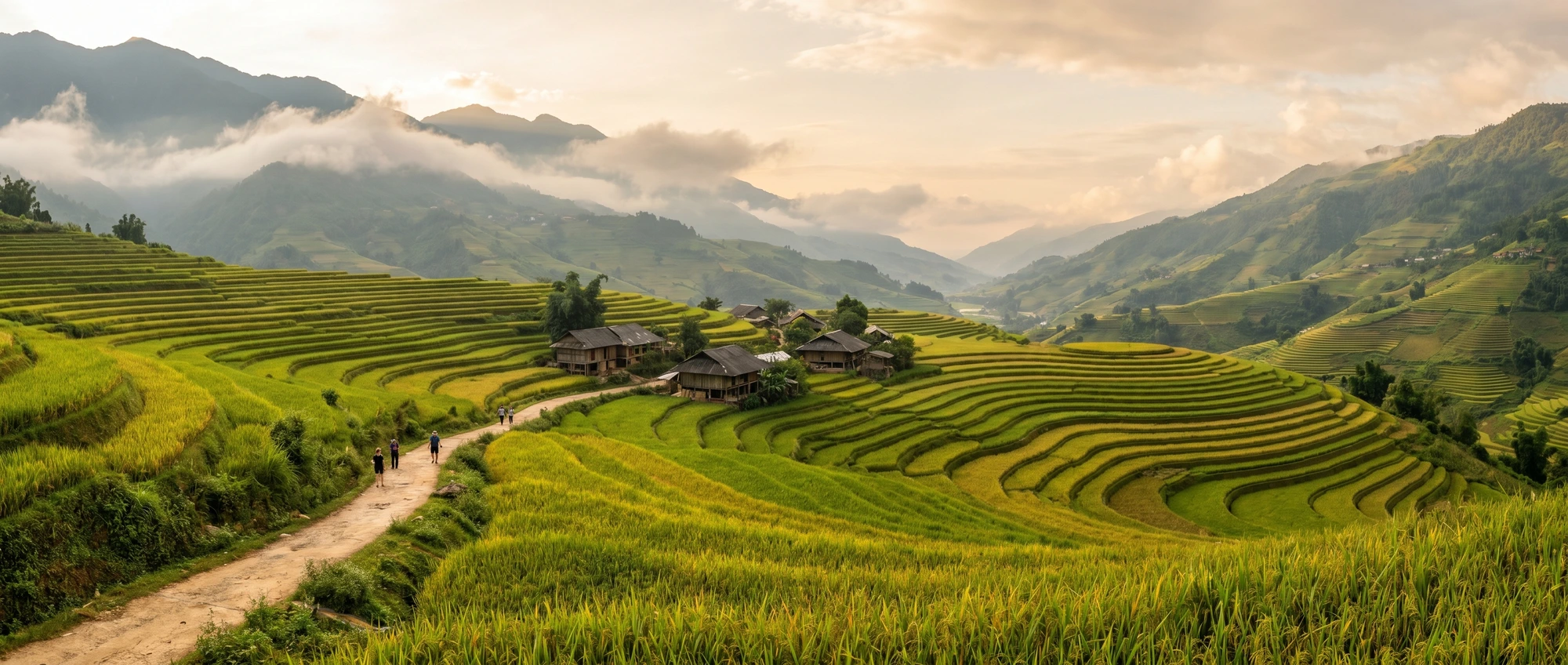
Sapa is a side trip, not a destination, and treating it as one is the first thing to get right. It’s a mountain town at around 1,500m, four to six hours northwest of Hanoi, and the draw is the terraced rice valley below it rather than the town itself — which has been over-built into a slightly scruffy resort of concrete hotels. The trip works when you use the town as a base for one good thing: a guided walk down into the Muong Hoa Valley to a Black Hmong or Giay homestay, with a local guide who actually knows the unsigned paths. The day-walks straight from town, and the staged-photo village of Cat Cat, are the consolation prizes most people accidentally make the main event.
The two calls that decide your trip are timing and weather, and they’re linked. The terraces are only the emerald-then-gold you’ve seen in photos for a few weeks from late August into September; outside that they’re brown stubble or flooded mud, which is fine to walk but not what you pictured. And Sapa sits in cloud for much of the winter, so the Fansipan cable car — which runs whatever the sky is doing — can take ₫800,000 off you to deliver a wall of fog. Come in the September harvest window or the March-to-May spring, pack for genuine cold rather than your lowland-Vietnam kit, and check the mountain forecast before you commit to the summit. The structured planning below — how to get up, where to base, and a budget in pounds — picks up from here.
Keep a first trip focused: book the big timed sights, then leave room for neighbourhoods and food.
Top things to do in Sapa
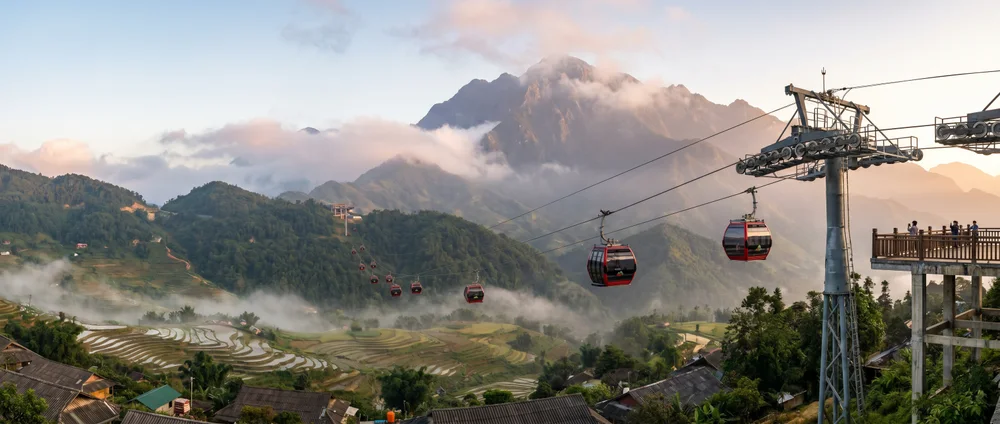
Fansipan Cable Car
The Fansipan cable car runs from the Sun World station in central Sapa to a complex just below Indochina's highest peak at 3,143m, climbing about 1,410m of vertical in roughly 15 minutes — a Guinness-record three-rope ropeway. The ₫800,000 round-trip fare gets you to the upper station, but the final 600-odd steps to the true summit are still a climb, or you pay extra for the Muong Hoa funicular that cuts most of them out. The single biggest decision is the weather: the cable car runs in any conditions, so on a cloudy day you pay full price to stand in a white-out at the top. Check the mountain forecast the morning you go and ride the first car around 07:30 for the best chance of a clear view.
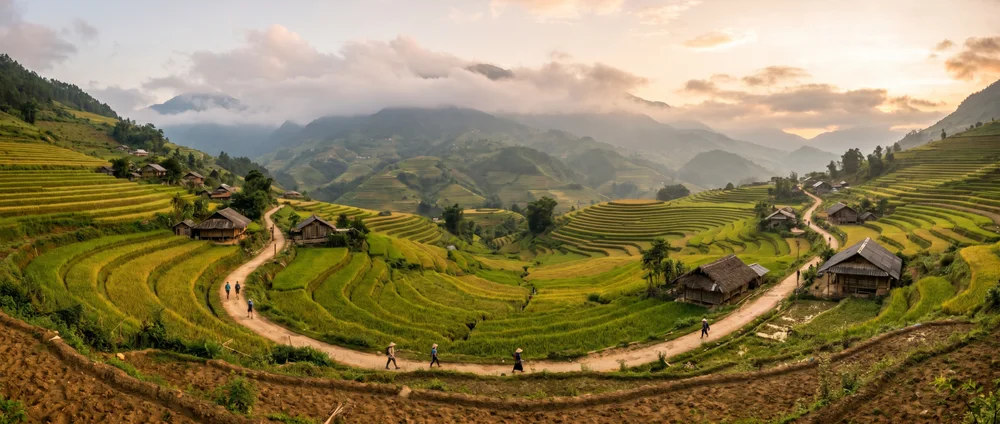
Muong Hoa Valley trek (Lao Chai - Ta Van)
The Muong Hoa Valley trek is the reason most people come to Sapa: a guided walk down through terraced rice paddies and Black Hmong and Giay villages, Lao Chai to Ta Van, to a valley homestay. A half-day taster works, but the overnight version is what people remember. A guided trek with homestay runs from roughly ₫700,000–1,200,000 per person.
Where to stay first
The areas that make a first visit easier — not an exhaustive directory.
Sapa town centre
££ mid-rangeThe hotel-and-restaurant hub around the lake and stone church, with the cable-car station and most tour pickups. Convenient and well-served, but it has been over-built with concrete hotels and can feel like a busy resort town rather than a mountain village.
Best for: First night, easy logistics, cable-car access
Ta Van and Muong Hoa Valley
£ valueHomestays and small lodges down in the rice-terrace valley, 8-10km from town. This is where you wake up to the paddies and the quiet; the trade-off is you're a drive from the restaurants and shops back up in town.
Best for: Trekkers, valley views, a quieter night
Ham Rong / hillside above town
£££ premiumThe smarter hotels and resorts climbing the slope above the centre, trading a short walk for better valley views and fewer crowds at the door. The pick if you want comfort and a view but still want to walk into town for dinner.
Best for: Couples wanting comfort and a view
Airport to city centre
| Option | Time | Cost | Book ahead? |
|---|---|---|---|
| Overnight train Hanoi - Lao Cai, then road transfer up | ~8h on the train + ~1h by road | soft sleeper about ₫400,000-650,000 + transfer about ₫50,000-100,000 | Most romantic; the cabins are basic but you save a night's hotel |
| Limousine van Hanoi - Sapa (door to door) | ~5-6h | about ₫350,000-450,000 one way | The simplest option; runs day and overnight, pickups from central Hanoi hotels |
| Sleeper bus Hanoi - Sapa | ~6h | about ₫250,000-350,000 one way | Cheapest, but cramped berths and a winding road — not ideal if you travel-sick |
| Private car with driver from Hanoi | ~5h | about ₫2,500,000-3,500,000 each way | Worth it for a family or to stop for photos en route |
When to go
Sweet spot: Late August to mid-September is the standout window: the terraces are emerald-green turning gold for the harvest, and the cloud lifts more often. March to May is the second-best run — wildflowers, clearer skies and warm days. Avoid mid-June to August for the heaviest rain and leeches on the trails, and December to February if you mind the cold and constant fog.
Sapa runs on a completely different weather clock from lowland Vietnam because it sits at around 1,500m. Winter is cold — single digits Celsius, occasional frost and even rare snow on Fansipan — and frequently fogged in, so the views you came for vanish. Summer (June-August) is the wet season: green but slippery, with afternoon downpours and leeches in the paddies. The shoulder months either side of summer give you the clearest air and the best trekking, which is also when Sapa is busiest with domestic tourists at weekends.
What it costs
There are no flights to Sapa — you fly to Hanoi first. UK return flights to Hanoi start around £790-£800 direct from Heathrow on Vietnam Airlines, or often less on a one-stop Gulf or Asian-hub fare from Manchester or Edinburgh, with the Hanoi-Sapa leg added overland on top.
Daily budget per person
All dong figures use £1 ≈ ₫35,000 (June 2026). Sapa is cash-first once you leave the bigger town hotels, and ATMs are limited up here — draw your dong in Hanoi before you come up, because a village homestay won't take a card.
Book the essentials
Where to stay
Tours & tickets
Airport transfers
Stay connected
Trains & rail passes
Also in Vietnam




Sapa FAQs
How do you get from Hanoi to Sapa?
How many nights do you need in Sapa?
Is the Fansipan cable car worth it?
Ready to book?
Find hotels in Sapa