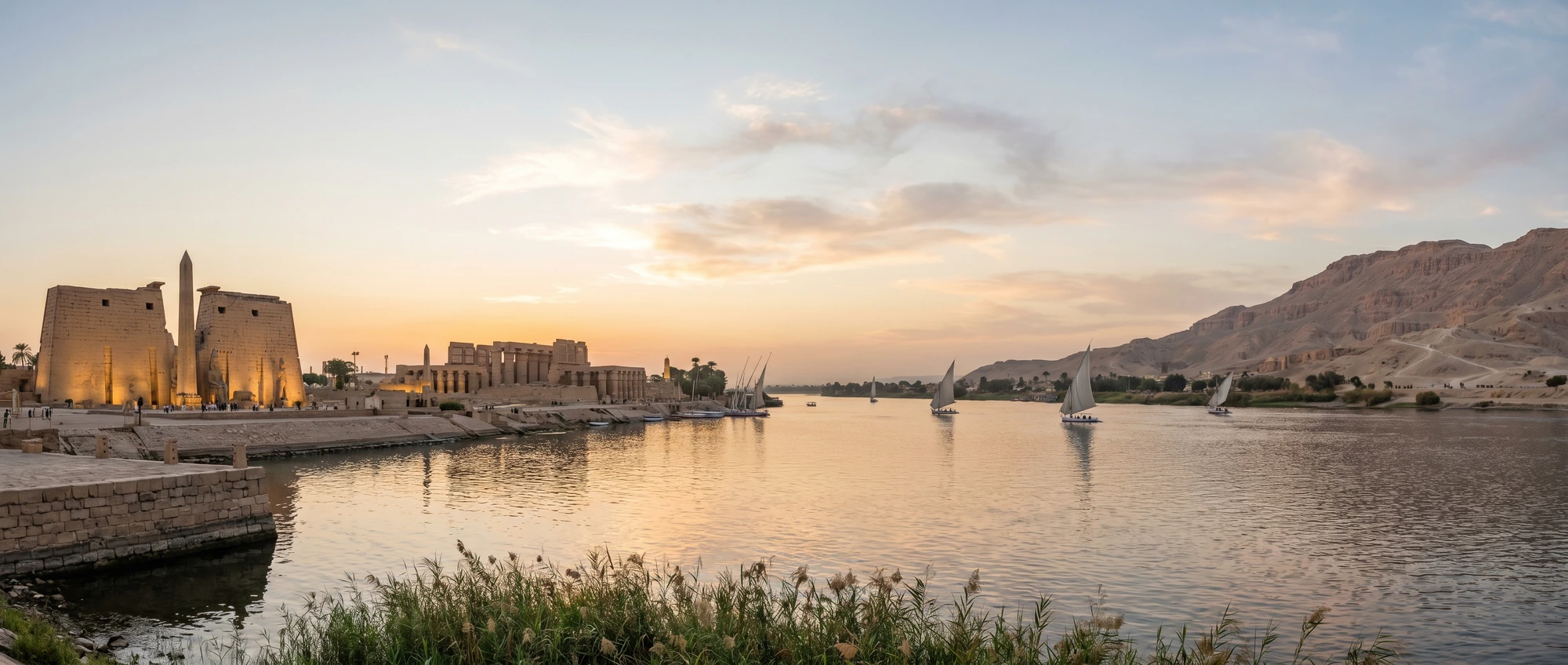
Upper Egypt / Nile Valley
Luxor
Split Luxor in two: the living East Bank of Karnak and the corniche, and the West Bank necropolis of the Valley of the Kings — then decide whether to land-base or sleep on a Nile cruise.
Best length
2-3 full days
Airport
Luxor International (LXR), ~6km east of the centre
Airport to centre
Taxi ~15-20 min, about £5-£12 (agree the fare first; cash, EGP)
Best base
East Bank for first-timers; West Bank for quiet and tomb access
Getting there
No direct UK flight — via Cairo (~1h domestic hop) or overland from a Red Sea resort
In short
Luxor at a glance
Luxor is the densest concentration of ancient Egypt anywhere, and the trick is to stop thinking of it as one place. The East Bank is the living town — Luxor and Karnak temples, the corniche, hotels and restaurants — while the West Bank across the Nile is the necropolis: the Valley of the Kings, Hatshepsut's terraces and the Valley of the Queens, with quiet guesthouses instead of nightlife. Two full days does the headline sites properly if you start at dawn before the heat and the coaches; three lets you breathe. The two planning calls that matter most are whether to base on land or arrive on a Nile cruise, and budgeting honestly for the Valley of the Kings, where the standard ticket only gets you into three tombs and the famous ones (Tutankhamun, Seti I, Nefertari) are separate, expensive add-ons.
The short version
- Split your plan by bank: East Bank for Karnak and Luxor temples and your hotel; West Bank for the tombs, done first thing before the heat.
- The Valley of the Kings standard ticket (about £11 / E£750) covers any three open tombs — Tutankhamun, Seti I and Nefertari are separate, pricey add-ons.
- The dawn hot-air balloon over the West Bank (about £40-£70) is touristy and genuinely worth it — book a day or two ahead.
- Stay East Bank for your first trip; the West Bank is calmer and closer to the tombs but has almost no evening life.
- A Nile cruise uses Luxor as its hub and bundles the temples in; a land-base gives you more time and better West Bank access. Two full days is the realistic minimum.
- Almost all site ticket offices are now card-only — but you still need cash for taxis, the ferry, tuk-tuks and constant tips.
Luxor is often called the world’s greatest open-air museum, and the phrase undersells how much is crammed into one stretch of the Nile. The clearest way to plan it is to split the city in two. The East Bank is the living town: Luxor Temple in the centre, the colossal Karnak complex just to the north, the corniche, and almost every hotel and restaurant. The West Bank, across the river, is the necropolis — the Valley of the Kings, the Valley of the Queens, and Hatshepsut’s terraces set against the cliffs — a quieter, rural world of guesthouses and sugarcane fields with very little going on after dark. Get that geography straight and the rest of the trip falls into place.
Two full days does the headline sites justice if you’re disciplined about timing: one West Bank morning for the tombs and Hatshepsut, started at opening before the heat and the coaches arrive, and one East Bank day for Karnak and Luxor Temple. Three nights is more comfortable, and the heat alone is a good argument for a slower pace. The Valley of the Kings is the one ticket to understand before you go: the standard fare only covers three tombs from a rotating list, and the famous ones — Tutankhamun, Seti I, Nefertari — are separate, sometimes eye-watering, add-ons. Work out which you actually want before you reach the gate.
The other early decision is whether to land-base or arrive on a Nile cruise. A cruise uses Luxor as its hub and bundles the temples in efficiently, but trades away your control over timing the tombs at dawn; a couple of nights in an East Bank hotel buys you more time and freedom. The structured planning below — where to stay, ticket prices, the dawn balloon, airport transfers and a realistic budget in pounds — picks up from here. Entry, visa, health and safety facts inherit Departly’s Egypt country guide, which is anchored to the current FCDO advice.
Plan your Luxor trip
Keep a first trip focused: book the big timed sights, then leave room for neighbourhoods and food.
Top things to do in Luxor
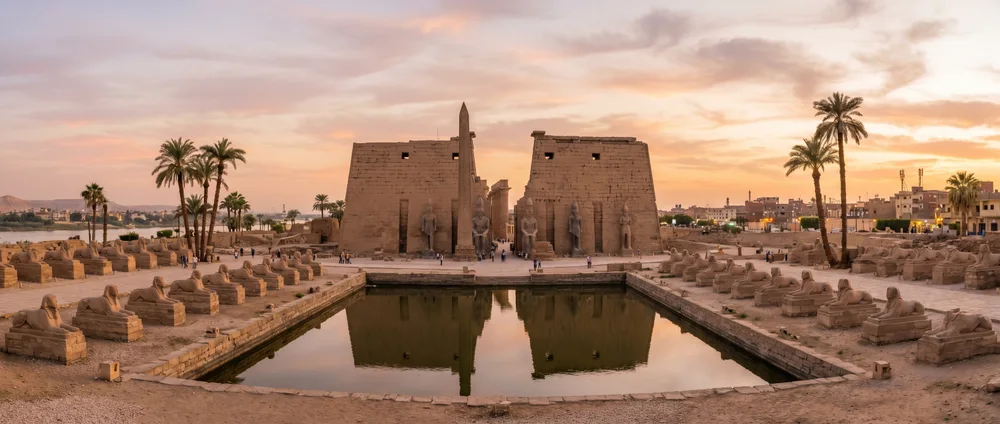
Luxor Temple
Luxor Temple is the one major site you don't need to pre-book or rush at dawn — it sits in the middle of town, the ticket office is card-only at the gate (about E£500 / £7), and the smart move is to go in the last hour of daylight and stay as the floodlights come on. Unlike the West Bank tombs there's no timed entry and no real queue, so it works as a flexible evening stop after a hotter day at Karnak or the Valley of the Kings. Allow about an hour to an hour and a half, and don't waste money on a separate guide here — Karnak is where guiding earns its keep.
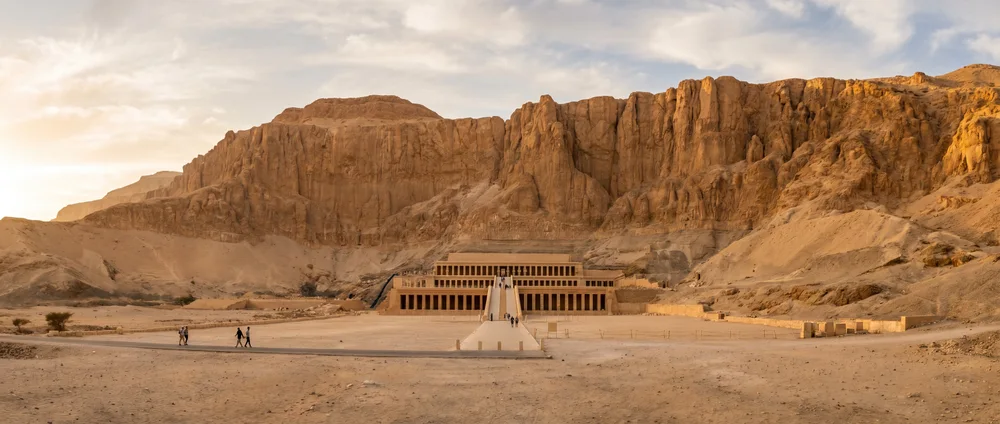
Temple of Hatshepsut
The Temple of Hatshepsut is the cheapest headline site on Luxor's West Bank — about £3 (E£200) — so the booking question isn't the ticket, it's the timing. Go at the 06:00 opening, straight after the Valley of the Kings, before the coaches and the brutal heat arrive; the terraces face east and have almost no shade. Buy a combined West Bank morning as a guide-and-driver tour rather than turning up site-by-site, and budget only 45–60 minutes here — it's stunning from the approach but there's little inside.
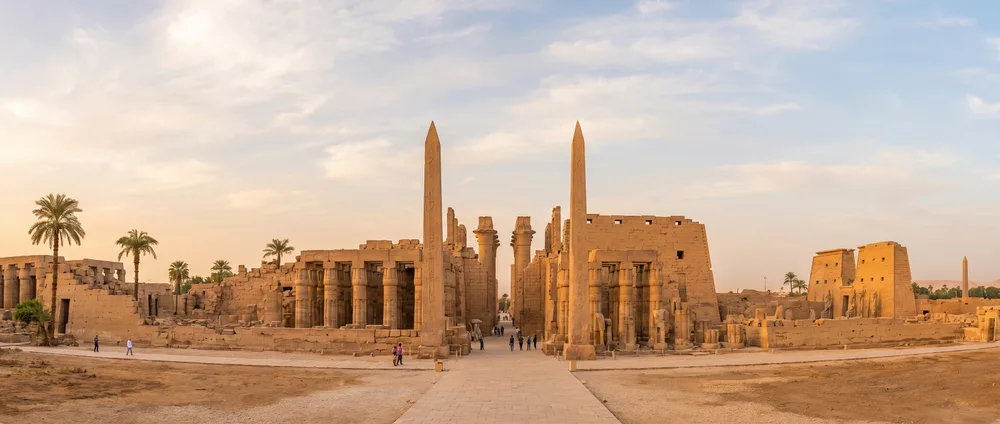
Karnak Temple
Karnak is the biggest religious complex of the ancient world, on Luxor's East Bank about 3km north of Luxor Temple, and the one thing you go for is the Great Hypostyle Hall — 134 sandstone columns the height of a four-storey building. Buy the EGP 600 (about £9) ticket at the gate; it's card-only now, so don't queue with cash. Go at opening (6am) or in the last two hours before the 5pm close to dodge both the coach groups and the brutal Upper Egypt heat, and take a guide — without one it reads as enormous but baffling. Allow about two hours.
Valley of the Kings
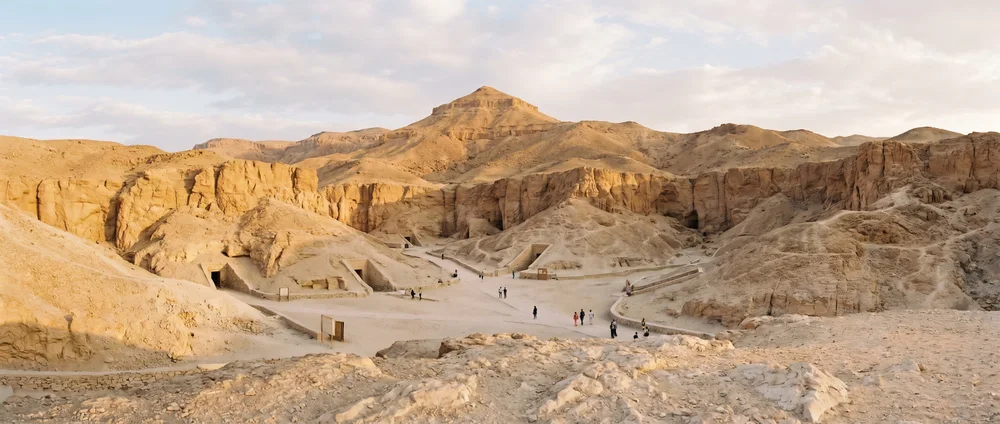
The Valley of the Kings is the rock-cut burial valley of the New Kingdom pharaohs on Luxor's West Bank, and the single thing to understand before you go is the ticket. The standard ticket (about £11 / E£750) lets you into any three open tombs from a rotating list — it is not all-access, and the famous names cost more on top. Tutankhamun (about £10 / E£700) and Seti I (a steep £29 / E£2,000) are separate add-ons bought at the gate. Go at opening (06:00) before the heat and the coaches: by mid-morning the deep tombs are airless and the valley is full. Decide your three free picks and any add-ons before you queue, because the costs stack up fast.
Where to stay first
The areas that make a first visit easier — not an exhaustive directory.
East Bank corniche (central Luxor)
££ mid-rangeThe obvious first-timer base: walkable to Luxor Temple, restaurants and the Nile-front promenade, with taxis and the ferry on the doorstep for West Bank trips. The Sofitel Winter Palace and Steigenberger Nile Palace anchor the upper end; budget guesthouses sit a few streets back.
Best for: First-timers, evening life, easy logistics
West Bank (around the tombs)
£ valueA quieter, more rural world of family-run guesthouses and eco-lodges among sugarcane fields, minutes from the Valley of the Kings and Hatshepsut. The trade-off is almost no evening life and a ferry hop back across the Nile for dinner — peaceful, but you commit to it.
Best for: Tomb access, quiet, repeat visitors
Nile-front five-stars (East Bank, north of centre)
£££ premiumThe riverside resort hotels with pools and Nile-view rooms, a short taxi from the temples. Comfortable and a relief in the heat, but you're slightly removed from the walkable old centre, so factor in short rides.
Best for: Comfort, pools, couples
On a Nile cruise boat
£££ premiumIf you're doing the Luxor-Aswan cruise, the boat is your Luxor hotel for a night or two: you wake up moored on the East Bank with the temples bundled into the itinerary. Convenient, but it gives you less control over timing the tombs at dawn.
Best for: Cruise travellers, least faff
Airport to city centre
| Option | Time | Cost | Book ahead? |
|---|---|---|---|
| Taxi to the East Bank centre | ~15-20 min | about £5-£12 (E£300-£700) | Agree the fare before you set off; cash in EGP |
| Pre-booked hotel or tour transfer | ~15-20 min | often included on packages and cruises | Simplest if it's bundled with your trip |
| Onward to the West Bank | ~30-40 min incl. river crossing | taxi + ferry/motorboat, roughly £8-£15 | Confirm your West Bank guesthouse arranges pickup |
When to go
Sweet spot: October to April is the window: daytime temperatures sit around a manageable 20-26°C and you can actually walk the West Bank in the morning without melting. December to February is the coolest and busiest, with the Valley of the Kings taking thousands of visitors a day; March, April and October are warmer but quieter and better value. Whatever month, the golden rule is the same — be at the West Bank gates at opening, before the heat and the coaches arrive.
Luxor is brutal in high summer: May to September regularly pushes 40-45°C, which limits safe sightseeing to dawn and early evening and makes the tombs genuinely punishing inside. Prices drop hard then, but it's a real endurance test. Winter is the comfortable, popular season and the only time the temples feel pleasantly cool, at the cost of crowds and peak Christmas pricing. The evening sound-and-light shows at Karnak run year-round and are a good hot-weather alternative when daytime sightseeing is off the table.
What it costs
There's no direct UK-Luxor flight. Most people route via Cairo (BA and EgyptAir from London, roughly £250-£450 return) then take the ~1-hour domestic hop to Luxor on EgyptAir, Nile Air or Air Cairo (often £60-£110 each way). The other common arrival is overland or on a day tour from a Red Sea resort like Hurghada, which is a long road day. Many UK visitors reach Luxor on an organised tour or a Nile cruise where the internal flights are bundled in.
Daily budget per person
| Valley of the Kings base (any 3 tombs) | ~£11 (E£750) |
|---|---|
| Tutankhamun tomb add-on | ~£10 (E£700) |
| Seti I tomb add-on | ~£29 (E£2,000) |
| Karnak Temple entry | ~£9 (E£600) |
| Public ferry across the Nile | a few pounds (E£5-£10) |
| Dawn hot-air balloon | ~£40-£70 per person |
All EGP figures use £1 ≈ E£69 (June 2026). The catch in Luxor is the Valley of the Kings: the headline ticket is only a three-tomb base fare, and the tombs everyone has heard of are separate. Decide which add-ons you actually want before you queue. Site ticket offices are now almost entirely card-only, but you still need a thick wad of small notes for the ferry, taxis, tuk-tuks and tipping.
Book the essentials
Where to stay
Tours & tickets
Airport transfers
Stay connected
Also in Egypt


Luxor FAQs
How many days do you need in Luxor?
How much does the Valley of the Kings cost in 2026?
Should I base in Luxor or do it from a Nile cruise?
Is the Luxor hot-air balloon worth it?
Where should first-timers stay in Luxor?
Ready to book?
Find hotels in Luxor