Kansai
Kyoto
Base in Higashiyama or downtown Kawaramachi for three nights, hit Fushimi Inari and Kiyomizu-dera before the coach crowds, and resist cramming ten temples into a day.
Best length
3-4 nights
Airport
Kansai International (KIX), ~75 min by train; or Itami (ITM) for domestic
Airport to centre
Haruka express to Kyoto Station ~75 min (tourist fare from ¥2,200)
Best base
Higashiyama for temples; downtown Kawaramachi for central convenience
In short
Kyoto at a glance
Kyoto is best as a 3- or 4-night base: stay in Higashiyama or downtown Kawaramachi, hit Fushimi Inari and Kiyomizu-dera early before the coach crowds, lean on the bus-and-subway day pass rather than taxis, and resist the urge to cram ten temples into a day.
The short version
- Stay in Higashiyama for temple mornings on foot; downtown Kawaramachi if you want dinner, shops and a central transport base.
- Do Fushimi Inari and Kiyomizu-dera before 9am: the same shots an hour later come with a wall of people.
- Skip basing yourself out by Arashiyama or Kyoto Station unless you have a reason; the historic core is where the early starts pay off.
- Take the Haruka express from Kansai airport to Kyoto Station, and buy the foreign-tourist discount ticket online before you fly.
- Three or four temples a day is the honest ceiling before they blur into one; pair a temple morning with a market or garden afternoon.
Kyoto has more temples and shrines than any first trip can absorb, which is the city’s promise and its trap. Try to see them all and they dissolve into one long blur of gravel, gates and tour groups. The job of a good first trip is to choose four or five sights that genuinely repay a visit, get to the busiest of them — Fushimi Inari and Kiyomizu-dera — before the coaches arrive, and balance each temple morning with something else: a market lunch downtown, a garden, or a riverside walk in Arashiyama.
Three full days is the practical minimum. One day works the eastern Higashiyama hills on foot, taking Kiyomizu-dera at opening and walking down through Sannenzaka and Ninenzaka before they clog. One covers the west side with Arashiyama’s bamboo grove and Tenryu-ji garden, then the Golden Pavilion — carry cash, as Kinkaku-ji is cash-only at the gate. One combines Fushimi Inari early with a no-temple afternoon around Nishiki Market and Pontocho. A fourth night lets you slow down or take the short train to Nara or Osaka.
Where to base yourself comes down to one choice. Stay in Higashiyama if early temple mornings are the point; it goes quiet at night, but you can be among the stones before the crowds. Pick downtown Kawaramachi if you would rather be near dinner, the arcades and the two subway lines. Skip Kyoto Station unless you have an early onward train, and treat Gion as a premium address rather than a practical one.
The common first-timer mistake is over-booking the days: three or four temples is the honest ceiling before they merge. On getting around, this is a bus-and-subway city, not a car one. Tap an IC card for pay-as-you-go, and buy the Subway & Bus 1-Day Pass (about ¥1,100) only on days you will ride four times or more. From Kansai, take the Haruka express to Kyoto Station and buy the foreign-tourist ticket (from about ¥2,200) online before you fly — far cheaper than the ¥25,000-plus taxi. Eat as you walk at Nishiki, save sit-down dinners for downtown, and you will have spent your money where Kyoto rewards it.
Plan your Kyoto trip
Keep a first trip focused: book the big timed sights, then leave room for neighbourhoods and food.
Top things to do in Kyoto
Arashiyama Bamboo Grove
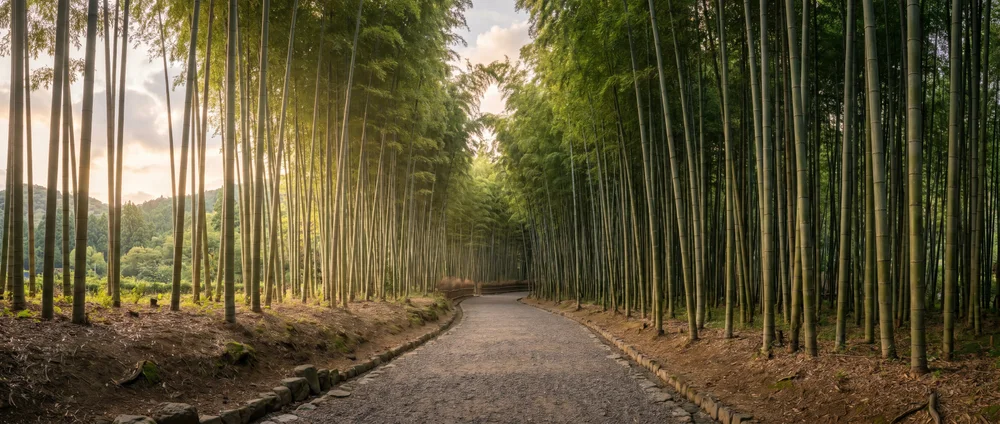
The bamboo grove itself is a free, ten-minute walk along a public path beside Tenryu-ji temple — there is no ticket, no gate and no queue, just an open lane that funnels every tour group in Kyoto by mid-morning. Get there before 08:00 (the JR Sagano Line from Kyoto Station takes ~17 minutes for ¥240) and the towering green corridor is genuinely quiet and worth it; turn up at 11:00 and it's a slow shuffle of selfie sticks. The grove fills barely fifteen minutes, so the real decision is what you pair it with: Tenryu-ji's garden (¥500), the Hozugawa river boat from Kameoka, the Sagano scenic train, or an Ebisuya rickshaw that pulls you down the prettier closed lanes.
Ginkaku-ji
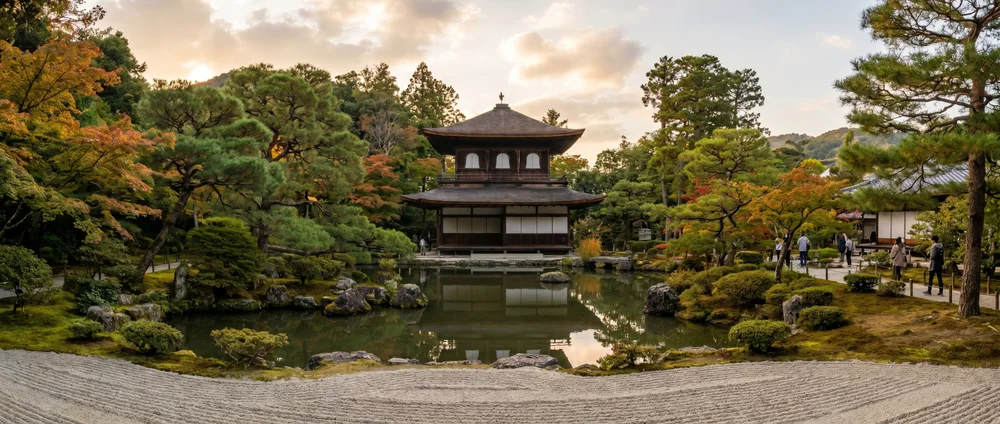
Ginkaku-ji is no walk-up tap pass: pay cash on the day at the gate (¥1,000 general, recently up from ¥500) — there is no advance booking and no online ticket. The pavilion itself is never silver and you can't go inside it; what you're paying for is the one-way garden loop — the raked sand cone, the moss slope and the hillside view back over Kyoto. Go right at the 08:30 opening or in the last hour, because the lane in from the Philosopher's Path funnels coach groups by mid-morning.
Kinkaku-ji (Golden Pavilion)
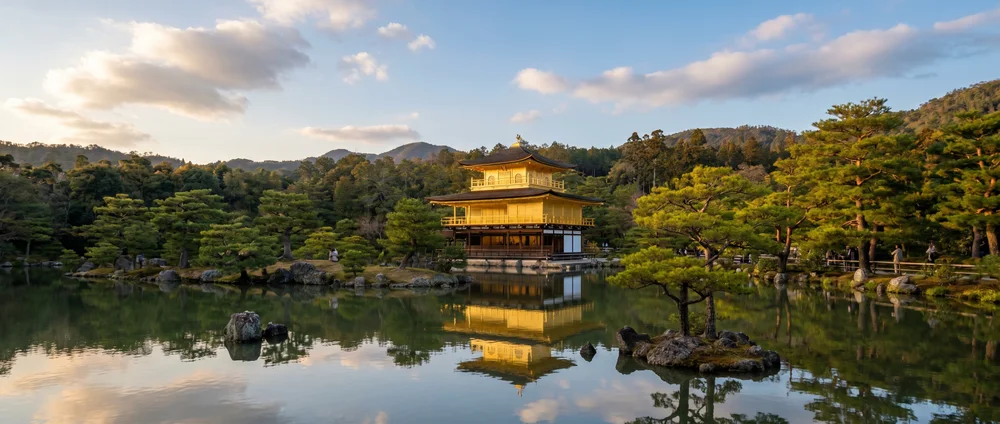
Bring ¥500 in cash per adult — Kinkaku-ji takes no cards, has no ATM at the gate, and sells no advance or timed tickets, so you simply turn up and pay. You never go inside the pavilion: a one-way garden path loops you past the gold-leaf building reflected in the Kyoko-chi pond and back out in 40–60 minutes. Arrive for the 09:00 opening or after 15:30 to miss the 11:00–15:00 crush of school trips and coach tours.
Kiyomizu-dera
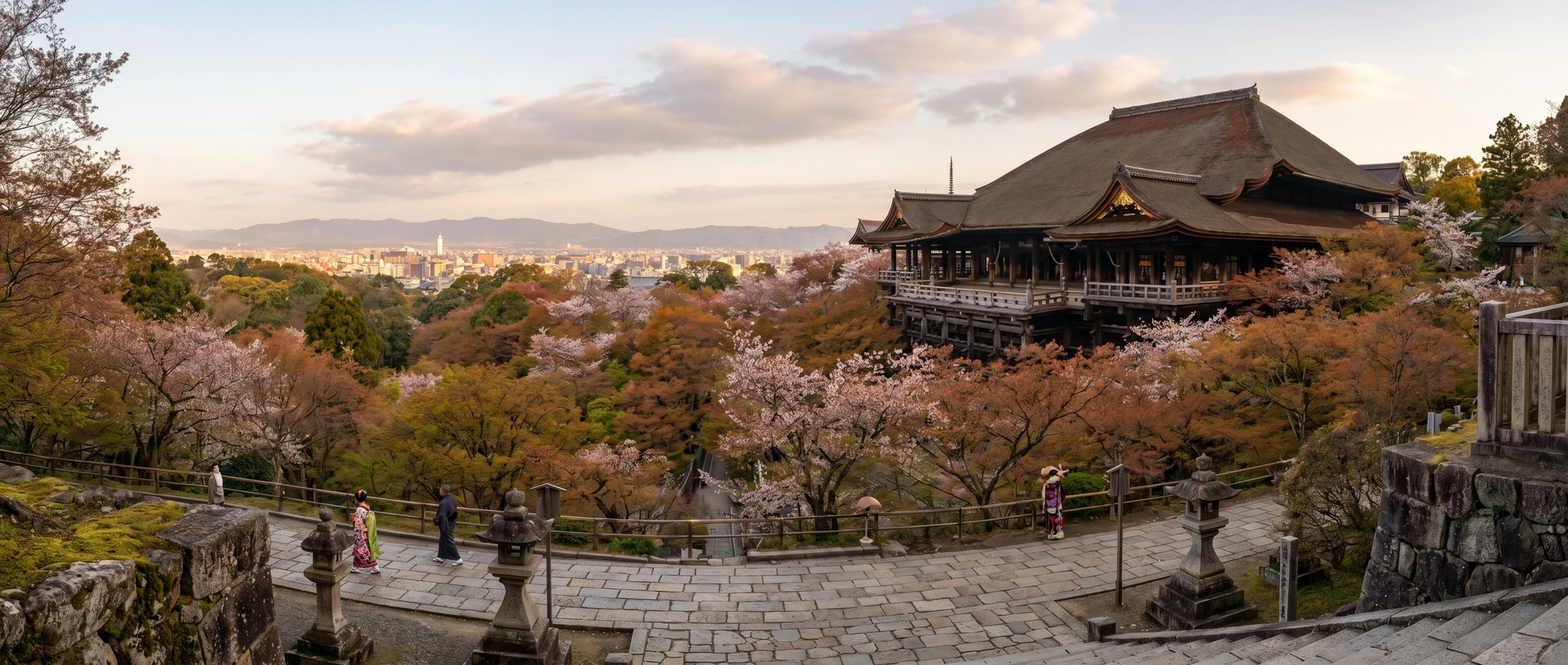
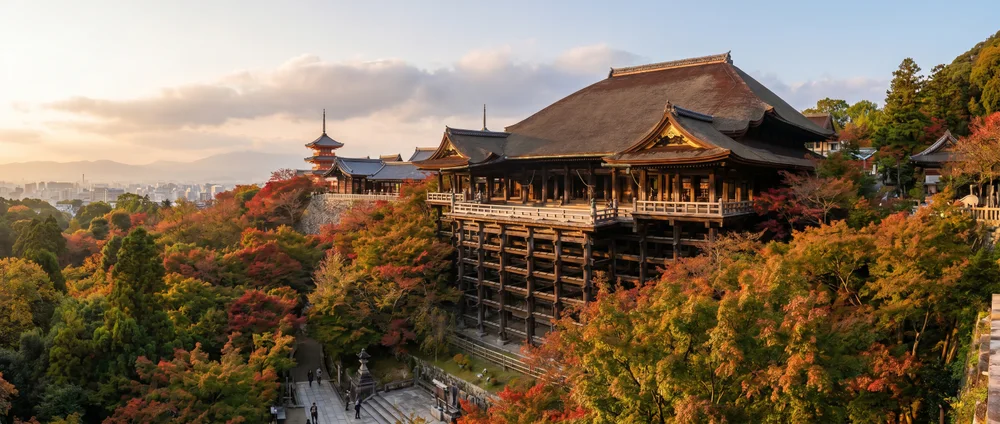
Kiyomizu-dera's draw is its huge wooden Main Hall stage, jutting out over the hillside on tree-trunk pillars with the city spread out below — and the whole experience hinges on timing. It opens at 06:00, earlier than almost anything else in Kyoto, so come at dawn and you get the stage and the photogenic Sannenzaka lanes nearly to yourself before the coach groups arrive around 09:00. Entry is a flat ¥500 (about £2.70) and cash-only, so carry coins. Take bus 206 or 100 from Kyoto Station to Gojo-zaka (~15 minutes, ¥230) then walk ten minutes uphill, or build the climb into a half-day on foot through Higashiyama.
Nijo Castle
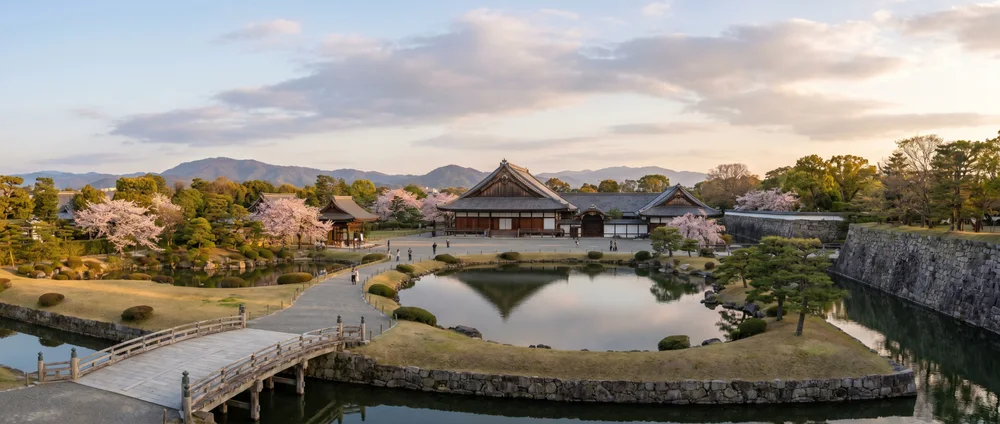
Buy the combined ¥1,300 ticket at the gate, not the ¥800 grounds-only one — the Ninomaru Palace interior, with its uguisubari 'nightingale' floors that chirp under your feet and the shogun's gold-leaf audience rooms, is the entire reason to come. Photography is banned inside the palace, so it's a put-the-phone-away, slow-walk experience. Allow 1.5 hours, go first thing at 08:45 to beat the coach groups, and check the day: the palace closes every Tuesday in January, July, August and December.
Ryoan-ji
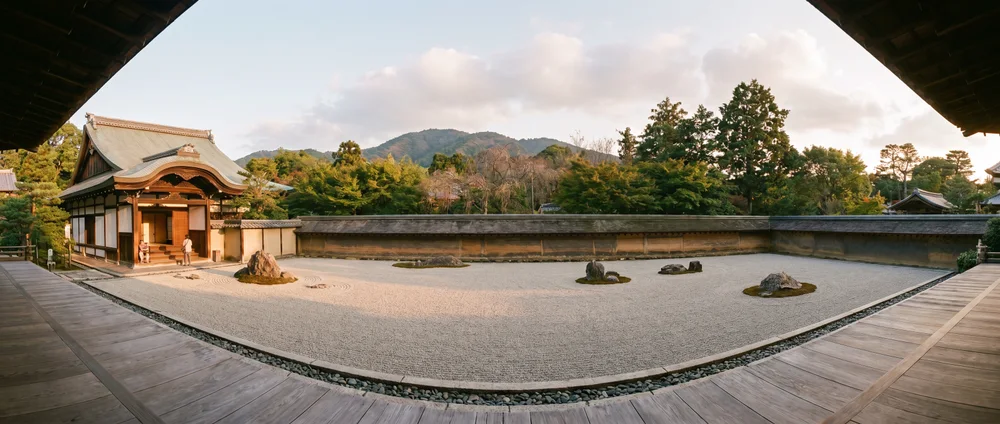
No advance booking needed — you pay ¥600 (about £3.20) at the gate, so there's no ticket to organise before you fly. The single thing that decides your visit is timing: arrive at 08:00 opening to have the 15-stone rock garden quiet, because by mid-morning the wooden veranda fills with tour groups and the contemplative point of the place evaporates. Allow about an hour, and pair it with Kinkaku-ji a short bus ride east the same morning.
Every Kyoto attraction guide
Where to stay first
The areas that make a first visit easier — not an exhaustive directory.
Higashiyama
££ mid-rangeThe postcard eastern hills: stone-paved Sannenzaka and Ninenzaka, Kiyomizu-dera and Yasaka Shrine within walking distance. Best base if you want to be out among the temples before the crowds arrive, though it goes quiet at night.
Best for: Temple-first trips, early risers, photographers
Downtown / Kawaramachi
££ mid-rangeKyoto's central hub for restaurants, the Nishiki and Teramachi arcades and Pontocho nightlife, with the best transport links for the rest of the city. The easiest all-round first-timer base if you would rather not commute to dinner.
Best for: First-timers, food and shopping, central transport
Gion
£££ premiumThe atmospheric geisha district of lantern-lit teahouses around Hanamikoji, walkable to Higashiyama. Lovely and central, but private lanes are now closed to tourists in places and rooms carry a premium for the address.
Best for: Atmosphere, couples, walkers
Kyoto Station area
££ mid-rangePractical rather than charming: you are on top of the Haruka, the Shinkansen and the main bus terminal, with big modern hotels. Choose it for an early onward train or a short stop, not for evening atmosphere.
Best for: Onward rail, late arrivals, day trips
Airport to city centre
| Option | Time | Cost | Book ahead? |
|---|---|---|---|
| Haruka express (Kansai/KIX) to Kyoto Station | ~75 min | foreign-tourist ticket from about ¥2,200; standard non-reserved about ¥3,060 | Buy the discounted tourist ticket online before you fly |
| Airport limousine bus (KIX) to Kyoto Station | ~85-105 min | about ¥2,800 | Useful with heavy luggage; slower in traffic |
| Itami (ITM) airport bus to Kyoto Station | ~55 min | about ¥1,800 | Only if you land at Itami on a domestic hop |
| Taxi from Kansai airport | ~90 min | usually ¥25,000+ | Rarely worth it; the train is far cheaper and faster |
When to go
Sweet spot: Late October and November for the autumn colour, and April for cherry blossom, are the headline windows but also the most crowded and expensive. May, June and September give pleasant temple weather with thinner crowds and lower prices.
Kyoto sits in a heat-trapping basin, so July and August are genuinely sweaty and best avoided for long temple days; early June to mid-July is the rainy season. Cherry-blossom and koyo peaks sell out hotels months ahead, so book early or aim for the shoulder weeks either side.
What it costs
There are no direct flights from the UK to Kyoto; you fly into Kansai (KIX) or via Tokyo, then take the train. UK-Japan return fares are typically £600-£900 booked ahead, rising to £1,000+ in peak cherry-blossom and autumn weeks.
Daily budget per person
Temples are cheap individually, so the real spend in Kyoto is hotels and food, not entry fees. Carry cash: several major temples, including Kinkaku-ji, are cash-only at the gate and do not take cards.
Book the essentials
Where to stay
Tours & tickets
Airport transfers
Stay connected
Trains & rail passes
Also in Japan

Kyoto FAQs
How many days do you need in Kyoto?
Where should first-timers stay in Kyoto?
Do you need a car in Kyoto?
Ready to book?
Find hotels in Kyoto