Kanto
Senso-ji Temple
How to visit Senso-ji in Asakusa: why entry is free, when to go to dodge the Nakamise-dori crush, and whether the kimono and rickshaw add-ons are worth the yen.
Where
Tokyo, Japan
Opening hours
Grounds open 24/7. The main hall (Hondo) opens 06:00 April–September and 06:30 October–March, closing at 17:00. Nakamise-dori shops mostly run roughly 09:00–18:00, so an early visit means quiet temple grounds but shuttered stalls.
Tickets
Free. No ticket, no booking, no gate queue. Extras are optional: an omikuji fortune is ¥100 (about £0.50), kimono rental from around ¥3,300 (£15), and a rickshaw ride from about ¥3,000 per person for 12–13 minutes (£14).
Time needed
45 minutes to an hour for the gate, Nakamise-dori, the main hall and the five-storey pagoda. Add an hour or two if you do a kimono fitting or a rickshaw circuit of old Asakusa.
In short
Visiting Senso-ji Temple
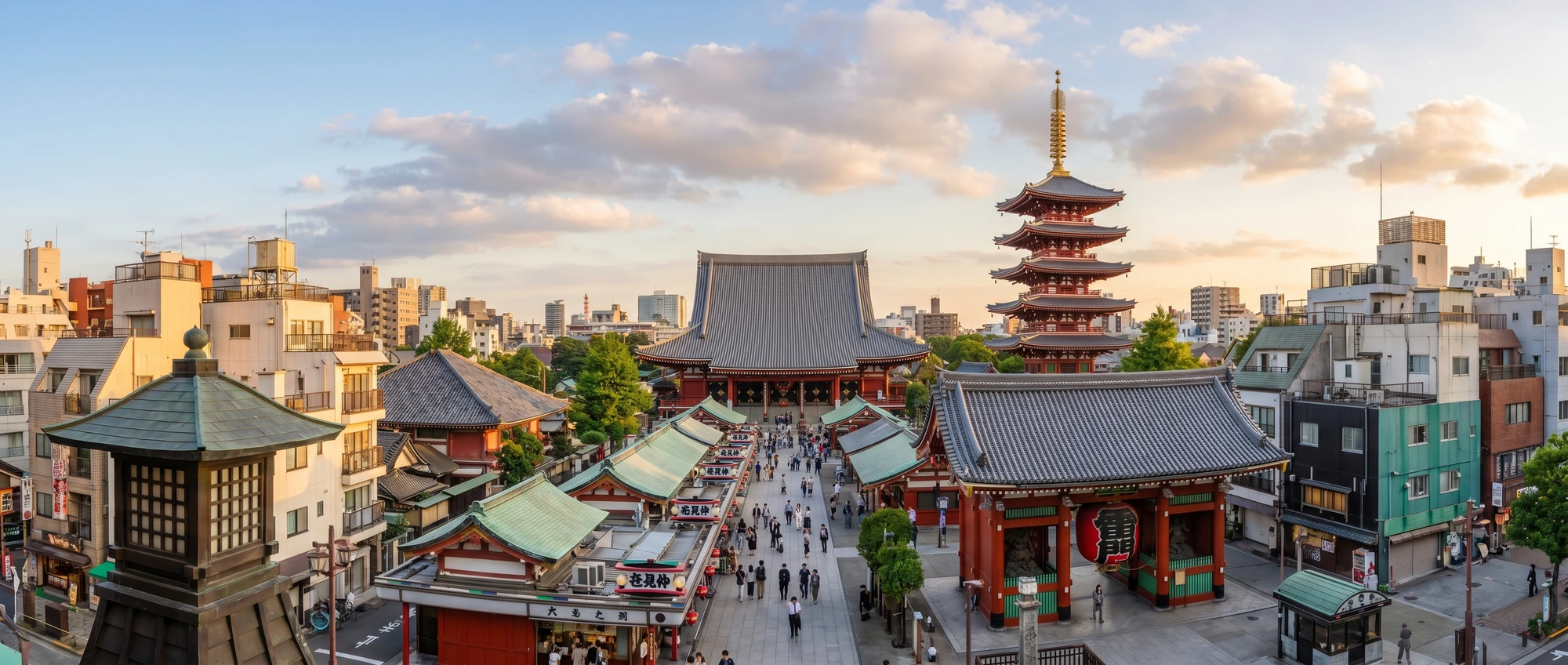
Senso-ji is free and needs no booking, so the only real decision is when to turn up. Go before 8am: the Kaminarimon lantern and the 250-metre Nakamise-dori shopping street are walkable and photographable then, but by 9:30 the gate is shoulder-to-shoulder and stays that way until late afternoon. Forty-five minutes to an hour covers the whole site at a relaxed pace; the kimono rental and rickshaw rides clustered around it are the bit you'd actually pay for.
Go for free, just go early
Senso-ji costs nothing to enter — no ticket, no online booking, no gate queue — so the only real decision is timing. The grounds are open around the clock and the main hall opens at 06:00 from April to September (06:30 in winter), which is the window worth setting an alarm for. Walk through the giant red Kaminarimon lantern and down the 250-metre Nakamise-dori before 8am and you’ll have the place close to yourself, with clean photos and morning incense drifting across an empty forecourt. By 9:30 the gate is filling fast, and from roughly 10am to 4pm it’s shoulder-to-shoulder — a Tuesday morning here has perhaps a fifth of the foot traffic of a Saturday afternoon, so come midweek if you can.
The trade-off with an early start is that the Nakamise-dori shops mostly don’t roll up their shutters until about 09:00. If the street food and souvenir stalls are the draw, you’ll want to come back through later or accept the crowds. Inside, allow 45 minutes to an hour for the gate, the shopping street, the Hozomon inner gate, the main hall and the five-storey pagoda — it’s a compact site, and you don’t need longer than that.
The bit you’d actually pay for
Since the temple itself is free, the spend is all optional and clustered in the lanes around it. Draw an omikuji paper fortune for ¥100 (about 50p) — if you get a bad one, the local custom is to tie it to the rack and leave the luck behind. The genuine experiences are the dress-up ones: kimono rental from around ¥3,300 (£15) including hair styling from shops a few minutes off the temple, and rickshaw rides from about ¥3,000 per person for a 12–13 minute spin, rising to roughly ¥7,000 for a half-hour circuit of old Asakusa. Both are touristy and both are good fun in this particular setting, where the low-rise backstreets still feel like an older Tokyo.
Visit early, walk it in an hour, and don’t overthink it — this is a free sight that rewards good timing more than money. Pair it with the riverside walk over to Tokyo Skytree (visible from the temple grounds) rather than stacking another big sight on top the same morning. The crowds, not the cost, are the only thing that can spoil Senso-ji, and beating them is entirely within your control.
Planning the rest of your trip? See the Tokyo city guide.