Kaafu Atoll
Malé Fish Market & Local Market
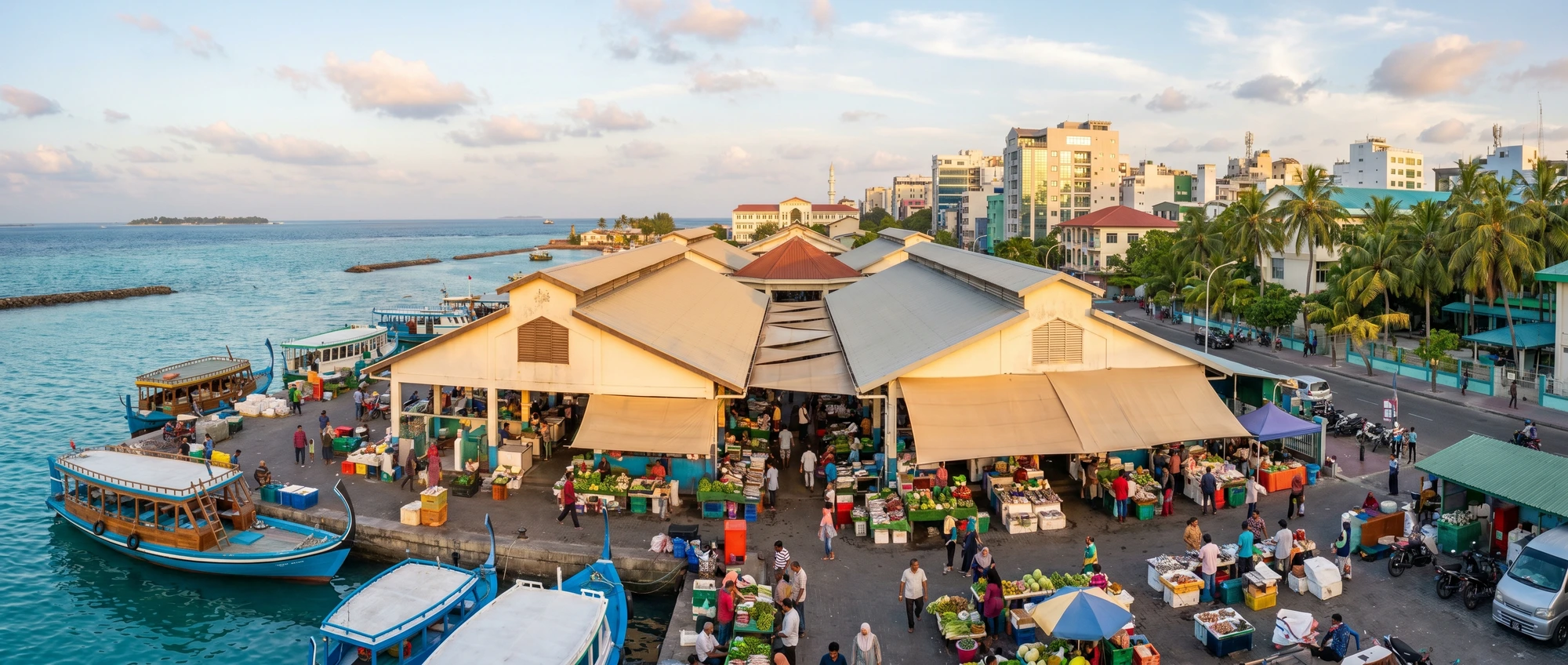
The working heart of the capital on the north waterfront: tuna landed straight off the dhonis, gutted and sold by mid-afternoon. Loud, vivid and entirely unpolished.
Where
Malé, Maldives
Opening hours
Open most days through the day, with the fish market liveliest in the afternoon and early evening when the boats unload; quieter and emptier in the morning. Fridays run on a slower, prayer-day rhythm. Hours are informal rather than fixed, so treat the late afternoon as your safe window.
Tickets
Free — no ticket needed; you walk straight in off the waterfront and only spend if you buy fruit, a coconut or a snack from the surrounding stalls.
Time needed
Around 30 to 45 minutes to walk the fish hall and the produce market next door; longer if you linger on the waterfront watching the dhonis come and go.
In short
Visiting Malé Fish Market & Local Market
On Malé's north waterfront, the fish market is the working heart of the Maldivian capital: skipjack and yellowfin tuna landed straight off the dhonis, gutted on tiled slabs and sold off through the afternoon. Next door, the local produce market piles up coconuts, bananas, chillies and betel. It is noisy, slippery and entirely unpolished — the most honest hour you will spend in the city. Busiest in the late afternoon as the boats come in. Free to wander; you only pay if you buy.
What it is and when to go
Run along the north waterfront of the capital, this is two markets in one. The fish market is a tiled, open-sided hall where skipjack and yellowfin tuna are hauled straight off the dhonis, slapped onto slabs, gutted and sold by the kilo. A few doors along, the local produce market stacks coconuts, bananas, chillies, pumpkins, breadfruit and bundles of betel leaf, with vendors weighing out goods for islanders rather than tourists. Nothing here is staged for visitors, which is exactly why it is worth your time.
Timing is everything. The fish hall is half-empty and undramatic in the morning, then fills through the afternoon as the boats return — the late afternoon and early evening are when you get the noise, the crowd and the steady thwack of cleavers. Fridays run slower around prayers. Hours are informal, so don’t expect fixed opening times; just aim for the boats coming in.
How to do it, and is it worth it
This is a stand-and-watch experience rather than a tick-box sight. Walk the wet, slippery hall, watch the tuna being broken down, then drift into the produce market next door and buy a fresh coconut to drink. It costs nothing to enter; you only spend if you buy. Wear shoes you don’t mind getting damp, keep cameras low-key, and ask before photographing individual traders. The Maldives is a conservative Muslim country, so dress modestly in the city — covered shoulders and knees.
Is it worth it? For anyone wanting the real Malé rather than the airbrushed-lagoon version, very much so. It is raw, pungent and genuinely local — arguably the most honest hour in the capital. Set expectations: it is not scenic or comfortable, and there is little English signage. Pair it with a walk along the harbour and the nearby Republic Square before you head back to the airport jetty or your resort transfer.
Planning the rest of your trip? See the Malé city guide.